

What Is the Best Age to Start Soccer for Kids?

As a parent, one of the most common questions I hear is, "When should my child start playing soccer?" It's a great question, and the answer isn't a single magic number. Based on years of experience in youth development, most experts agree that the sweet spot for introducing a child to the beautiful game is somewhere between 3 and 7 years old.
This window is perfect because it lines up with a child’s natural development—blending their boundless curiosity with an emerging ability to follow directions and learn basic skills.
Unpacking the Ideal Soccer Starting Window
While there’s no official "right" birthday to sign up for a first soccer class, the 3 to 7-year-old range offers some incredible advantages. Think of it like learning to read. You wouldn't hand a toddler a chapter book; you start with colorful picture books to build a love for stories. Early soccer is exactly the same—it’s all about fun, movement, and creating a positive vibe around the sport, not drilling complex rules.
This isn't just our opinion; it's a consensus you'll find in youth development programs all over the world. A child can happily start as early as 3 or 4, with a focus on pure play. As they get a bit older, around ages 6 to 8, they become more ready for organized team activities where they can start to understand cooperation and basic game concepts. If you'd like to dive deeper, you can read additional insights on youth soccer stages and how programs adapt.
This timeline gives you a great visual for how soccer should evolve from playful discovery to more structured skill-building as a child grows.
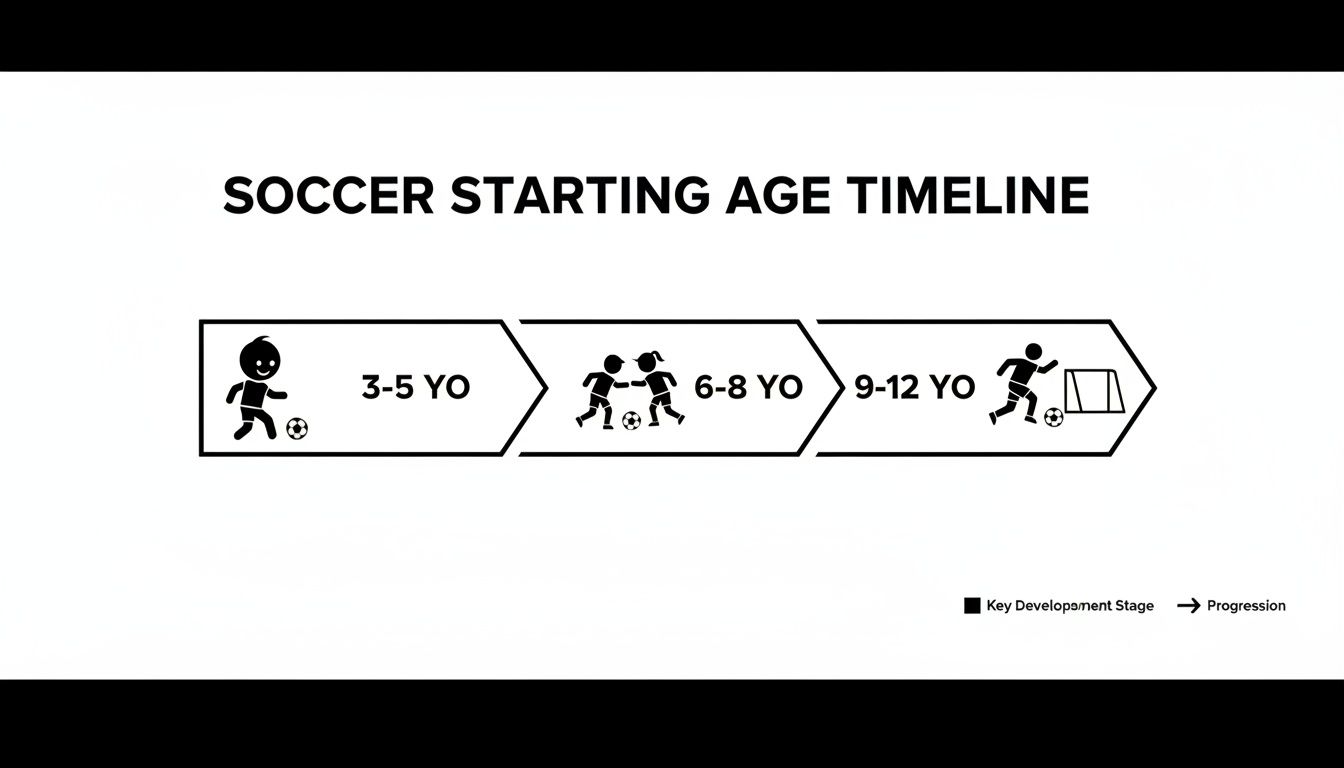
As you can see, the goals for a 4-year-old are totally different from what you'd expect from a 9-year-old. This is why finding an age-appropriate program is so important for their long-term enjoyment and development.
Youth Soccer Starting Ages at a Glance
To give you a clearer picture, here’s a quick breakdown of what you can expect at different starting ages. This table shows how the focus naturally shifts from pure fun to more skill-oriented activities as kids get older and more capable.
Age Group | Primary Focus | Typical Activities |
|---|---|---|
Ages 3-5 | Fun, Motor Skills, & Positive Exposure | Running games, kicking at large targets, simple follow-the-leader drills. |
Ages 6-8 | Foundational Skills & Team Concepts | Basic dribbling, passing exercises, small-sided 3v3 or 4v4 games. |
Ages 9-12 | Skill Refinement & Tactical Awareness | Positional play, advanced dribbling moves, introduction to game strategies. |
This kind of progressive approach is key. It ensures kids build a strong, positive foundation with the sport, which helps prevent burnout and nurtures a passion for the game that can last a lifetime.
Ultimately, the best age to start soccer has less to do with a specific number and more to do with a child’s individual readiness for fun, structured play.
The Toddler Years (Ages 3-5) Building a Love for the Game
When you introduce a toddler to soccer between the ages of 3 and 5, the goal isn’t to create the next superstar. It’s to plant a seed of joy.
Think of it like learning to read. You wouldn't hand a 3-year-old a chapter book and expect them to follow the plot. You start with the alphabet—the fun, colorful building blocks that make everything else possible.
Toddler soccer is the "alphabet" of athletics. It's all about building a happy, positive foundation with movement and play, not about mastering the rules.
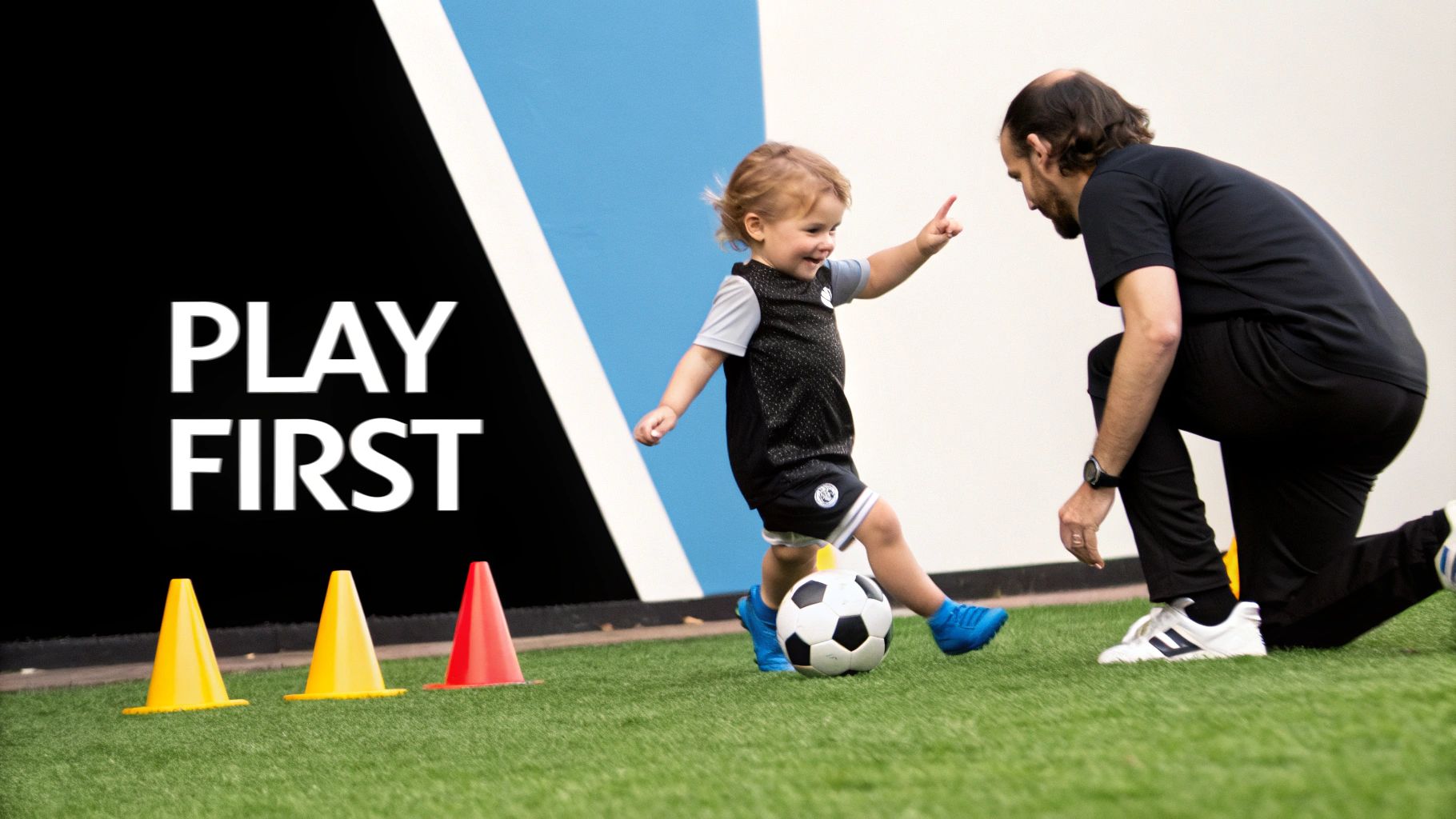
What to Expect from Toddler Soccer
A toddler's world revolves around discovery. Their little brains are firing on all cylinders, and so are their gross motor skills. A truly great toddler soccer program gets this. It focuses on activities that feel like pure fun but are secretly teaching essential skills.
The right time to start is whenever your child shows interest in running, kicking, and playing alongside others. The vibe should be 100% pressure-free, celebrating laughter way more than performance.
A high-quality program for this age group will prioritize:
Fundamental Movement Skills: Games built to improve balance, coordination, and agility.
Listening and Following Directions: Simple instructions like "run to the red cone" or "kick the ball to the funny monster" help develop focus.
Social Interaction: Toddlers learn to share space, take turns, and interact with friends in a structured, positive way.
Building Confidence: Every small win—kicking a ball, running through an obstacle course—is celebrated to build genuine self-esteem.
A child’s first experience with sports should be joyful. The primary goal for ages 3-5 is to ensure they associate physical activity with fun, setting the stage for a healthy, active lifestyle.
From Playful Games to Lifelong Skills
A typical toddler class won't look much like a real soccer practice. Instead, you'll see a series of imaginative games that cleverly weave in core movements. These activities are designed for short attention spans while developing the physical literacy they'll need for any sport down the road.
For example, a coach might lead games like:
Red Light, Green Light: A classic that teaches toddlers to start and stop on command, improving body control and listening skills.
Dragon's Treasure: Kids dribble their "treasure" (the ball) away from the coach (the dragon), learning to keep the ball close in a super fun way.
Animal Adventures: Children might be asked to hop like a bunny or stomp like a dinosaur, all while moving with a ball, which builds coordination and balance.
These playful scenarios are the perfect introduction. They deliver physical benefits while also nurturing emotional growth in toddlers.
Ultimately, these early years are all about creating a positive connection to the sport. By focusing on fun, you’re giving your child the best start possible. If you're curious what this looks like, you can see why this play-based approach is Houston's top choice for toddler sports programs.
Early Elementary (Ages 6-8) From Fun Games to Foundational Skills
As kids hit those early elementary years, something special starts to happen. Their world, once a whirlwind of pure, chaotic fun, begins to take shape. They can connect the dots, follow simple instructions, and their attention spans are finally getting a bit longer. For soccer, this is a golden window.
Between the ages of 6 and 8, kids are not just ready to play—they're ready to start learning the language of the game. The fun doesn't stop, not by a long shot. It just evolves. Think of it as graduating from finger painting to learning how to hold a paintbrush properly. The joy is still there, but now it’s paired with a bit more intention and skill. This is often the best age to start soccer for kids who are ready to build on their natural love for running and kicking.
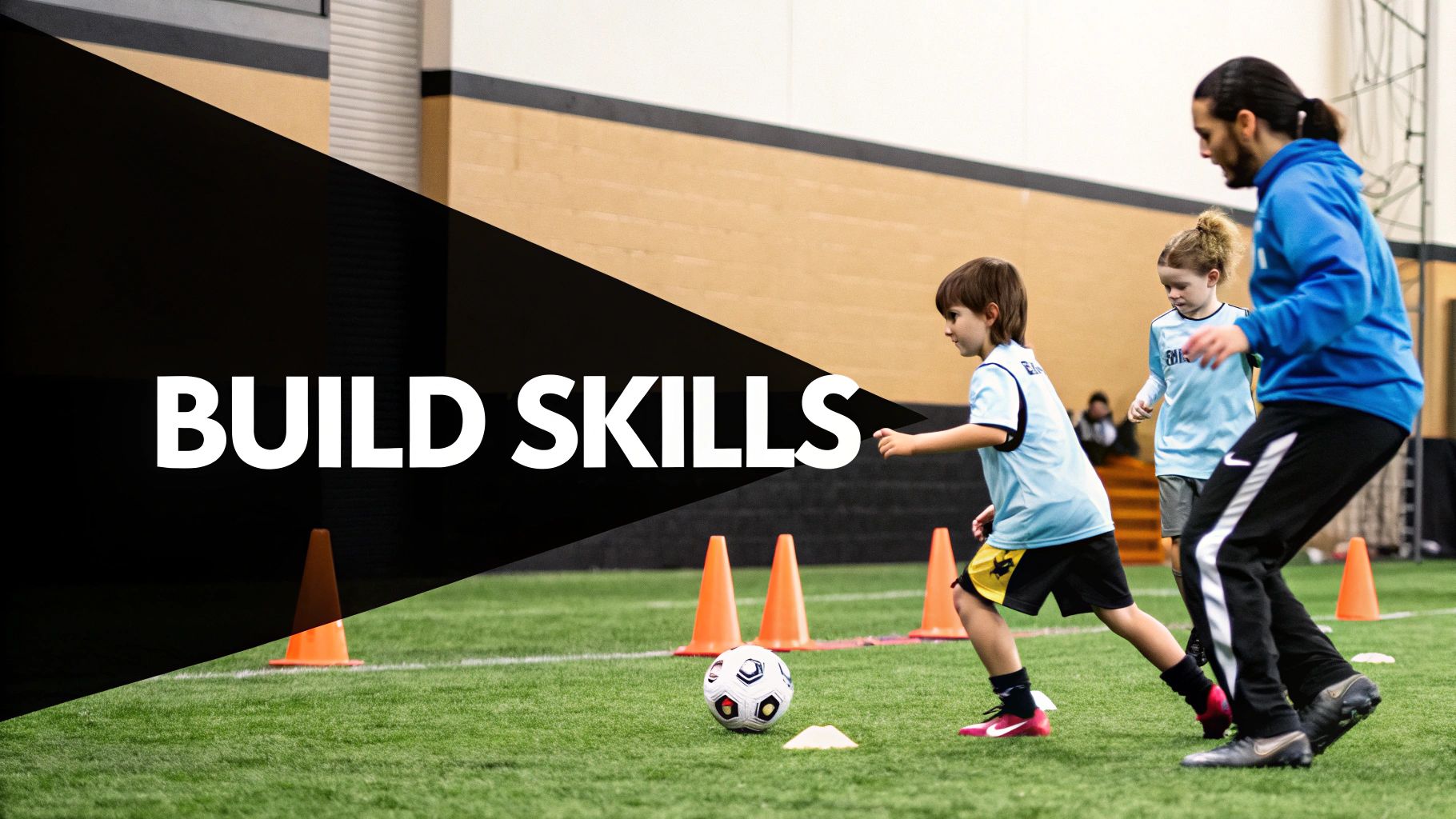
Introducing Structure Through Small-Sided Games
One of the best ways to teach soccer to this age group is through small-sided games. Forget the huge 11v11 fields you see on TV. For 6 to 8-year-olds, the real magic happens in smaller formats like 3v3 or 4v4.
Why is this so critical? It solves the biggest problem in youth soccer: kids standing around, completely disconnected from the game. With fewer players on the field, every single child is constantly involved.
This simple change unlocks some major benefits:
More Ball Touches: Every player gets dozens of chances to dribble, pass, and shoot, which fast-tracks their skill development.
Active Participation: There’s simply nowhere to hide. This keeps kids engaged, moving, and thinking for the entire session.
Simplified Decisions: The game is easier to read with fewer teammates and opponents, helping kids learn positioning and teamwork naturally.
The goal at this age isn't about winning trophies. It's about maximizing engagement and building confidence. Small-sided games make every child feel like an important part of the action, which is what keeps them excited to come back week after week.
Building Foundational Soccer Skills
While fun is still king, ages 6-8 are perfect for introducing the core building blocks of soccer. A great program will focus on teaching these foundational techniques in a supportive, positive environment. The emphasis shifts slightly to how to do things correctly, but always with plenty of patience and encouragement.
Coaches at this level should be introducing essential skills like:
Controlled Dribbling: Learning to keep the ball close to their feet while moving, not just kicking it and chasing it down.
Basic Passing: Understanding how to gently push the ball to a teammate with the inside of the foot.
Introduction to Positioning: Learning the basic ideas of "offense" and "defense" and where they should be in relation to the ball and their teammates.
Shooting Technique: Focusing on striking the ball with their laces for a little more power and accuracy.
This period is all about laying the groundwork. By focusing on these fundamentals in a fun, game-based setting, you're giving your child the tools they need to truly enjoy soccer for years to come. It’s a crucial step in their athletic journey.
Don't Worry, It's Not Too Late to Start Soccer
It’s one of the most common questions we hear from parents: “My child is nine, have they missed their chance to play soccer?” Let me put that fear to rest right now. The answer is a clear and confident no. This idea that a child is "behind" if they aren't in cleats by age five is a total myth.
Honestly, a genuine love for the game and a real desire to learn will always be more powerful than a few extra years of toddler soccer. An enthusiastic 10-year-old who wants to be on the field will almost always outgrow a kid who started at five but is already feeling burned out.
The Upside of Starting a Little Later
Jumping into soccer between the ages of 9 and 12 actually comes with some unique advantages. At this age, kids are stronger and can think more strategically, allowing them to pick up parts of the game that younger players just aren't ready for.
Here’s what we see in players who start in this age window:
They Understand the Game Faster: Older kids can grasp complex ideas like spacing, team shape, and positioning much more quickly. The "why" behind the drills just clicks.
A Stronger Physical Base: They’ve already developed better coordination, speed, and power. This means they can execute skills like shooting and passing more effectively from the get-go.
Real, Self-Driven Commitment: When a 10-year-old decides they want to play soccer, it’s their choice. That self-motivation is huge for sticking with practice and wanting to improve.
This maturity often leads to incredibly rapid progress. Sure, they might need to work a little harder on some of the basic ball skills, but their ability to learn and adapt is on a completely different level.
Passion trumps timing. A child’s love for the game is the single most important ingredient for long-term success and enjoyment, regardless of their starting age.
What the Pros Can Teach Us
The path to becoming a great soccer player isn’t a straight line. In fact, when you look at the pros, their starting points are all over the map. A 2023 study of World Cup players revealed that the median age for joining a professional youth academy was 13.2 years.
Even on the World Cup-winning Argentinian team, the journeys were incredibly diverse. While 13 players on that squad had joined pro academies before they were 12, another five players didn't start until after age 15. This proves that late bloomers can absolutely reach the highest levels of the sport. You can explore the full findings on player development pathways yourself and see just how different every player's story is.
The bottom line is simple: there is no "sell-by" date on getting into soccer. The best age to start soccer is the moment your child is excited to get on the field and just play.
Focusing on Long-Term Development, Not Early Wins
In the world of youth sports, it’s so easy to get caught up in the excitement of weekend games and team standings. But when we talk about the best age to start soccer, the real goal isn’t about winning trophies at age seven. It's about building a foundation for a healthy, active life and a genuine, lifelong love for the game.
Think of a young player's journey like building a house. The early years—from toddlerhood all the way through elementary school—are for pouring a strong, deep foundation. You’d never rush to put up the walls and roof before the concrete is even set, right? In the same way, focusing on the fundamentals like coordination, listening, teamwork, and just plain fun is far more important than winning every single match.
This long-term perspective is everything, because an athlete's journey is a marathon, not a sprint. The pressure to specialize early and chase short-term victories often leads to burnout, robbing kids of their passion for sports before they even hit their teenage years.
The True Timeline of a Soccer Player
It’s so important for parents to remember that a player’s physical and tactical peak doesn’t happen at age 12. It’s not even close.
High-level performance research shows that soccer players typically hit their peak in their mid to late 20s. A 2021 analysis actually found the average age of peak performance is around 27–28 years old, with some positions peaking as late as 31. This isn't just an opinion; you can see the data on player development yourself to understand how this unfolds over time.
This simple fact completely reframes the purpose of youth soccer. It's not about creating a finished product by middle school. Instead, it’s a long, developmental runway designed to build skills, resilience, and a passion that will carry a player into their adult years.
The goal of youth soccer isn't to create the best 8-year-old player. It’s to develop a 28-year-old who still loves, understands, and actively participates in the sport.
By focusing on gradual skill acquisition and enjoyment, we help create well-rounded athletes who are far less likely to suffer from overuse injuries or mental fatigue. This balanced approach nurtures players who will continue to love and engage with the game long after their youth league days are over. For more on this, check out our guide on how to improve soccer skills with a long-term mindset.
How to Choose the Right First Soccer Program
Knowing when to start soccer is only half the battle. Finding the right program is where your child’s journey really takes off. The goal isn't just to find a place where they learn soccer skills, but where they discover a genuine love for being active and part of a team.
A great first program should feel more like a playground than a boot camp. When you pop in to watch a class, listen for laughter and shouts of encouragement. Are the coaches high-fiving kids and celebrating effort, not just perfect kicks? That positive energy is the single most important ingredient for a successful start.
Key Qualities of a Top Youth Program
When you're looking at different options, make sure the program puts development and fun way ahead of intense competition, especially for the little ones. The environment has to be safe, positive, and built to keep kids engaged and excited to come back every week.
Here’s a little checklist to use during a trial class or visit:
Fun Is the Top Priority: Are the drills disguised as games? Does the coach use imaginative scenarios like "monster tag" or "lava on the field," or are kids just standing in lines waiting for a turn?
Kid-Friendly Coaching: The best coaches are patient, energetic, and know how to talk to kids on their level. They make every child feel seen and valued, no matter their skill level.
Small-Sided Games: Look for small groups (3v3 or 4v4). This setup is huge because it maximizes how many times each child touches the ball and keeps everyone involved in the action. No one should be just watching from the sidelines.
Safe and Positive Environment: The facility should be clean and secure. Just as important, the language from coaches and even other parents should be consistently encouraging.
The right program doesn't just teach soccer; it builds confidence. It uses the sport as a tool to develop well-rounded, happy kids who are eager to participate.
Beyond the field, a great program also understands the social side of sports. Look for ones that incorporate fun team building activities into their sessions. After all, making friends and feeling like part of a team is a massive part of the experience for a young child.
Finding a program that checks all these boxes ensures your child's first steps into soccer are positive ones. To see how these principles come to life, you can discover Houston's premier youth sports programs and see what a development-focused environment looks like in action.
Got Questions About Starting Soccer? We’ve Got Answers.
When you're thinking about signing your child up for their first sports experience, it's natural to have a few questions. We hear these all the time from parents, so let's tackle them head-on.
Is My 3-Year-Old Too Young for Soccer?
Not at all! In fact, this is a fantastic age to start. For a 3-year-old, the goal isn't to learn the offside rule—it's to have a blast while moving their body.
A great program for this age group focuses on fun, imaginative games that involve running, kicking, and improving balance. It's all about creating a positive first impression with sports that makes them want to come back for more.
What Gear Do We Need for the First Class?
For the first few sessions, especially with toddlers, keep it simple. All they really need are comfortable clothes they can run around in and a pair of sneakers. That’s it!
As they get a bit older and start playing more structured games (usually around ages 6-8), shin guards become essential for safety. But don't worry about the rest—any good program will provide the soccer balls, cones, and other gear needed for practice.
The best advice is to keep it simple. A child's enthusiasm is far more important than a bag full of expensive gear, especially at the beginning of their journey.
Should My Child Play Other Sports Besides Soccer?
Absolutely. We're big believers in this. Youth sports experts almost universally recommend that kids play multiple sports rather than specializing too early.
Playing different sports like basketball, baseball, or even swimming helps them build a wider range of athletic skills, which funny enough, often makes them better soccer players down the road. This variety also helps prevent burnout and reduces the risk of overuse injuries, keeping them happy, healthy, and active for years.
Ready to give your child a fun and positive start in sports? JC Sports Houston offers age-appropriate programs that build confidence and skills from day one. Request a free trial class today!
Comments