

Explore sports programs for 2 year olds: Safe, engaging activities for toddlers

Thinking about signing your two-year-old up for a sports program? It’s a great idea, as long as the program is all about play, not pressure. The best classes for this age group are designed to build foundational skills—like running, jumping, and balancing—in a fun, positive environment that helps your toddler grow confident and learn to love being active.
Rethinking Sports for Your Toddler
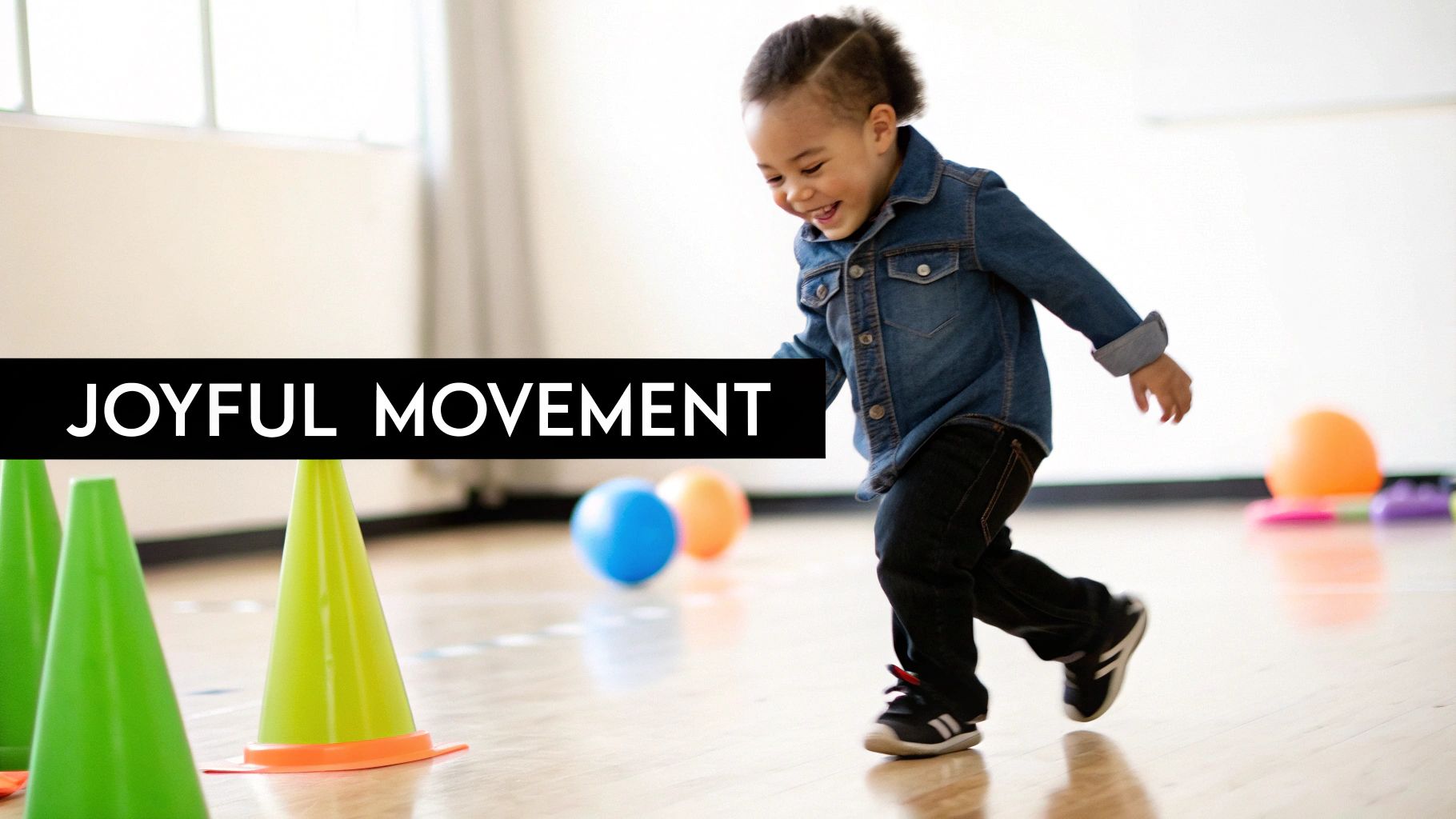
When we hear “sports,” our minds often jump to competition, complex rules, and keeping score. But for a two-year-old, it’s a whole different world. It’s not about mastering a specific sport; it’s about discovering movement in a joyful, encouraging space.
Think of it as learning the ABCs of physical activity. Just like letters form words, basic movements like running, hopping, and balancing are the building blocks for a healthy, active life. These early experiences are what experts call physical literacy, and they’re incredibly important.
The Goal is Joyful Movement, Not Competition
A two-year-old’s world revolves around play. Their attention spans are short, and their only motivation is to have fun! The best sports programs for toddlers are built around that simple truth. They trade rigid drills for imaginative games and celebrate participation over performance.
Instead of structured teams and complicated rules, you’ll find:
Play-based learning: Activities are disguised as games, like roaring like a lion while crawling or navigating a colorful obstacle course.
Short, engaging sessions: Classes are usually 30-45 minutes long to match a toddler's natural energy and focus.
Parent participation: Many programs invite parents to join in, which makes the class a fantastic bonding experience for you and your child.
The goal isn’t to create the next superstar athlete at age two. It's to build a positive relationship with being active that can last a lifetime, all while developing confidence and social skills.
Building a Foundation for Future Fun
Getting toddlers into organized movement classes helps them develop gross motor skills, coordination, and body awareness. They also get to practice following simple instructions from a coach, taking turns with other kids, and celebrating their own small wins.
These skills are the bedrock for more structured sports down the road. While it's good to know the best age to start soccer for kids, these early programs create the physical and social readiness they’ll need to succeed later. Ultimately, the right program makes being active feel like a happy, normal part of their weekly routine.
The Real Developmental Benefits of Toddler Sports
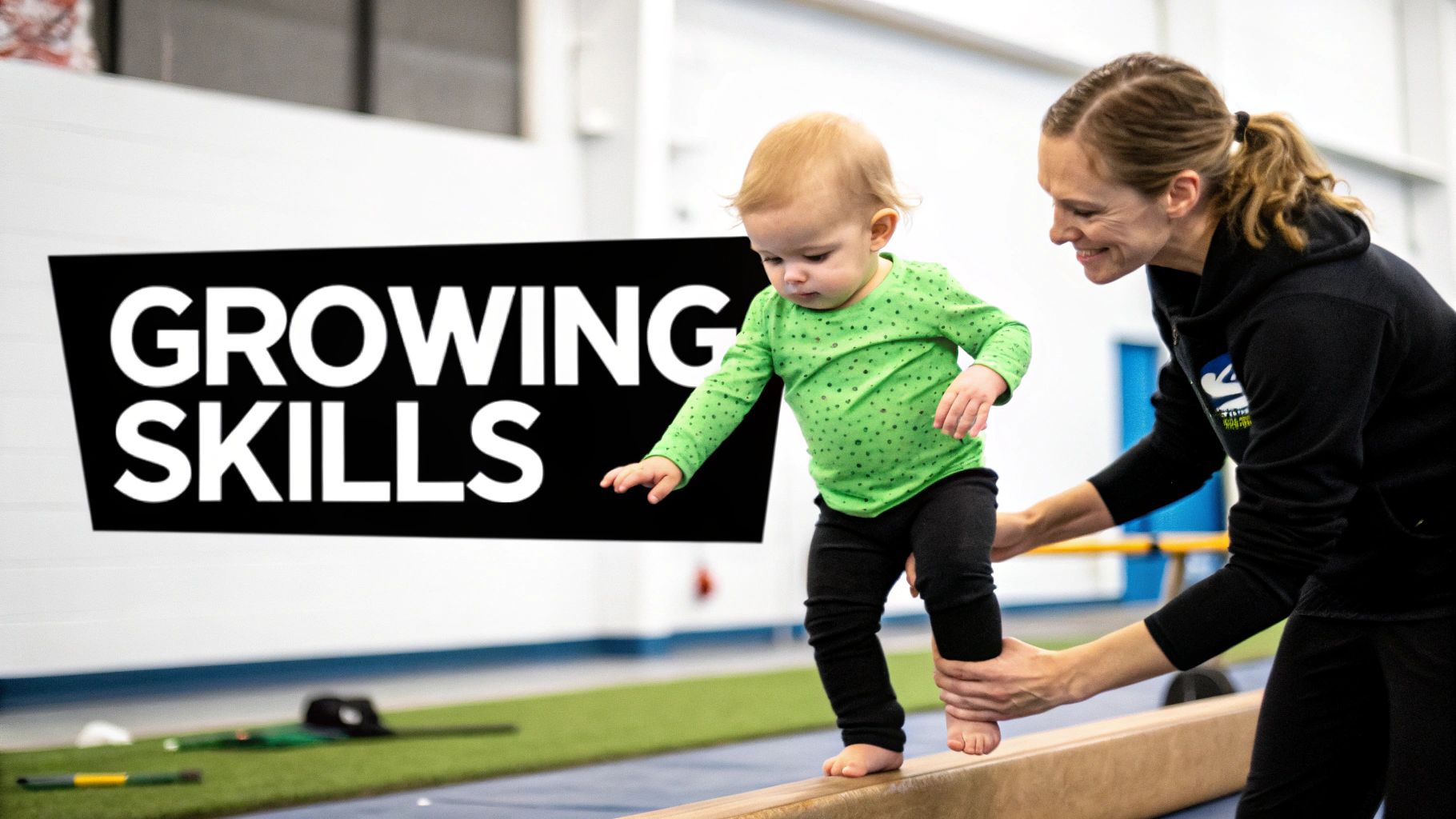
To the untrained eye, a sports class for two-year-olds looks a lot like organized chaos. But if you look closer, you'll see something incredible happening beneath all that joyful energy.
Well-designed sports programs for 2 year olds are so much more than just a way to burn off steam. They’re a playground for the developing brain, carefully built to give your child a head start on the foundational skills they’ll use for the rest of their lives. It all breaks down into three key areas that build on each other.
Physical Foundations and Gross Motor Skills
For a toddler, every movement is a learning experience. When they kick a ball, they aren't just playing—they're mastering gross motor skills, which control the large muscles in their arms, legs, and core.
This is where coordination, balance, and body awareness begin. Activities that seem incredibly simple to us are actually major physical challenges for a two-year-old:
Balancing on one foot teaches them about stability and shifting their weight.
Running around cones helps them figure out how to change direction and stay agile.
Throwing a soft beanbag into a basket builds that crucial hand-eye coordination.
Every successful jump, catch, or kick creates new connections in their brain, helping their movements become more confident and deliberate. You can support this growth at home, too, by incorporating developmentally smart toys for 2-year-olds that complement what they’re learning in class.
A toddler sports class is like a physical playground for the brain. It provides a safe, structured environment where children can test their physical limits, learn from trial and error, and build bodily confidence with every step.
Cognitive Leaps and Following Directions
A great toddler sports class is also a fantastic workout for their minds. A simple game like "Red Light, Green Light" is secretly a powerful lesson in listening, processing information, and practicing self-control. They have to hear a cue ("Green light!") and connect it to a physical action (run!).
This process—listen, think, act—is a cornerstone of early learning.
When a coach asks them to find the "blue" hoop or kick the "big" ball, they're gently introducing concepts like colors, sizes, and spatial awareness in a way that feels like pure fun. These little cognitive challenges lay the groundwork for more complex problem-solving down the road. We see this all the time in our programs, which you can read more about in our guide to toddler soccer and building confident young players.
Social Growth and Emotional Independence
This might be the most important benefit of all. For many two-year-olds, a sports class is their very first "team" experience—a place where they have to navigate sharing, taking turns, and listening to another adult authority figure, the coach.
It's often their first time in a structured group without a parent right next to them, which is a huge step toward independence. They learn to cheer when a friend takes a turn, wait patiently for the ball, and listen when the coach gives instructions to the whole group.
These moments are the building blocks of empathy, cooperation, and resilience. And parents agree—surveys show that 92% believe sports help kids build character, and 90% say they teach important life skills. It's why starting with play-based programs at a young age is such a powerful choice.
A Look Inside a Typical Toddler Sports Class
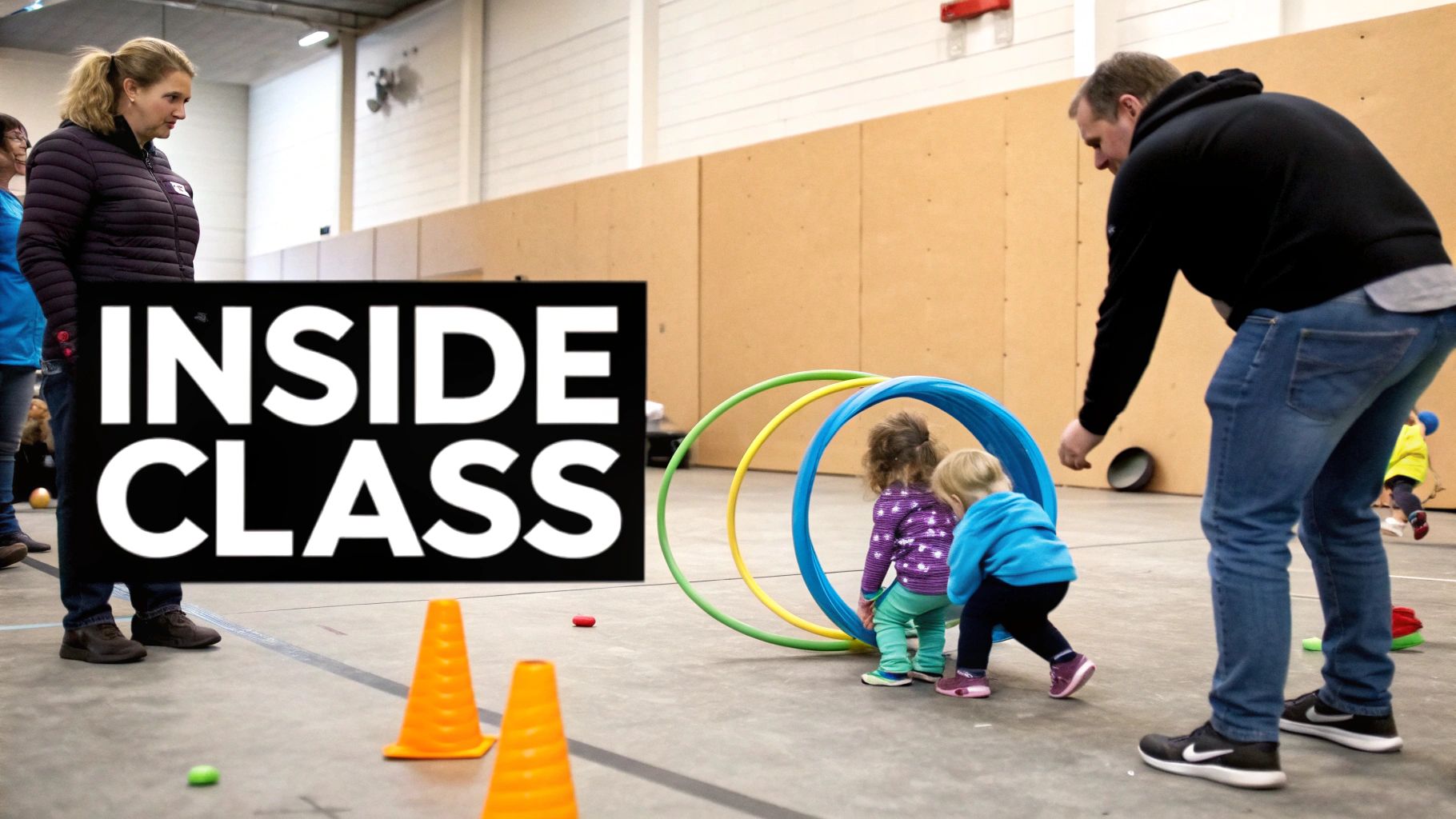
Stepping into a sports class for a two-year-old can be a little nerve-wracking for parents. What will it actually look like? Will my child even participate? We get it. The good news is that these programs are designed from the ground up to be inviting, low-pressure, and—most importantly—incredibly fun.
Imagine walking into a bright, safe space filled with colorful, soft equipment. Instead of a rigid, formal practice, you’ll find a welcoming atmosphere built entirely around a toddler's world. The focus is never on performance but always on playful participation and exploration.
The Anatomy of a Toddler Sports Session
Most sports programs for 2 year olds follow a similar, predictable flow that helps toddlers feel secure and ready to jump in. The classes are also intentionally short—typically lasting between 30 and 45 minutes—to perfectly match a young child’s attention span and keep their energy high from start to finish.
A session usually breaks down into a few key parts:
A Playful Warm-Up: The class often kicks off with a high-energy welcome song or a simple stretching routine disguised as a game, like reaching for the sky like a tall giraffe or wiggling like a worm.
Skill-Building Games: This is the core of the session, where activities introduce basic movements. Forget drills; coaches use imaginative play to teach fundamental skills.
A Cool-Down and Celebration: The session winds down with a calming activity, like a story or quiet stretching, followed by a big round of high-fives or stamps to celebrate everyone's effort.
This consistent structure helps toddlers know what to expect each week. That predictability builds their confidence and encourages them to join in more freely over time.
What Activities Actually Happen in Class?
So, what does “skill-building” really look like for a two-year-old? It’s all about games that encourage running, jumping, balancing, and kicking without them even realizing they're "practicing." This isn't about rigid lines and repetitive drills; it's about joyful exploration.
We’ve found that the best activities for this age group are ones that feel more like a guided playdate than a formal lesson. Here's a look at some of the fun, age-appropriate games you can expect to see and the developmental skills they're designed to build.
Common Activities in a Sports Program for 2 Year Olds
Activity Example | Primary Skill Developed | Description |
|---|---|---|
Animal Adventures | Gross Motor Skills | Kids are asked to gallop like horses, hop like frogs, or crawl like bears through a soft obstacle course. |
Bubble Chasing | Coordination & Reaction | An all-time favorite that encourages running, stopping, starting, and jumping in a fun, unpredictable way. |
Color Matching Games | Listening & Following Directions | Coaches might ask kids to run to the red cone or put a yellow beanbag in the yellow hoop, teaching colors and listening skills. |
Parachute Play | Teamwork & Social Skills | Lifting a large parachute together or running underneath teaches cooperation and taking turns in a sensory-rich environment. |
Parent-Assisted Play | Balance & Confidence | Many programs encourage parents to help their child roll a ball through a tunnel or hold their hand while they walk on a low balance beam. |
These engaging activities are the secret sauce. They're carefully chosen to make learning feel completely effortless for your little one.
You can see these types of games in action in our very own Toddler Thursday Morning Multi-Sport program. The entire experience is crafted to ensure your child leaves feeling happy, successful, and excited to come back next week.
How to Choose the Right Sports Program
With more options than ever, finding the perfect sports program for your toddler can feel like a pretty big decision. How do you know which class will be a source of joy and not a weekly battle? The key is knowing what to look for and what questions to ask before you sign up.
Think of it like choosing a preschool. You wouldn't just pick one from a brochure; you’d visit the space, meet the teachers, and get a feel for the overall vibe. Applying that same mindset works wonders when selecting sports programs for 2 year olds. A little bit of homework now saves a lot of headaches later and ensures a positive first experience for your little one.
We’ve put together a practical checklist to help you evaluate programs and make a confident choice.
Evaluating the Coaching and Program Philosophy
The coach is easily the most important person in the room (besides your child, of course!). For a two-year-old, a great coach is more of a play facilitator and cheerleader than a technical instructor. Their patience, energy, and genuine experience with this unique age group are non-negotiable.
When you observe a class or talk to the director, watch how the coaches interact with the kids. Are they warm, encouraging, and physically down on the children's level? Do they celebrate effort over perfect execution?
The best toddler sports programs are built on a foundation of playful participation. The goal should be to build a love for moving, not to create a competitive athlete at age two. If the language feels too intense or focused on performance, it’s probably not the right fit.
Here are a few essential questions to ask about their approach:
What is your coach-to-child ratio? (For this age, lower is always better).
What kind of training or certifications do your toddler coaches have?
How do you handle a child who is shy, upset, or doesn't want to join in?
Can you describe the main goal of your program for two-year-olds?
Assessing Safety and the Learning Environment
A safe, inviting space is crucial. The environment should be completely toddler-proofed with clean, age-appropriate equipment. Look for soft balls, low-to-the-ground gear, and colorful, padded surfaces. The area should feel open and secure, giving kids the freedom to explore without unnecessary risks.
Beyond the physical setup, pay attention to the class structure. Does it seem organized and well-managed, or is it pure chaos? A predictable routine helps toddlers feel secure, which makes them much more willing to engage and have fun.
Considering Logistics: Scheduling and Cost
At the end of the day, the program has to fit into your family's life. Be realistic about the class schedule, location, and the total cost. Most parents are hesitant to commit to long, expensive sessions, especially when a two-year-old's interests can change in the blink of an eye.
This is where local centers like JC Sports Houston have a great opportunity to serve families by offering affordable, low-commitment toddler programs. Things like short sessions, drop-in options, and free trials help bridge the gap for parents who want their kids to be active but can't sustain long-term costs. If you're curious about this trend, you can read about the growing youth sports market and its impact.
Don't be shy about asking about these practical details:
What is the total cost for the season, including any registration or uniform fees?
Do you offer a free trial class so we can see if it's a good fit first?
What is your makeup policy if we have to miss a class?
By using this simple framework, you can look past the flashy marketing and find a program that truly aligns with your child's needs and your family’s reality.
Getting Your Toddler Started with Sports
Okay, you've done the research and have a shortlist of programs that look promising. Now comes the fun part—actually getting your little one started! The whole process should feel exciting and positive, setting the stage for a great experience for both of you.
The trick to a smooth start is to avoid locking into a long-term commitment right away. Instead, look for sports programs for 2 year olds that offer a trial class. This is your family’s chance to test-drive everything without any pressure. You’ll get to see the facility, meet the coaches, and most importantly, watch how your child reacts to the new environment.
Take Advantage of Trial Classes
A trial class is your best friend in this process. It’s a low-stakes way to see if the program's vibe in real life matches what they promise online. Does the coach actually connect with the toddlers? Is the atmosphere as fun and supportive as you hoped? This firsthand look is the best way to know if you've found the right fit before you sign up for a full session.
Think of a trial class as a "sports playdate." It’s a chance for your toddler to explore a new space with you right by their side, making sure they feel safe and comfortable from the get-go.
Making Registration and the First Day a Breeze
Once you’ve found a program you both love, signing up is usually pretty simple—most places have an easy online form. After that, it’s all about getting your little one excited for their new adventure.
Talk it up! Frame their new "sports class" in a fun, positive way. You could say something like, "On Saturday, we get to go play with balls and run around with new friends!" or "We're going to meet Coach Alex, who loves playing super fun games!"
This kind of upbeat talk helps them know what to expect and turns any potential nerves into pure excitement. At a facility like JC Sports Houston, which is already known for its Coerver-based training and small-sided leagues, this supportive environment is built right in. They start soccer-inspired movement at age 2 with soft balls, parent-assisted activities, and playful games. This approach helps toddlers in Humble, Kingwood, and Atascocita build balance and coordination while naturally feeding into future leagues. You can learn more about the fastest-growing sports trends for kids on i9sports.com.
When the big day arrives, treat it like a celebration. Plan to get there a few minutes early so your child can take in the new sights and sounds without feeling rushed. With a little prep and a big focus on fun, you can make their first step into sports a fantastic milestone.
Of course! Here is the rewritten section, crafted to sound like a human expert and match the provided examples.
Got Questions? We’ve Got Answers.
Even with all the info, it’s totally normal to have a few lingering questions before you sign up for sports programs for 2 year olds. Taking that first step into a structured class is a big deal for you and your little one, and we get it.
Let's clear up some of the most common things parents ask. Think of this as the final piece of the puzzle to help you feel 100% confident about getting started.
What if My Toddler Is Shy or Cries?
This is probably the number one worry we hear from parents. But trust us, it’s incredibly common! A new place, new faces, and lots of noise can feel like a lot for a two-year-old. Our coaches have seen it all and are pros at handling this exact situation.
A good coach will never force a nervous child to participate. Instead, they’ll use gentle encouragement, maybe invite them to watch from the comfort of your lap, or offer them a cool piece of equipment, like a colorful ball, just to hold. The whole idea is to let your toddler warm up at their own pace. You’d be surprised how often they decide to jump in after watching the other kids have a blast for a few minutes.
The goal of those first few classes isn't perfect participation; it's about building comfort and trust. A happy, low-pressure start is way more important than making them do an activity before they're ready.
Remember, consistency is your best friend here. It might take two or three classes for your child to feel totally secure, and that’s perfectly fine.
Do I Have to Participate in the Class?
For two-year-olds, the answer is usually yes—and that’s a good thing! While it depends on the specific program, most classes for this age group are designed for parent participation. Having you nearby is like a security blanket; it gives your toddler the courage to explore.
Think of yourself as their "home base." Knowing they can run back to you for a quick hug gives them the confidence to try something new. It’s why so many programs are structured as "mommy and me" or "parent and tot" classes—it’s also a fantastic way for you two to bond.
When you're looking at different sports programs for 2 year olds, just ask about their policy on parent involvement. That way, you’ll know exactly what to expect.
What Should My Toddler Wear and Bring?
Simple is best! You want your little one to be comfortable and able to move freely.
Here’s a quick and easy checklist:
Comfy Clothes: T-shirts, leggings, or athletic shorts are perfect. Steer clear of anything too restrictive like jeans.
Good Shoes: Closed-toe sneakers with a decent grip are a must for all the running and jumping they’ll be doing.
Water Bottle: All that activity is thirsty work! A labeled water bottle is a great idea to keep them hydrated.
Don't worry about any special gear like cleats or shin guards. At this age, it's all about fun and movement, so comfort and safety are the only things that matter.
Ready to give your toddler a fun, positive, and active start? At JC Sports Houston, our toddler programs are specifically designed to build confidence and a love for movement through play. Request a free trial class today!

Comments