

A Parent's Guide to Finding Youth Soccer Training Near Me

Typing "youth soccer training near me" into a search bar can feel like opening a Pandora's box for any parent. Let's be honest, finding the right program is about so much more than just finding the closest field. You're looking for a place that matches your child's personality and skill level, and more importantly, one that prioritizes genuine fun and long-term development.
If you're a family in Houston communities like Humble or Kingwood, this guide is your starting point.
Your Guide to Youth Soccer Training Starts Here
Finding the right soccer program is an investment in your child's growth, both on and off the field. The real goal isn't just to teach them how to kick a ball—it's to build their coordination, boost their confidence, and spark a lifelong love for being active. As you guide them, you're helping them foster motivation for greater success in all parts of their life.
Youth soccer is incredibly popular, but it's also competing with a ton of other sports. While youth sports participation is back up, soccer's top spot has been challenged by the explosive growth of sports like flag football. Even so, soccer remains a powerhouse. Roughly 26% of children—that’s about 1 in every 4 kids—play soccer, putting it right up there with football in terms of popularity.
Understanding the Options Available
To cut through the noise, it helps to know what kinds of training are out there. Each format is built for a specific age group and developmental stage, so your child gets exactly what they need.
Here’s a quick rundown of what you’ll likely find:
Toddler & Multi-Sport Classes: These are perfect for the little ones (ages 2-5). The focus isn't on the rules of soccer but on core motor skills like running, jumping, and balance, all taught through fun, engaging games.
Technical Skill Clinics: Aimed at school-aged kids, these sessions zero in on specific skills like dribbling, passing, and ball control. Think of them as a great supplement to team practice, designed purely for individual improvement.
Leagues & Team Play: This is the classic soccer experience. Kids get to join a team, wear a uniform, and play in real games. It's where they learn about teamwork, field positioning, and sportsmanship firsthand.
Once you know these differences, you can stop searching generically and start looking for the specific programs that will really help your child thrive. For a deeper dive, check out our guide on the top kids' soccer camps near Humble and Kingwood.
What Kind of Soccer Program Is Right for My Child?
When you first search for "youth soccer training near me," you'll notice a ton of different options. A class for a three-year-old is all about fun and games, while a technical clinic for a competitive ten-year-old is focused on serious skill-building. Knowing the difference is the secret to finding the perfect fit for your child.
The right program can shape how your kid feels about sports for years to come. Some are purely for fun and making friends, while others are designed to sharpen specific on-field skills. It’s all about matching the program to your child's age, personality, and what you both hope to get out of it.
This infographic gives a quick look at some key trends in youth soccer, showing just how popular the sport is and why finding a great local program matters.
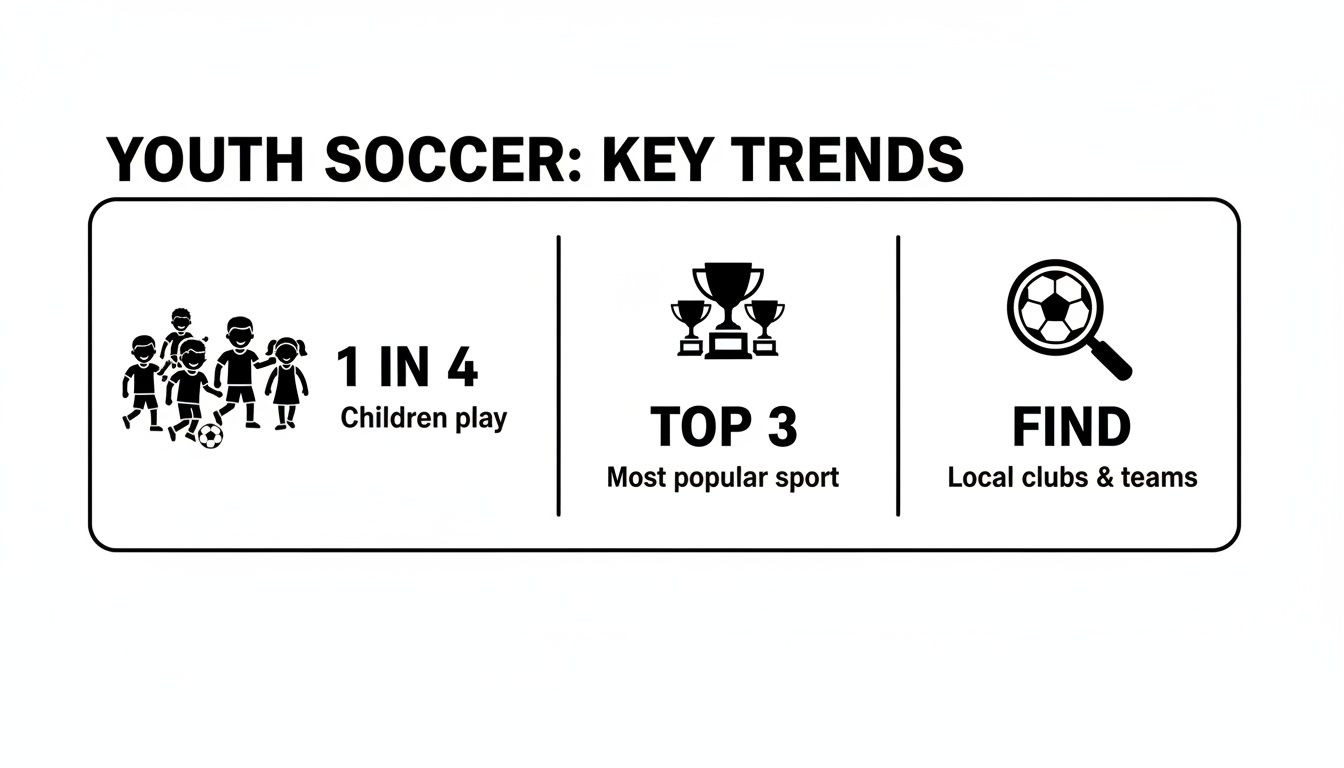
The numbers don't lie. With roughly one in four kids playing, soccer is a top-three sport in the U.S., which means you've got plenty of choices right in your neighborhood.
Starting with the Basics: Toddlers and Skill-Building
For the little ones, it’s all about movement and coordination, not winning or losing. A multi-sport class for toddlers is a fantastic starting point. These sessions use play-based activities to build foundational motor skills that are crucial for any sport down the road.
Once they get a bit older, you can start looking at more focused training. A popular method you'll see is Coerver-based technical training, which is all about individual ball mastery. Instead of team formations, these clinics are laser-focused on footwork, first touch, and dribbling. It’s an incredible way for a player to build a solid technical base and really grow their confidence on the ball.
Finding a Specialized Fit
Sometimes, the best training happens in an environment built for a specific purpose. Just for Girls programs, for instance, create a really unique and empowering atmosphere. These sessions are designed to build confidence and skills by addressing the specific social and physical dynamics that young female athletes navigate.
If your child needs help with a specific skill, private one-on-one lessons are the most direct way to see improvement. A private coach can spot and fix weaknesses—whether it's their shooting form or defensive footwork—providing the kind of focused attention that can accelerate development in a way group sessions just can't.
One-on-one coaching is all about repetition. That focused practice helps players build the muscle memory needed for critical skills like dribbling, ball control, and finishing.
Fun, Games, and Seasonal Options
Beyond the weekly class, there are other great ways to get involved. Camps offer an intensive, multi-day training experience, perfect for making a big leap in skill over a school break. They usually mix drills, fun games, and team-building in an immersive setting.
Finally, beginner-friendly leagues are where kids get to put all those skills into practice. The best intro leagues put fun and participation first, way ahead of a win-at-all-costs mentality. It’s the perfect way to let kids experience teamwork and sportsmanship in a low-pressure environment, igniting a love for the game that can last a lifetime.
To help you sort through the options, we've put together a quick comparison guide.
Youth Soccer Program Comparison Guide
Program Type | Best For Ages | Primary Focus | Key Benefit |
|---|---|---|---|
Toddler Multi-Sport | 2–4 | Fun, motor skills, coordination | A positive first introduction to sports |
Coerver Training | 7–14 | Individual ball mastery, technical skills | Builds confidence and technical foundation |
Just for Girls | 7–16 | Skill development, confidence-building | Empowering and supportive environment |
Private Lessons | 8+ | Targeted skill improvement | Personalized attention for rapid progress |
Camps | 5–16 | Intensive skill-building, fun | Immersive experience for big skill jumps |
Leagues | 4+ | Teamwork, game experience, sportsmanship | Applying skills in a real-game setting |
Ultimately, there’s no single "best" program—only the one that’s best for your child right now. Think about their personality and goals, and you'll find the perfect match to help them grow and have fun.
What to Look for When Evaluating Local Soccer Training
You've done the Google searches and have a shortlist of local soccer programs. Now comes the real work: digging in to see which one is the right fit for your child. It’s about looking past the shiny website and figuring out what truly matters for their development, safety, and, most importantly, their love of the game.
A great program always starts with its coaches. While a coach's pro playing career might look impressive, what really counts is their experience and approach with your child’s age group. A fantastic high school coach might not have the patience or teaching style needed for a group of energetic six-year-olds.
Coach Credentials and Class Size
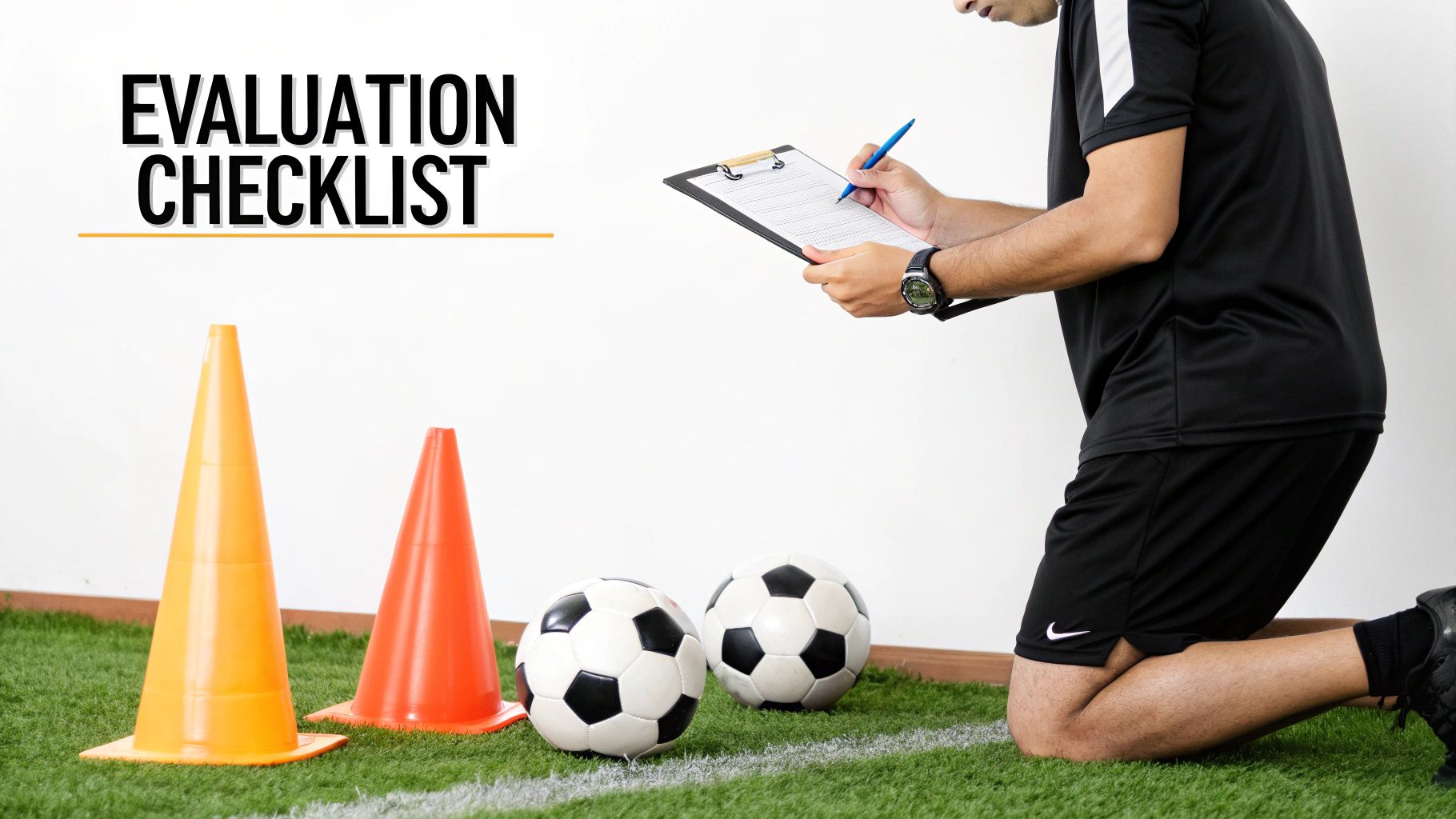
Look for coaches who hold formal certifications from respected organizations like U.S. Soccer or United Soccer Coaches. These credentials prove they understand modern coaching methods, child safety, and age-appropriate development. It’s about more than just running drills; it’s about creating a positive environment where kids feel confident enough to try new things.
The player-to-coach ratio is just as crucial. If one coach is trying to manage twenty kids, your child simply won't get the individual attention they need to improve. A smaller ratio means the coach can actually coach—correcting form, offering a word of encouragement, and making sure no one gets left behind.
A smaller group setting allows coaches to provide immediate, personalized feedback, which is critical for mastering new skills and building a player's confidence on the ball.
Curriculum and Facility Quality
A professional program will always have a plan. Ask to see a curriculum overview or a sample lesson plan. You're looking for a structured approach where each session builds on the last, not just a random collection of drills. This shows they’re focused on steady, long-term player development. If you want to dive deeper into this, our guide on choosing the right soccer academy for your child has some great insights.
Don't overlook the facility itself. An indoor training facility is a game-changer, especially in Houston. No more canceled practices because of rain, extreme heat, or soggy fields. It provides a consistent, reliable environment so your child's training schedule stays on track all year long.
Safety Protocols and Program Cost
This is non-negotiable. The program must have clear safety protocols in place. Make sure to confirm:
Background Checks: Every single coach and staff member must have a thorough, up-to-date background check. No exceptions.
Facility Upkeep: The space should be clean, well-maintained, and free of any obvious hazards.
First Aid: Coaches need to be certified in basic first aid and CPR and have a clear plan for handling injuries.
Of course, cost is a real-world factor for every family. Youth sports have gotten expensive. The average family is now spending $1,016 per year on just one child's primary sport—that's a huge 46% increase in only five years, which is making it harder for many families to keep their kids in the game. You want a program that is transparent about its fees and delivers real value for your investment.
Finding the right fit takes a little homework, but it's worth it. A comprehensive guide to finding the right training program can help frame your thinking. By looking closely at the coaches, curriculum, facility, and safety, you can feel confident you’re choosing a local soccer program that will help your young athlete thrive.
Key Questions to Ask Before You Register
You've checked out the coaches and walked through the facility. Now it's time to get to the heart of what a program is really about.
Asking the right questions before you sign on the dotted line can save you a ton of headaches later. This isn’t just about confirming practice times; it’s about making sure the culture and philosophy of the program are a genuine fit for your child and your family.
That first chat with a program director is your best chance to see if their approach matches what you're looking for. Are they all about winning, or is their focus on helping each kid grow their skills and, most importantly, have a good time? The answers will tell you everything you need to know.
Questions About Coaching and Player Development
Every soccer program has its own vibe, and you want to find one that feels right for your kid. A super-competitive, "win-at-all-costs" environment might crush the spirit of a beginner who just wants to learn the game and make friends.
A great question to kick things off is, “What’s your coaching philosophy for this specific age group?”
Listen for words like "fun," "creativity," "skill-building," and "sportsmanship." That tells you they get what youth sports should really be about.
Next, you'll want to dig into how they handle the reality of youth sports—a class full of kids with different abilities.
Here are a few more must-ask questions:
How do you manage a class with mixed skill levels? A good coach has a plan to challenge the more experienced kids while still encouraging and supporting the beginners.
How do you track a player's progress? You're looking for answers that go beyond just scoring goals. Do they celebrate mastering a new move or showing great teamwork?
What’s your take on sportsmanship? How do they teach kids to be good teammates and handle both winning and losing?
A program’s philosophy is everything. You're looking for a partner who will help build your child's character just as much as their crossover dribble.
Getting Into Logistics and Communication
The big-picture stuff is important, but so are the day-to-day details. Clear, consistent communication is the sign of a well-run organization, and you want to know what to expect before the season starts.
Finally, wrap up with the practical questions that will affect your weekly routine:
How do you keep parents in the loop? Is there an app, an email list, or a text group for last-minute changes like rainouts?
Do you follow a specific training methodology? For instance, if they mention using the Coerver Method, you know they’re serious about individual ball skills.
What does a typical practice look like? Ask how much time is spent on warm-ups, drills, and actually playing the game.
By asking these questions, you’re doing more than just gathering information. You're getting a real feel for the program's values and quality, helping you make the absolute best choice for your young athlete.
How We Deliver Premier Youth Soccer Training in Houston
After you’ve searched "youth soccer training near me," the real work begins: finding a program that aligns with your family’s goals. At JC Sports Houston, we’ve built our entire approach around a simple but powerful motto: "Developing well rounded, creative players."
That philosophy is the heartbeat of everything we do. We believe real development is about more than just winning games—it’s about nurturing a child’s confidence, technical skill, and a genuine love for soccer. Our experienced, certified coaches are all-in on this long-term vision, creating a positive, encouraging space where every kid feels safe to try, fail, and grow.
Age-Specific Programs Built for Success
We know that a four-year-old learns completely differently than a ten-year-old. It sounds obvious, but many programs miss this. That’s why our curriculum is carefully designed for each developmental stage, making sure every player gets the right training at the right time.
Our programs include:
Toddler Multi-Sport Classes: Introducing our youngest athletes to movement and coordination through fun, play-based activities.
Coerver-Based Technical Training: Focusing on individual ball mastery, fancy footwork, and skill-building for school-aged players.
Just for Girls Soccer: A dedicated program designed to build skills and confidence in a supportive, all-female environment.
This age-specific approach isn't just a good idea; it's where youth soccer is heading. The U.S. is adopting an August 1–July 31 age cycle to align soccer teams with school grades, a change aimed at building better team cultures and keeping kids in the game longer. This mirrors what works in Europe and has shown incredible results—some aligned programs have seen 64% growth while national participation has declined.
The JC Sports Advantage
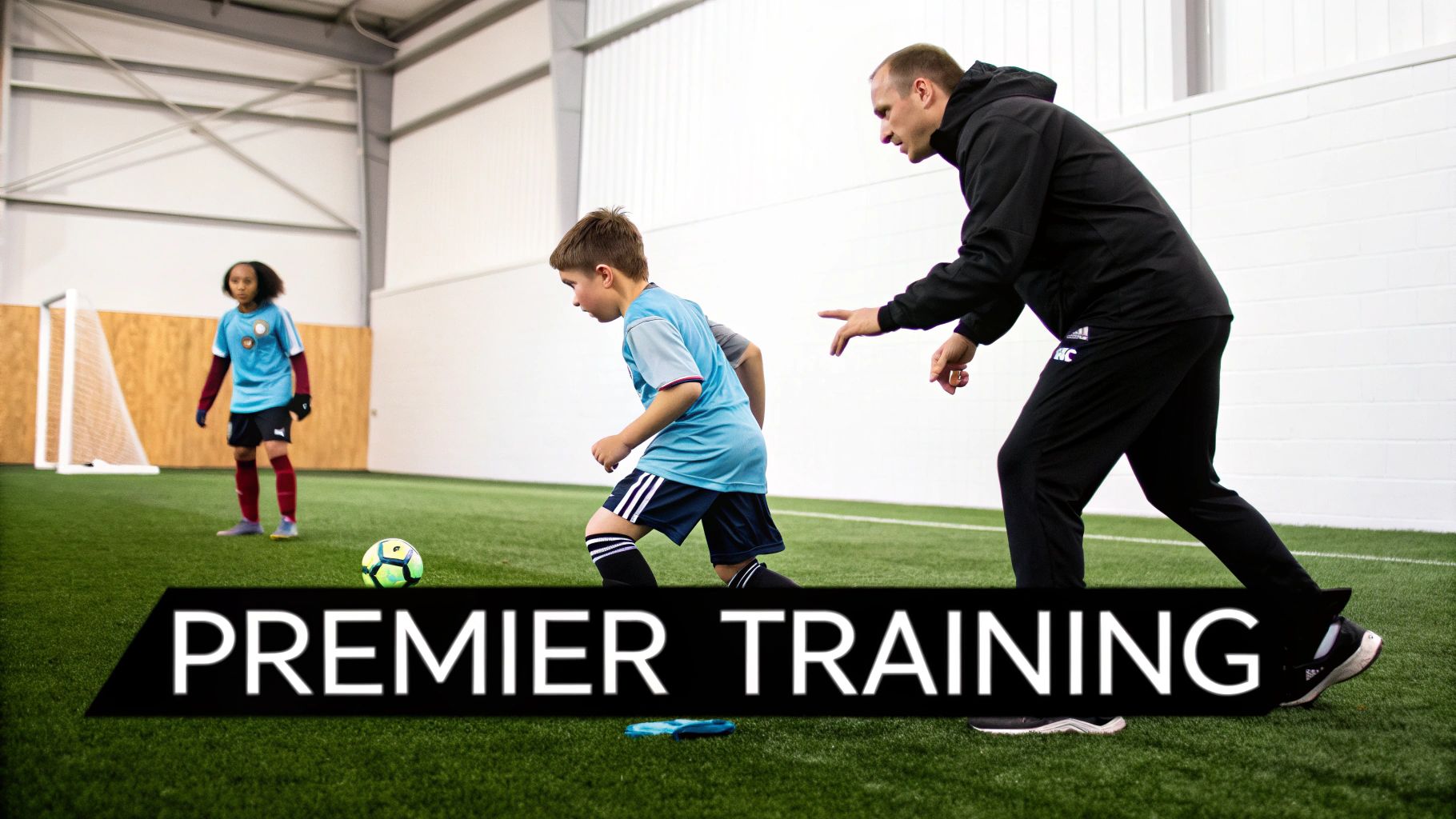
What really makes our training different are the little details that create big improvements and a lasting love for the game. We intentionally keep our class sizes small for a low player-to-coach ratio. This guarantees every child gets the personalized feedback they need to master new skills and build confidence on the ball.
Our state-of-the-art indoor facility in the Humble/Atascocita area is a huge part of our program. It provides a safe, comfortable, and weather-proof environment, which means training is never canceled because of Houston’s unpredictable weather.
This consistency is key. It helps players build momentum and stay on a steady development track all year long. From our curriculum to our facility, every element is designed to give Houston families a truly premier training experience.
You can learn more about everything we offer in our guide to JC Sports Houston's premier youth sports programs. Our focus is simple: create a positive atmosphere where kids can develop their skills, grow as people, and—most importantly—have fun.
Common Questions About Youth Soccer Training
When you first start looking into soccer for your child, a ton of questions pop up. It’s totally normal. You're not just trying to find a team—you're looking for the right place for your child to grow, learn, and have fun.
Let's clear up some of the most common questions we hear from parents just starting their search for "youth soccer training near me."
What Is the Best Age for a Child to Start Soccer Training?
This really depends on the goal. For the little ones, ages 2-4, the best start isn't even soccer-specific. Think multi-sport classes that build core motor skills like running, jumping, and balance through fun, guided play. It’s all about creating a positive first impression with being active.
Once they hit ages 5-7, they’re usually ready for more formal, soccer-focused training. At this point, kids have developed the coordination and attention span to start learning real technical skills. The key is finding a program that keeps the fun front and center, building a love for the game that will last.
What Is the Difference Between Recreational Leagues and Technical Clinics?
This is a big one, and it's where a lot of parents get confused. Think of it as playing a game versus practicing the skills to get better at that game.
Recreational Leagues are all about the game. Kids get a uniform, join a team, and learn the rules of soccer in a fun, low-pressure setting. The focus is on teamwork and just getting out there to play.
Technical Training Clinics, like those that use the Coerver method, are all about skill. These sessions are designed to improve an individual player’s abilities—things like ball control, first touch, and dribbling—through structured, repetitive drills.
Honestly, the best approach for many kids is to do both. They can sharpen their individual skills in a technical clinic during the week and then put it all into practice with their recreational league team on the weekend.
How Do I Know if a Coach Is Qualified to Teach My Child?
A great coach has the right mix of official credentials, real-world experience, and, most importantly, the right personality for your child's age group.
Look for formal certifications from respected organizations like U.S. Soccer or United Soccer Coaches. This shows they’re up-to-date on modern coaching techniques and safety protocols.
But a certificate doesn't tell the whole story. A truly great coach is patient, positive, and knows how to make learning fun. Their ability to connect with your child is just as important as their technical knowledge.
Beyond the paperwork, check their experience with your child’s specific age. A coach who’s a pro with teenagers might not have the patience or approach needed for a group of six-year-olds. The best way to find out? Observe a class or ask for a trial session to see their coaching style firsthand.
At JC Sports Houston, we provide a clear pathway for every age and skill level, from our playful toddler classes to our advanced technical training. Our certified coaches are dedicated to creating a positive environment where your child can thrive.
Ready to see the difference for yourself? Request a free trial and discover our premier youth sports programs.
Comments