

Choosing the Right Soccer Academy in Houston for Your Child

Finding the right soccer academy in Houston for your child can feel like a massive decision—because it is. This is one of the first big steps in their athletic journey, and the choice you make can shape their love for the game for years to come.
The best academies aren't just about winning games. They're about building skills, fostering confidence, and making sure kids genuinely enjoy being on the field. This guide will help you cut through the noise and find a program that’s the perfect fit for your family.
Starting Your Search for a Houston Soccer Academy

Let's be real: choosing a soccer academy is about so much more than just finding a team. It's an investment in your child's growth, both on and off the field. The right environment teaches them about teamwork, resilience, and the joy of being active. The wrong one? It can lead to burnout and frustration before they’ve even had a chance to discover their potential.
Houston has a ton of options, from small neighborhood clubs to big, highly competitive organizations. The key is to look past the fancy jerseys and win-loss records. You need to dig into what really matters: the quality of the coaching, the structure of the program, and the overall culture of the club.
To make your search easier, let’s create a quick checklist of the key factors you should be looking at when evaluating different soccer academies.
Key Factors When Choosing a Soccer Academy
Evaluation Criteria | Why It Matters for Your Child | What to Look For |
|---|---|---|
Coaching Philosophy | This determines whether the focus is on development or just winning. A good coach is a mentor who builds skills and confidence. | Look for coaches who offer positive, constructive feedback. Observe a practice if you can—how do they interact with the kids? |
Age-Appropriate Training | A 6-year-old learns very differently than a 16-year-old. The drills, expectations, and goals must match their developmental stage. | The program should be fun-focused for younger kids, gradually introducing more technical and tactical elements as they get older. |
Facility Quality & Safety | Safe, well-maintained fields are a must. You don't want your child playing on uneven surfaces or with rundown equipment. | Check out the fields, goals, and any other equipment. Indoor facilities, like we have at JC Sports, are a huge plus for dealing with Houston's heat and rain. |
Club Culture | Is the environment positive and encouraging, or high-pressure and stressful? The culture sets the tone for your child’s entire experience. | Talk to other parents. Does the club value sportsmanship and personal growth? Does it feel like a supportive community? |
These core elements give you a solid foundation for comparing your options and finding a place where your child will truly thrive.
A great soccer academy in Houston builds more than just athletic skills; it builds character. The environment should foster resilience, sportsmanship, and confidence that extends far beyond the soccer field.
Ultimately, your goal is to find a community where your child feels supported, challenged, and inspired to be their best.
A great way to get a feel for different programs is to see how they run their shorter-term events. You can explore insights on finding the best soccer camps in Houston, as a camp often gives you a perfect snapshot of an organization's coaching style and overall vibe.
Decoding Coaching Philosophies and Program Structures
Beyond the quality of the fields and the shine of the trophies, the true heart of any soccer academy in Houston is its coaching philosophy. This is the guiding principle that shapes every drill, every team talk, and every interaction your child will have.
Honestly, it’s the difference between a program that builds a lifelong love for the game and one that can lead to early burnout.
Some academies adopt a high-pressure, “win-at-all-costs” model. The main focus here is winning games, which can be exciting but often prioritizes short-term success over long-term player growth. This environment isn't inherently bad, but you have to know if it’s the right fit for your child's personality and your family's goals.
On the other hand, many programs champion a developmental philosophy. This approach is all about building a strong foundation of technical skills, creativity, and soccer IQ. Winning is still a goal, of course, but it’s seen as a byproduct of excellent player development—not the sole objective. This is where methods like Coerver training shine, as they put a huge emphasis on individual ball mastery and confidence. You can learn more about technical training and the Coerver Method to see how it creates such well-rounded players.
Asking the Right Questions
To really understand an academy's true philosophy, you need to ask questions that go beyond the surface. When you get a chance to speak with a coach or director, have a few of these ready:
How do you measure individual player progress? A development-focused academy will talk about skill milestones and confidence, not just goals scored or games won.
What is your typical coach-to-player ratio? Smaller ratios, like 1 coach for every 10-12 players, are a great sign. It means more personalized feedback and attention for your child.
How do your coaches handle mistakes during a game? The answer you want to hear is about constructive correction and encouragement, not yelling or punishment.
What kind of training and certifications do your coaches have? Look for coaches with licenses from recognized organizations like U.S. Soccer or United Soccer Coaches.
Their answers will quickly reveal whether the academy's talk matches their walk.
The best coaches don't just teach soccer; they teach life skills. They use the game to build resilience, foster sportsmanship, and show kids how to work together toward a common goal.
The Importance of Age-Appropriate Programming
A one-size-fits-all curriculum simply doesn't work in youth soccer. The way you train a five-year-old and a fifteen-year-old should look completely different, and a top-notch academy understands this instinctively.
For the youngest players (ages 4-7), the program should be all about fun. Think of it as playful learning disguised as soccer. The goals are simple:
Develop basic motor skills like running, jumping, and kicking.
Build comfort and confidence with a ball at their feet.
Introduce teamwork through fun, cooperative games.
Create a positive association with being active and part of a team.
As players get older (ages 8-12), the focus starts to shift. While fun is still a huge part of it, the programming becomes more structured, introducing foundational technical skills and basic tactical concepts. By the teenage years, training becomes far more sophisticated, focusing on positional play, strategic thinking, and physical conditioning.
Finding an academy that tailors its approach to each specific age group isn’t just a nice-to-have—it’s non-negotiable for healthy, long-term development.
Inspecting Facilities and Managing Logistics
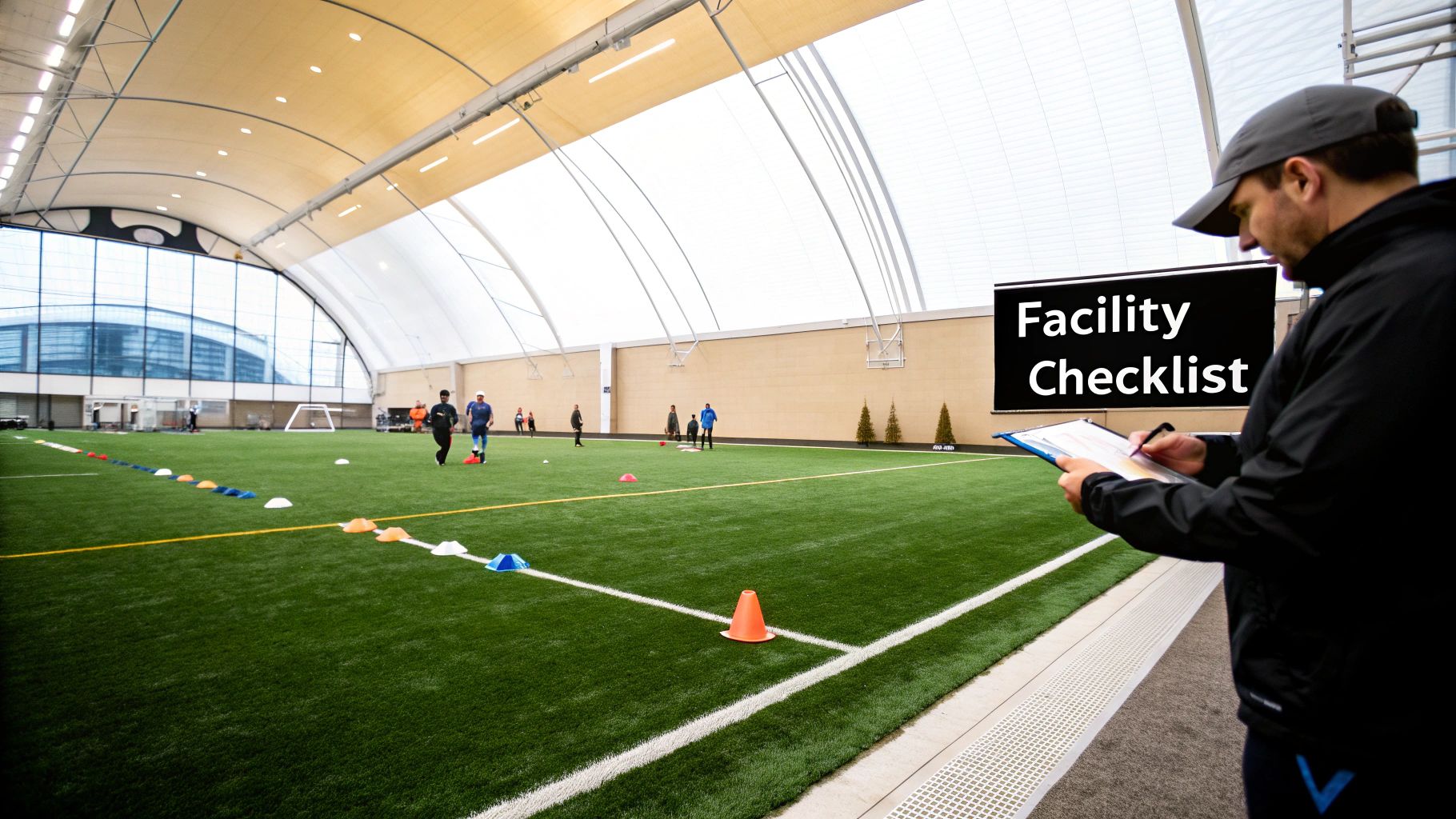
A great coaching philosophy is a huge piece of the puzzle, but it needs the right environment to truly shine. The physical space of a soccer academy in Houston has a direct impact on your child’s safety, their development, and frankly, how much they enjoy showing up.
It’s time to put on your inspector hat.
When you visit a potential academy, look past the obvious. Are the fields well-maintained? Check for hazards like uneven patches or potholes. A quality playing surface isn't just for looks; it shows the organization cares about preventing injuries and providing a professional environment.
Take a look at the gear, too. Are the goals, cones, and other training equipment in good shape? Clean, organized facilities are a huge green flag. It tells you the academy is run professionally and takes its responsibility to your child seriously.
The Indoor Advantage in Houston
Let's be real: Houston weather is completely unpredictable. Scorching summer heat, pop-up thunderstorms, and surprise cold fronts can wipe out training schedules for weeks at a time. This is where an academy with indoor facilities, like we have at JC Sports Houston, becomes a total game-changer.
An indoor, climate-controlled turf field means practices and games happen on schedule, no matter what's going on outside. That consistency is gold for skill development and keeps the momentum going all year long. For busy Houston families, it’s a practical advantage you’ll appreciate every time you see a storm rolling in.
A well-equipped academy invests in its players' safety and provides consistent training opportunities. Look for clean, well-maintained fields and consider the huge benefit of an indoor option to combat Houston's unpredictable weather.
Navigating the Family Schedule
The final piece of this practical puzzle is logistics. Even the most amazing program won't work if it turns your family's schedule upside down. The best academy for your child is one that fits reasonably into your life.
Before you commit, map it out. How long is that commute during rush hour? Do the practice times clash with school, dinner, or other commitments? A 30-minute drive can easily become an hour in Houston traffic, and that adds up fast over a long season.
As you evaluate an academy, dig into the details of their schedule and locations.
Practice Times and Frequency: Make sure the schedule is sustainable. You don't want to burn out your child (or yourself!) before the season is even halfway over.
Game Locations: Where are league games typically played? Ask if you'll be expected to drive all over the city every weekend.
Communication: How does the academy handle schedule changes? A great program will have a clear system, like an app or email alerts, to keep parents in the loop.
Choosing a soccer academy in Houston is about finding that sweet spot. You need excellent coaching and a positive culture, but you also need safe facilities and a schedule that doesn't add a ton of stress to your real-world demands.
Understanding Player Development Pathways
Choosing a soccer academy in Houston is about more than just signing up for a season. It's a real investment in your child's athletic future. The foundation they build in these early years doesn't just teach them how to kick a ball—it opens doors to higher levels of competition down the road. It’s all about seeing the bigger picture.
Thinking about a "player development pipeline" might sound intense, but it's essential for making a smart choice. This isn't about putting pressure on your little one. It's simply about recognizing how quality, consistent training can unlock their potential, whether that means playing for their high school team, in college, or even beyond.
From Foundational Skills to Elite Competition
The skills a child picks up in a development-first program are the building blocks for everything that comes next. A curriculum that focuses on individual ball mastery, like Coerver-based training, is designed to build the technical skill and creativity that college scouts and pro coaches look for later on.
A great academy provides a clear, structured path for players to advance. This usually means moving from recreational teams to more competitive select teams, and for some, all the way to elite platforms like MLS NEXT—the highest level of youth soccer in the country. A good soccer academy in Houston will have the connections and a proven track record of helping players climb that ladder.
The goal of a real development pathway isn't just to create great soccer players. It's to create opportunities. A well-run academy shows you a clear route from fundamental training to tangible goals like college scholarships and professional tryouts.
Houston's soccer scene is packed with clubs that have built impressive talent pipelines. For example, some of the top programs in our area consistently produce high-caliber athletes. HTX Soccer has placed an incredible 775 players into college programs since 2006. On top of that, 67 have been selected for national team activities and 17 have signed professional contracts. You can learn more about their successful college placement program.
The Role of Long-Term Athlete Development
A huge piece of the puzzle is making sure young athletes can stay in the game. Understanding how to prevent sports injuries is a core part of any healthy development pathway. The focus should always be on building a durable, resilient athlete, not just a skilled player.
This long-term view is about more than just soccer. It includes physical conditioning, mental toughness, and injury prevention habits that will serve an athlete for their entire career. The best academies bake this holistic approach into their training from day one.
To get a better handle on this, check out our parent's guide to the Long-Term Athlete Development model. It breaks down how these principles should be applied at different ages.
When you choose an academy, you're not just picking a team for the fall season. You're selecting a partner in your child's growth. The right program offers a clear, supportive, and ambitious pathway to help them reach their full potential, both on and off the field.
Alright, you’ve narrowed down your options, done the online research, and compared the philosophies. Now comes the most important part: making that final call on a soccer academy in Houston with confidence. It's time to move from the screen to the sidelines.
The best tool you have for this is the trial session or open practice. Almost every solid academy offers one, and it’s your unfiltered, behind-the-scenes look at how they really operate. This is your chance to see the coaching style, the team culture, and the overall vibe in action, far beyond what any polished website or brochure can show you.
What to Watch for During a Trial Session
When you get to the field, it’s natural to want to focus only on your child. Try to resist that urge. Instead, zoom out and observe the entire environment. Your goal here is to catch the little interactions that reveal the true character of the academy.
Here are a few things I always tell parents to look for:
How does the coach handle mistakes? When a kid shanks a pass or loses the ball, what’s the coach's first reaction? You’re looking for someone who offers constructive, encouraging feedback—not a coach who shows visible frustration. Mistakes are teaching moments, plain and simple.
Are the kids engaged? Look at the players’ body language. Are they actively participating and, most importantly, having fun? Or do they seem bored and just going through the motions? A positive, energetic atmosphere is essential for keeping young players motivated.
How do teammates treat each other? Watch how the current players interact with newcomers. Is the team welcoming and supportive? That’s a massive indicator of a healthy club culture.
Making a decision about an academy also means trusting that it's a stable, well-run organization. It might sound strange, but understanding the basics of what makes a sports facility successful can give you peace of mind. For example, learning about topics like how to start a gym business highlights the kind of operational planning that keeps great programs running smoothly for years.
Gathering Intel from the Sidelines
While the coaches and directors will give you the official pitch, the other parents on the sidelines have the unedited, real-world story. Don't be shy—strike up a conversation. These parents are living the experience day in and day out.
Ask them direct, practical questions to get the full picture:
"How's the communication from the club when schedules change or a practice gets rained out?"
"Do you feel like the coaching has been consistent all season?"
"Honestly, has your child's confidence and skill improved since they joined?"
Their answers are pure gold. They'll give you priceless insight into how the academy actually operates and the real impact it has on families.
The trial isn't just about seeing if your child can keep up. It's about you confirming that the academy's culture, coaching style, and community are the right fit for your entire family.
The best academies are also crystal clear about their player development goals. They should be able to show you a roadmap of where their training can lead.
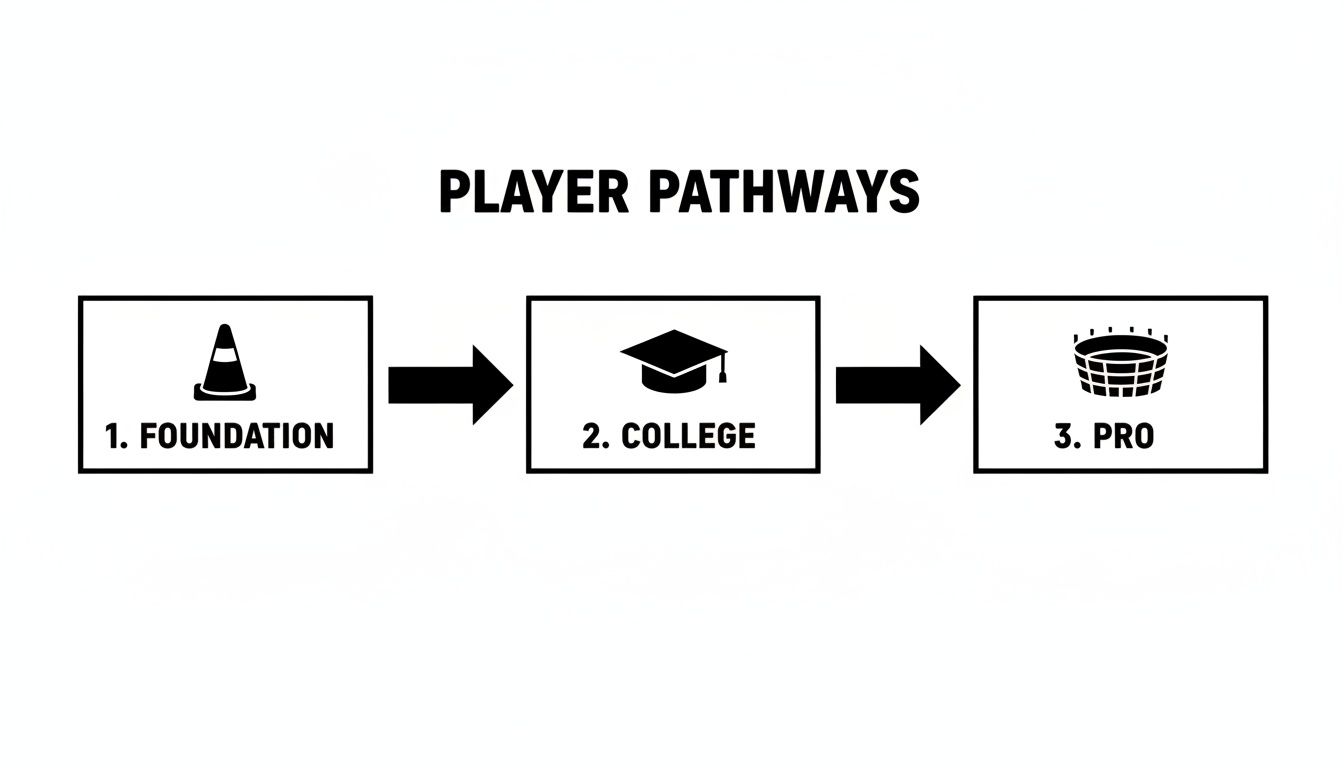
This kind of visual pathway shows how strong foundational training can open doors to collegiate and even professional opportunities down the road. It’s not just a nice graphic; it’s a sign of a program with a plan.
At the end of the day, your final decision should be a combination of solid, firsthand observation and a good gut feeling. You're looking for the place where your child will not only grow as a player but will also be happy, challenged, and supported every step of the way.
Common Questions About Houston Soccer Academies
Even after you've toured a few places and watched a practice, some practical questions always seem to pop up. Getting clear, straightforward answers is the final step before you can feel confident in your choice of a soccer academy in Houston.
Let’s walk through some of the most common questions we hear from parents.
At What Age Should My Child Join an Academy?
There’s really no magic number here—it all comes down to your child’s personality and the programs available. Many local programs offer fun, introductory classes for toddlers (ages 2-4) that are all about movement, coordination, and simply having a positive experience with being active.
More structured, soccer-focused training usually kicks in around ages 5 to 7. The most important factor at this age is finding a program that makes fun the top priority. A great first experience is what builds a lifelong love for the game.
What Is the Typical Cost of a Soccer Academy in Houston?
The costs can swing pretty wildly depending on the type of program. A local recreational league might only run you a few hundred dollars for a season, which is an awesome and affordable starting point for many families.
On the flip side, elite, year-round competitive programs can cost several thousand dollars. That fee typically covers things like coaching salaries, league registration, insurance, and access to the fields. Always ask for a detailed cost breakdown so you can see exactly where your money is going.
Don't forget to ask about the "extras" that might not be included in the registration fee. Uniforms, tournament entry fees, and travel costs for away games can add up fast, so you'll want to know the full financial picture upfront.
Knowing the complete financial commitment from the start prevents any surprises and helps you budget for your child’s soccer journey.
Can My Child Join an Academy with No Soccer Experience?
Absolutely! Every great player has to start somewhere, and quality academies are built for beginners. The best programs offer specific developmental tracks, skills clinics, or beginner-level teams designed for kids who are brand new to the sport.
When you reach out to an academy, just be direct and ask about their options for new players. A good organization will be happy to explain how they bring beginners into the fold. They should have a clear, supportive plan for teaching the fundamentals in a low-pressure environment.
How Can I Tell If a Coaching Philosophy Is a Good Fit?
This is where your own eyes are your best tool. Watching a trial session or a practice is the single best way to see a coaching philosophy in action.
Here’s what to look for:
Communication Style: How do the coaches talk to the kids? Is their feedback encouraging and helpful, or is it overly critical and demanding?
Handling Mistakes: Pay close attention to what happens when a player messes up. A coach focused on development will use it as a teaching moment, not a reason to yell.
Player Engagement: Do the kids look like they’re having fun? A positive, energetic atmosphere is a huge sign that the program prioritizes both skill-building and a genuine love for the game.
Ultimately, you’re looking for a program that feels right for your family and matches your child's personality. A great coach doesn't just teach soccer; they teach effort, resilience, and confidence—lessons that last a lifetime.
At JC Sports Houston, we build strong foundations through positive coaching and proven, skill-based methods like Coerver training. We invite you to see our approach for yourself with a free trial class. Come find out if our community is the right fit for your young athlete!
Visit us at https://jcsportshouston.com to learn more.
Comments