

A Parent’s Guide to Traveling Soccer Teams
- cesar coronel
- Feb 1
- 13 min read

So, you’ve heard the term “traveling soccer team” and you're wondering what it’s all about. Let's break it down.
At their core, traveling soccer teams are competitive, tryout-based squads for kids who play against other skilled teams from different towns, cities, and sometimes even other states. These teams, which you might also hear called 'club' or 'select' teams, are a big step up from your local rec league.
What a Traveling Soccer Team Really Means
Making the jump to a traveling team is a lot like going from a casual weekend bike ride around the neighborhood to training for a real race. While recreational soccer is all about fun, getting everyone on the field, and community spirit, travel soccer is built around one thing: player development in a highly competitive environment.
Think of it as the honors program for young athletes. These teams are specifically designed for players who show more than just a passing interest in soccer. They have a higher level of skill, a real passion for the game, and are hungry for a bigger challenge. The entire system is structured to push them and help them grow.
The Foundational Shift in Focus
The main goal here is to give talented kids opportunities they just can't get in a recreational league. This creates a few major differences:
Advanced Coaching: Forget parent volunteers (we love them, but this is different!). Travel teams are led by licensed, professional coaches who live and breathe soccer. Their job is to teach advanced technical skills and tactical strategies.
Intense Practice Schedules: You can expect practices to ramp up. Most teams practice multiple times a week, usually 2-3 times, with a sharp focus on high-intensity drills, conditioning, and real-game scenarios.
Skilled Competition: The "travel" part is key. Your child will consistently play against other hand-picked teams, which means the level of competition in games and tournaments is always high.
This structure isn’t just about racking up wins. It’s about creating a focused atmosphere where dedicated players can truly accelerate their skills and understanding of the game.
The transition to a traveling soccer team is the first major step for a young athlete and their family to decide if they want to pursue the sport more seriously. It moves soccer from a casual pastime to a structured developmental journey.
Understanding this difference is everything. It’s a serious commitment that demands a new level of dedication from both the player and their family. It’s not for everyone, but for the right kid, it can unlock their potential in ways a rec league never could.
So, What’s the Difference Between Recreational and Travel Soccer?
To really get a feel for what a traveling soccer team is all about, it helps to put it side-by-side with the recreational leagues most families start with. Think of it like the difference between a casual backyard barbecue and a formal, catered dinner party. Both are great, but the preparation, expectations, and overall experience are completely different.
The biggest shift is in the fundamental goal. Recreational soccer is built around participation and fun. The number one rule is making sure every kid gets a chance to play, regardless of their skill level. Travel soccer, on the other hand, is driven by competitive development. Playing time isn't guaranteed; it's often earned through hard work and performance, creating an environment that pushes every player to get better.
Coaching, Practices, and the Weekly Grind
Another major difference is who's leading the team. Rec leagues are almost always coached by amazing parent volunteers who generously donate their time. Travel teams, however, are managed by licensed, professional coaches—people who have a deep understanding of tactics, skill-building, and long-term player development.
That professional leadership changes everything about the weekly schedule:
Recreational Soccer: You can usually expect one practice a week, focused on learning the basic rules and, most importantly, having a good time.
Traveling Soccer: Get ready for a minimum of 2-3 intense practices per week, plus extra specialized training for positions like goalkeeping. These aren't casual kick-arounds; they're structured, demanding sessions designed to build serious technical skills and tactical smarts.
This chart gives you a quick visual of how a player typically moves up from the early stages to more advanced levels.
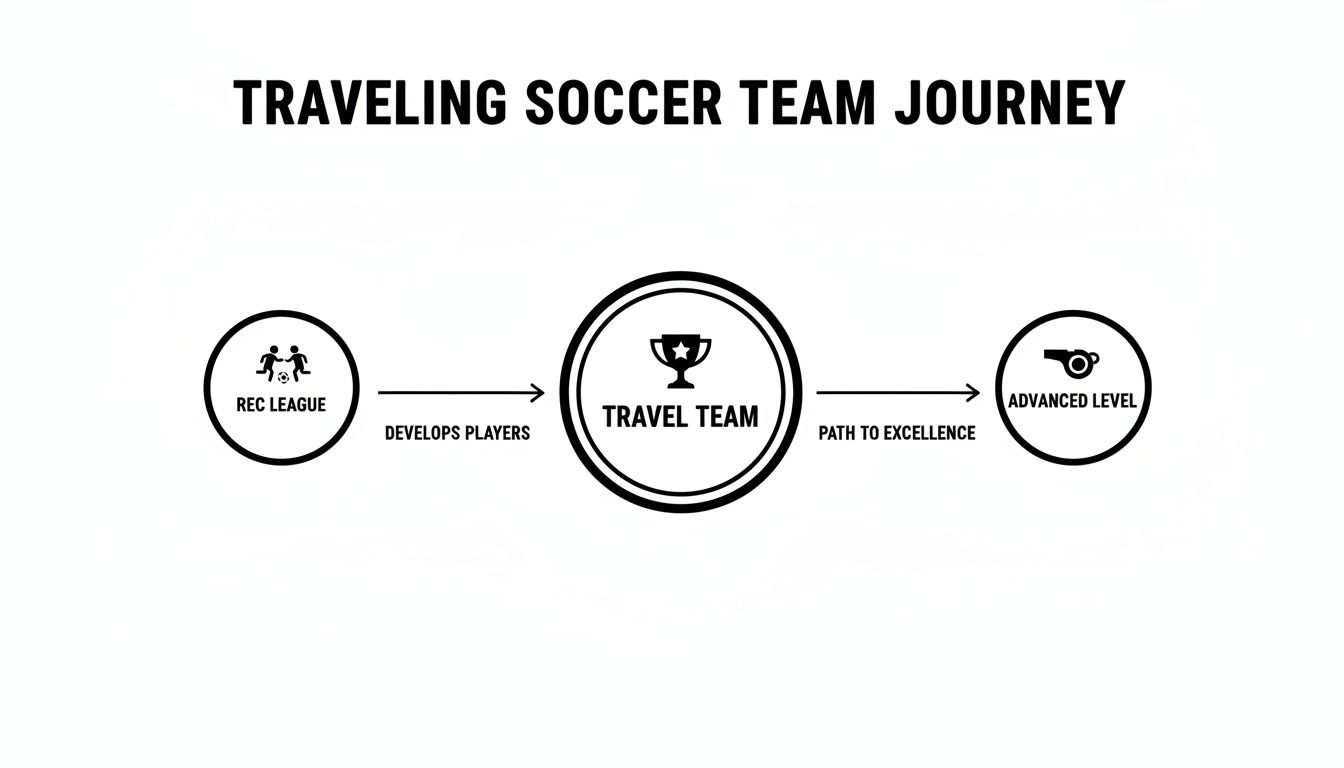
As you can see, making the jump from rec to travel soccer is a clear step up in both competition and commitment, putting a young athlete on a path toward serious development.
Let's break down these differences into a simple table.
Recreational Soccer vs. Traveling Soccer at a Glance
This quick comparison highlights the key distinctions every parent should know.
Aspect | Recreational Soccer | Traveling Soccer Teams |
|---|---|---|
Primary Goal | Fun, participation, social skills | Competitive development, skill mastery |
Playing Time | Guaranteed and usually equal for all players | Earned based on skill, effort, and game situations |
Coaching | Parent volunteers | Licensed, professional coaches |
Practices | 1 per week, focus on basics and fun | 2-3+ per week, intense and structured |
Competition | Local teams within the same league | Teams from other cities/states in leagues & tournaments |
Cost | Low (registration fee) | High (club fees, travel, uniforms, tournament costs) |
Time Commitment | Low (a few hours per week) | High (multiple evenings, full weekends) |
Ultimately, both paths offer valuable experiences, but they serve very different purposes for a developing player.
The World of Competition
Finally, the level of competition is night and day. In a rec league, you’re playing against other local teams from your own community. It’s a closed loop designed to be friendly and familiar.
A traveling soccer team, by its very name, is designed to seek out the best possible competition. This means playing in tough leagues and weekend-long tournaments against other skilled, tryout-based teams from different cities—and sometimes even different states. It’s a true test of how far a player has come.
This constant challenge is what fuels real growth. You can see how this all fits into the bigger picture by reading A Parent's Guide to the Long-Term Athlete Development Model.
Understanding the difference helps you pick the right environment for your child's goals and your family's lifestyle. The demands of travel soccer are absolutely higher, but so are the opportunities for a young player to truly blossom.
The True Commitment: What Travel Soccer Really Costs Your Family
So, you're thinking about moving up to one of the many traveling soccer teams. Before you make the leap, let's talk about what you're really signing up for. This isn't just a bigger version of the local rec league; it’s a lifestyle shift that requires a serious investment of your family's time, money, and energy.
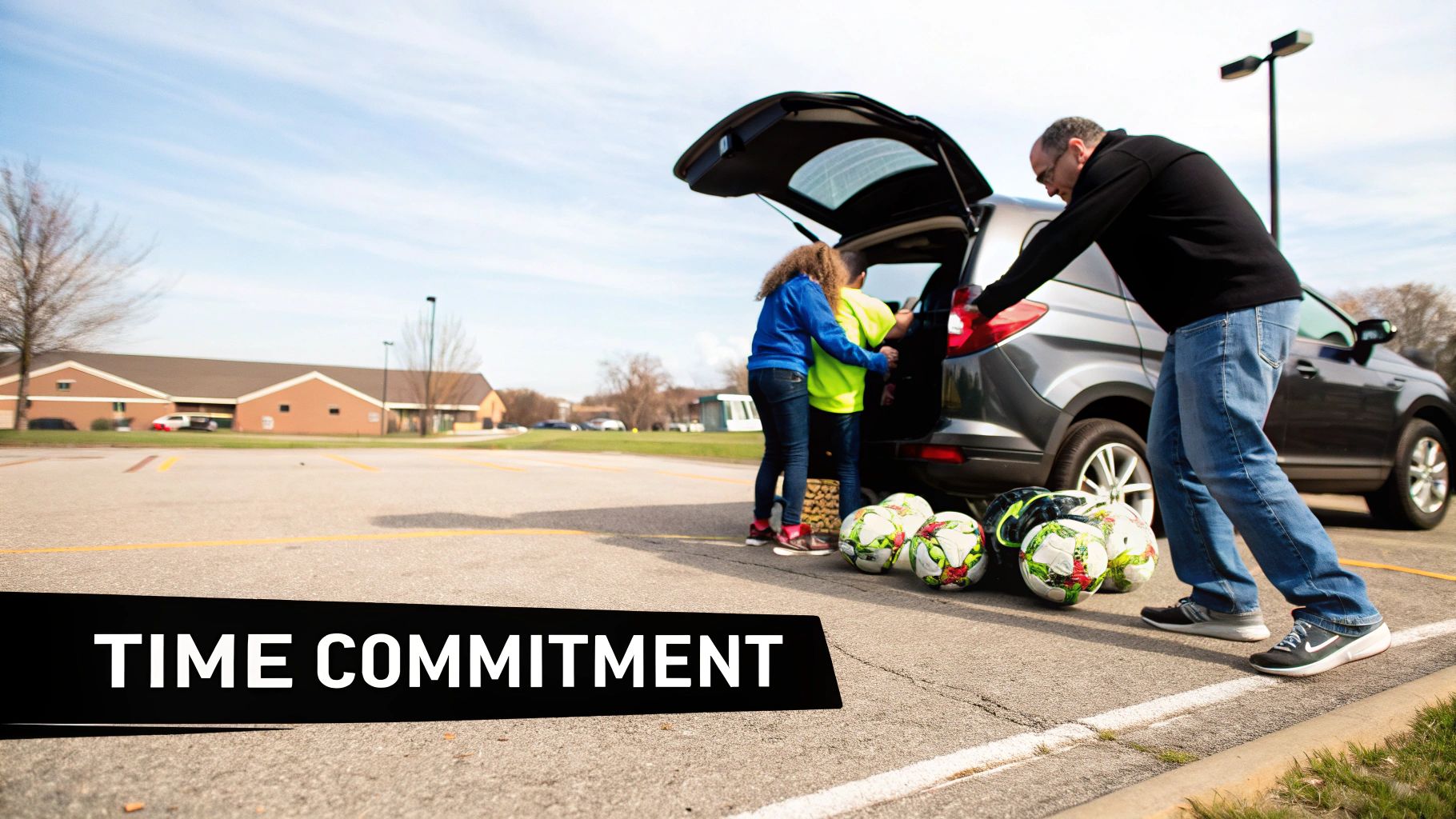
The Time Investment Is No Joke
The first and most immediate change you'll notice is on your calendar. Practices become a non-negotiable part of your weekly routine, usually happening 2-3 times per week. These aren't casual kickarounds, either—they're longer and far more intense than what you see in recreational soccer.
Then come the weekends. Get ready for them to transform into full-blown soccer weekends. Tournaments can easily eat up an entire Saturday and Sunday, starting with early morning kickoffs and sometimes ending with late afternoon championship games. This new schedule inevitably reshapes homework time, family gatherings, and social plans for both players and parents.
Unpacking the Full Financial Picture
The financial side of travel soccer goes way beyond the registration fee you see on the website. To avoid any sticker shock mid-season, it’s smart to get a handle on all the potential costs upfront.
Here’s a realistic breakdown of where the money goes:
Club Dues: This is the big one. It covers coaching salaries, field rentals, league registration, and all the administrative costs that keep the club running.
Uniforms: Players will need a full kit, which typically includes home and away jerseys, shorts, socks, and often warm-up gear.
Tournament Entry Fees: Each tournament has its own entry fee, which is split among all the families on the team.
Travel Expenses: This is the most variable cost. It includes everything from gas for driving to games, hotel stays for out-of-town events, and all the meals you'll eat on the road.
You can expect the total cost per player for a single season on a travel team to land somewhere between $2,000 to over $5,000. The final number really depends on the club's prestige and how far and how often they travel.
And when you're thinking about the logistics of getting an entire team to away games, it's worth knowing that options like chartering a bus for group travel can be a game-changer for team managers and parents trying to coordinate.
The Realities of Being on the Road
The "travel" in a traveling soccer team can mean anything from local tournaments an hour away to major out-of-state competitions that require flights and multi-night hotel stays. The physical toll of being constantly on the move is real—it impacts sleep, recovery, and ultimately, how well a player performs on the field.
Even at the youth level, the strain is significant. At the elite levels, it's immense. A study tracking Australian national footballers found they took 569 different trips over a 20-month period, with average flight times hitting 19 hours and total travel durations reaching nearly 26 hours.
While your U12 team won't be flying to Asia, this data shows the cumulative effect of constant travel. It's a demanding commitment, but it’s also how young athletes build resilience, master time management, and develop the advanced skills needed to compete at a higher level.
Preparing Your Child for Soccer Tryouts
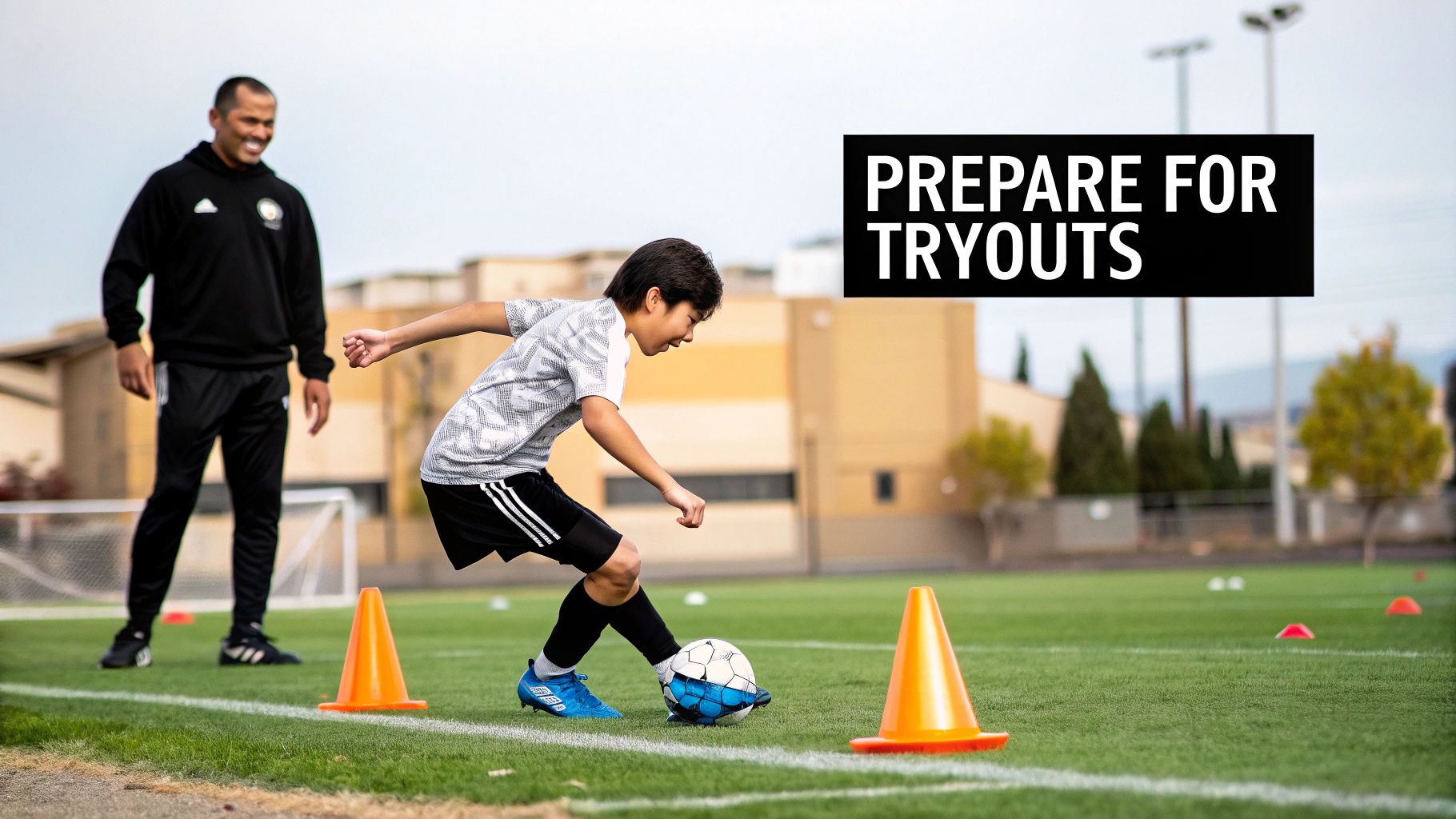
The tryout process for traveling soccer teams can feel pretty intense, both for kids and for parents. The secret to navigating it is simple: preparation. But we're not just talking about skills; we're talking about building confidence so the entire experience is a positive one, no matter the outcome.
Think of it like an open-book test, not a pop quiz. A player who has consistently put in the work on their core skills is going to feel way more prepared to show the coaches what they can do. Remember, coaches aren't looking for perfection. They're looking for potential and a solid foundation.
Focusing on Technical Readiness
When the pressure is on, it's the fundamental skills that shine brightest. Traveling soccer coaches are watching closely to see how players handle the ball in situations that feel like a real game. You can help your child feel ready by encouraging them to focus on a few key areas before they step on that field.
These are the building blocks every confident player needs:
First Touch: Can they receive a pass cleanly and get it under control in one motion? This single skill tells a coach a ton about a player's comfort on the ball.
Dribbling Under Pressure: How do they react with a defender right on their back? Coaches want to see players who can keep their heads up while moving the ball.
Passing Accuracy: Clean, crisp passes make the game flow. Practicing with both feet is a huge plus, showing versatility and a higher level of technical ability.
Composure: Can they stay calm and make smart choices when the game gets chaotic?
A player's ability to show solid fundamentals under pressure is often more impressive to a coach than one flashy move. Consistency is the true sign of a player who’s ready for the next level.
Building Mental and Emotional Strength
The mental game is every bit as important as the physical one. It’s completely normal for kids to feel nervous before a tryout, but how they manage that anxiety makes a world of difference. Remind your child that their effort and attitude are two things they are in 100% control of.
Coaches notice the little things—the "uncoachables." A player who hustles back after making a mistake or encourages a teammate stands out immediately. It's so important to frame the tryout as a chance to compete and learn, not as a pass/fail exam on their worth as a player. For more on this, check out our guide on how to improve soccer skills for young players.
This approach takes a lot of the pressure off. The real goal is for them to do their best, listen to the coaches, and have fun playing the game they love. That shift in mindset ensures that no matter what happens, the tryout becomes a valuable step in their development journey.
How to Choose the Right Soccer Club

Choosing a soccer club for your child is a much bigger deal than just signing them up for a season. You’re picking the environment that will shape their skills, confidence, and passion for the game for years. And let’s be clear: not all traveling soccer teams are created equal, so you have to look beyond a simple win-loss record.
Think of it like choosing a school for your child. Some schools are obsessed with test scores (the wins), while others focus on creating well-rounded, lifelong learners (skilled, confident players). You want to find a club whose philosophy lines up with what you want for your child’s athletic journey. A team that wins every game by just being bigger and faster might not be teaching the technical skills needed for long-term success.
Look for a Player Development Philosophy
This is the single most important thing to look for. Does the club prioritize winning at all costs, especially at the younger ages? Or is their focus on long-term player development? A great club will emphasize technical skill, tactical understanding, and creativity, rather than just stacking the team with the biggest kids to win a U10 trophy.
This philosophy drives everything—from the coach’s style to how playing time is managed. A club truly committed to development will make sure kids learn to play multiple positions, aren't afraid to make mistakes, and build a genuine love for the game.
A great club understands that developing confident, skilled players is the ultimate victory. The wins will naturally follow as a byproduct of excellent training and a positive environment, not the other way around.
Evaluate the Coaching Staff and Culture
The coaches are the ones who will have the most direct impact on your child's experience. Their qualifications, how they communicate, and their attitude on the field are what create the team’s culture. You need to know who is mentoring your young athlete week in and week out.
When you're checking out a club, ask some direct questions that get to the heart of what they value:
What are the coaches' licenses and qualifications? This shows if they are committed to their own professional education as coaches.
How does the coach handle playing time? Is it distributed evenly, or is it strictly earned? The answer tells you a lot about their competitive approach.
What is the primary way you communicate with parents? A clear, consistent communication plan saves everyone a lot of headaches and frustration.
How do you support players who are struggling with confidence? This question reveals whether they care about the whole child or just their on-field performance.
Finding the right fit means finding a supportive, structured environment where your child can thrive as both a player and a person. When you find that, the commitment to traveling soccer teams becomes a truly rewarding experience for the whole family.
Build a Strong Foundation Before Going Pro
Making the leap into the world of traveling soccer teams can feel like a huge step, but it doesn't have to be an intimidating one. The smartest way forward is to build a solid base of skills and confidence before stepping into the high-stakes environment of competitive tryouts.
Think of it like learning to read. You wouldn't hand a child a complex novel before they’ve mastered the alphabet. Developmental programs are that essential "learn-to-read" phase for young athletes, creating the foundation for everything that comes next.
Start with Foundational Skill Building
Developmental classes are all about building core athletic abilities from the ground up in a fun, positive, and low-pressure setting. The focus isn't on winning games, but on mastering movement and fundamentals.
These programs help young players develop:
Essential Motor Skills: Improving coordination, balance, and agility.
Ball Mastery: Gaining confidence and control with the ball at their feet.
Game Awareness: Learning the basic rules and flow of soccer in a simple, understandable way.
This early exposure builds a love for the game without the stress of tryouts and intense competition. It makes soccer a source of joy and accomplishment, creating a rock-solid foundation that makes the transition to a competitive team feel like a natural next step.
Jumping directly into a high-level traveling team without the right technical base is like building a house on sand. Foundational training provides the concrete slab needed to support a player's long-term growth and resilience.
Gain a Competitive Edge with Specialized Training
Once a player has that solid base, specialized training can give them a huge advantage when it's time for tryouts. These sessions bridge the gap between recreational fun and the technical demands of competitive soccer. They zoom in on the specific, advanced abilities that coaches for traveling soccer teams are looking for.
By focusing on advanced techniques, a player can turn a potential weakness into a real strength before ever stepping on the tryout field. To see how this works in practice, you can learn more about the importance of technical soccer training and its impact on a player's development.
Investing in this kind of preparation turns an intimidating leap into a confident stride forward.
Your Top Questions About Traveling Soccer Teams
Jumping into the world of competitive soccer can feel like a whole new game, and it’s natural to have questions. Let's tackle some of the most common ones we hear from parents who are thinking about making the leap.
What’s the Right Age to Join a Travel Team?
Honestly, there’s no magic number. It all comes down to your child’s skill, maturity, and—most importantly—their love for the game. Most clubs start forming their youngest travel teams around 8 or 9 years old (you'll see these labeled as U9/U10).
The biggest clue is your child's own desire. If they’re the one asking for more challenges, practicing on their own, and seem genuinely hungry to improve, they're probably ready.
Does My Kid Need to Be a Superstar to Make the Team?
Not at all, especially for the younger groups. Of course, skill matters, but what coaches are really looking for is potential and something they call "coachability." Can your child listen? Can they take feedback and try to apply it? That’s gold to a coach.
They are always on the lookout for things that don't show up on a highlight reel:
A great attitude, even when a drill is tough.
Hustle and a motor that doesn't stop.
A natural love for competing.
A coach will often take a hard-working, positive kid over a naturally talented player with a bad attitude. It just makes the whole team better.
The tryout shouldn't feel like a final exam. Frame it as a learning experience—a chance to show what you can do, get some feedback, and see what you need to work on, no matter what happens.
What If My Child Doesn't Make the Team?
This is a tough moment, but it’s also a powerful teaching opportunity. Not making the team isn't a "no," it's a "not yet." It gives you a crystal-clear roadmap of what skills to focus on next.
This is where targeted training like skills clinics really shines. It provides a focused, encouraging space for players to build up their weaknesses, boost their confidence, and get ready for the next tryout—all while keeping the fun in the game.
At JC Sports Houston, our entire focus is on building the technical skills and confidence that help players thrive. Our training, based on the world-renowned Coerver method, gives young athletes the strong foundation they need to succeed on traveling soccer teams. Ready to see the difference? Request a free trial class today!
Comments