

Girls Soccer Training That Builds Real Confidence

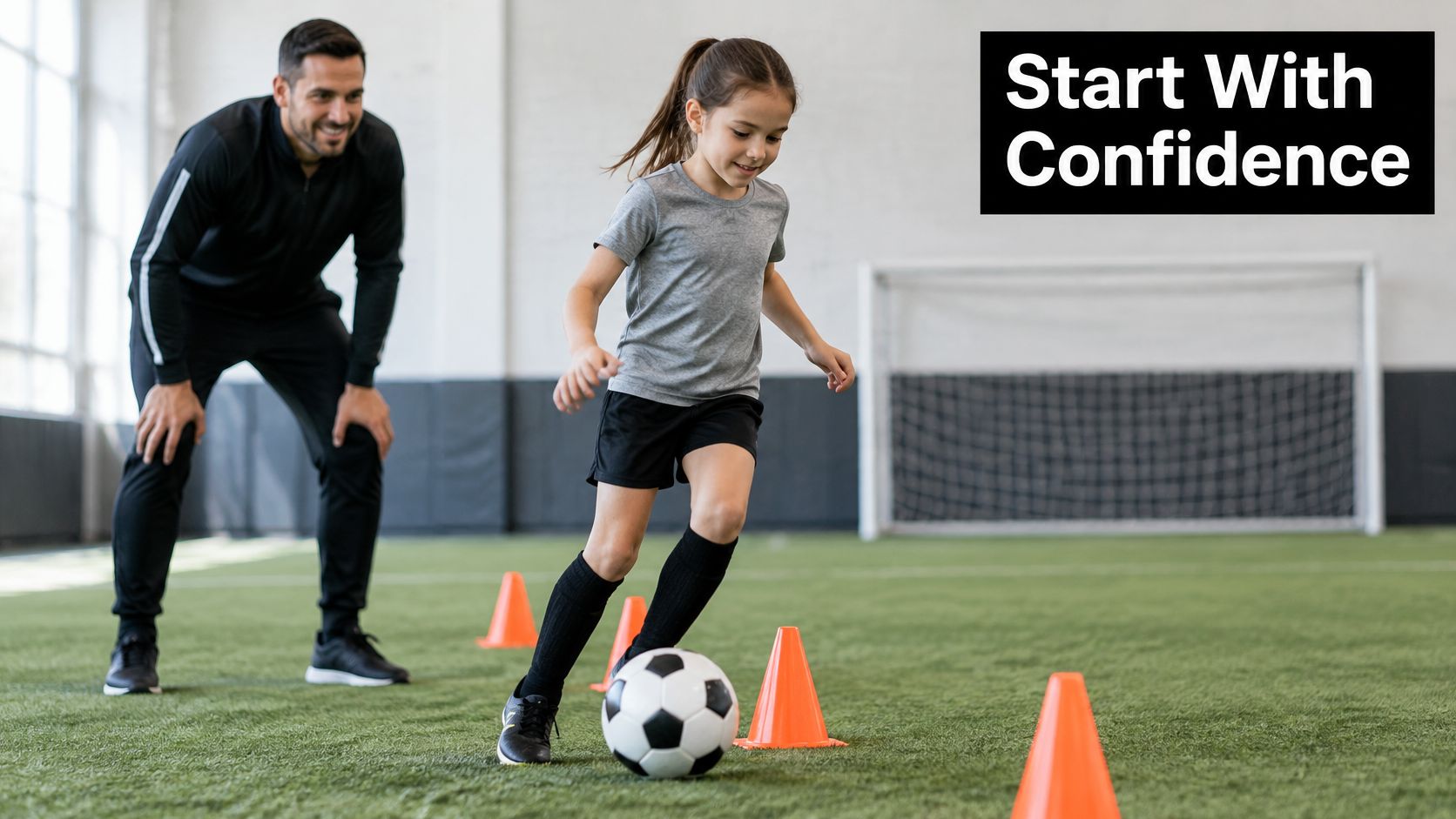
Girls soccer training is progressive, age-appropriate practice that builds ball comfort, decision-making, teamwork, and confidence. It welcomes first-time players as much as girls who already play. If your daughter has never kicked a ball in an organized setting, she is exactly the kind of player this guide is written for.
What Girls Soccer Training Means for Families
Think of it like learning to ride a bike. Nobody starts on a busy street. A child practices in a quiet parking lot first, where mistakes are cheap and repetition is safe. Soccer works the same way, which is why small spaces and lots of touches come before anything that looks like a real match.
That is also why one welcoming session can serve two very different players at once. A beginner who has never joined a team gets games, movement, and early confidence. A girl who already plays gets cleaner technique and sharper decisions. The coach changes the challenge while the welcome stays the same.
For families in Humble, Kingwood, and Atascocita, an indoor, coach-led center like JC Sports Houston removes the usual barriers. Equipment and curriculum are provided, teachers are trained in the program, and parents stay in the building during class.
Age gives parents a useful starting point, mainly because the “job” of training changes as girls grow. Here is the simple version before we get into session plans and drills.
Girls Soccer Training by Age at a Glance
Age Band | Main Training Job | What a Good Session Feels Like |
|---|---|---|
Toddler and preschool | First ball comfort and motor skills | Playful games, lots of giggles, many touches |
Ages 4-6 | Dribbling, listening, and fun | Simple markers, tiny games, smiles through mistakes |
Ages 7-9 | First touch and direction changes | Partner skills, small-sided play, real choices |
Ages 10-13 | Faster decisions under pressure | Quicker passing, movement into space, problem-solving |
These bands are a guide, so treat them as a map rather than a fence. Every child develops on her own calendar, and good coaching meets her where she is.
Early training should send every girl off the field feeling more capable than when she arrived.
Confidence is the thread that runs through all of it. Learn more about building confidence in young athletes in our related guide.
What This Guide Covers Next
Here is the path ahead, so you know what is coming:
How age changes the work, from toddler movement to teenage decision-making
How Coerver and Just for Girls training is organized, and what a session actually teaches
Sample session plans and drills you can picture before you ever register
Movement habits that support safer play, woven into the same games
How to choose a program and request a free trial for ages 4-6, 7-9, or 10-13
By the end, you will know whether girls soccer training fits your child and exactly how to take the first step.
A four-year-old dribbling through cones and a high schooler shielding the ball from a defender are playing the same sport. That doesn't mean they need the same practice. Girls soccer training works best when the challenge matches each player's movement skills, experience, and readiness for more.
Why Age Changes Girls Soccer Training
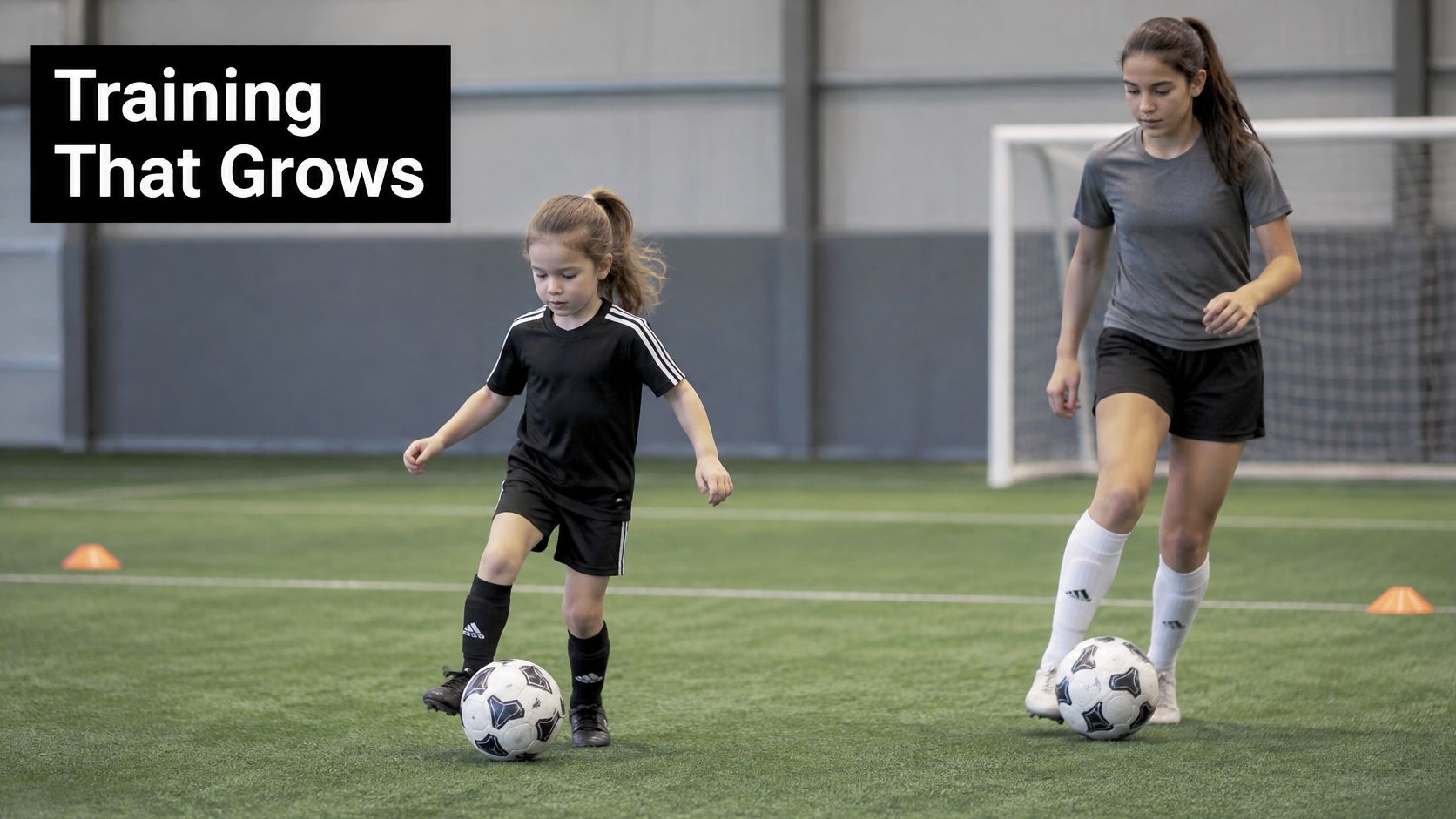
With toddlers and preschoolers, forget positions and passing patterns. The real work is playful coordination: stopping a rolling ball, tiptoeing around markers, then chasing it down again.
Simple games like these give movement a purpose. Nobody stands in line, and nobody gets a lecture. JC Sports Houston runs age-appropriate sports programs starting at 24 months, so kids can get comfortable with a ball through play long before training turns technical.
Young beginners work on stopping, starting, balancing, and keeping the ball close.
School-age players connect those skills to receiving passes and finding teammates.
Older players sharpen their first touch, speed up their passing, and learn to move away from pressure.
None of this is about pushing kids into harder drills before they're ready. When one problem starts feeling easy, that's the signal to introduce the next one.
Give Every Player More Decisions
Small-sided games are the easiest way to see this in action. Picture a kitchen where everyone gets a turn stirring the pot, instead of one kid doing all the cooking while the rest watch.
Fewer players on the field means more touches on the ball. More touches mean more chances to receive, decide, and try again. A younger girl might weigh whether to dribble toward an open goal. An older one might take a sideways touch and slip a pass through before a defender closes in.
Keep the game recognizable, but adjust the space, pressure, and choices to fit the player.
That's also why ball-based small-sided training beats running laps. Fitness and decision-making develop together, the same way they show up in real games.
Keep Confidence in the Picture
Once girls hit their teenage years, technical work can't be the whole story. Confidence and belonging matter just as much. Does your daughter feel included? Can she make a mistake without cringing? Does she actually want to come back next week?
Girls-only groups and mixed groups can both deliver, as long as the coaching stays encouraging and the challenge stays reasonable. Who else shares the field matters less than whether your daughter is genuinely getting involved.
Finding the right fit is simpler than it sounds:
Tell the coach about her experience so far.
Ask which group offers a manageable level of challenge.
Watch how she responds before you commit.
Not sure where she fits? Take a look at how soccer age groups guide progression, then sign her up for a free soccer trial. JC Sports Houston has groups for ages 4-6, 7-9, and 10-13.
A new move doesn't have to work the first time a player tries it. In girls soccer training, what really counts is whether she gets the instruction, the encouragement, and the chances to try again.
How Coerver and Just for Girls Training Works
At JC Sports Houston, Coerver-based soccer develops technique step by step, always keeping the child at the center of the game. Age-appropriate games and drills drawn from programs around the world give players fresh ways to explore their skills every session.
Think of that progression like stacking blocks. Controlling the ball forms the base. Changing direction adds another layer, and knowing when to use that turn is what brings the whole skill to life.
Copying a move is only the starting point. Real growth happens when a player begins to recognize when that move can actually help her.
Experienced teachers trained in the JC Sports curriculum guide each session, connecting activities so every skill builds on the one before it. A typical practice progression might look like this:
Ball mastery introduces controlled touches with different parts of the foot.
Creative practice gives players room to experiment with turns and changes of pace.
Small-sided play puts those skills to work against opponents and alongside teammates.
For example, a girl might practice pulling the ball backward in a drill, then use that same movement during a game when a defender steps into her path. Now the technique is a real answer to a real problem on the field.
Space to Ask Questions and Make Mistakes
Just for Girls was built for this kind of experimenting. It's a dedicated space where players can attempt skills they've never tried, ask a coach to demonstrate a move one more time, and speak up freely without feeling like they need to be the expert in the room.
Parents can carry that same mindset into the car ride home with two simple questions:
“What did you try?” keeps the attention on exploring.
“What would you try again?” makes mistakes feel like a normal part of learning.
Getting ready is simple for families too. The indoor center supplies training equipment and curriculum materials, so there's no need for newcomers to buy gear or piece together their own setup.
Before each class, help your player take care of two quick steps:
Check in with her coach.
Use the restroom before activities get underway.
Plan to stay for the session. A parent or caregiver must remain in the building for the entire class.
Once she feels settled in, families can explore private soccer sessions or seasonal play in the MLS Go Indoor Soccer League or the Soccer League. Think of those as possible next steps down the road, since neither one is needed for a first visit.
If this sounds like the right fit for your daughter, request a free soccer trial through JC Sports Houston. Before she joins, share a little about her experience so her coach knows where to start.
A good girls soccer training session usually sticks to one idea from the first touches to the final game. Think of the examples below as starting points a coach can adjust, not fixed scripts or published class schedules.
Sample Girls Soccer Training Sessions and Drills
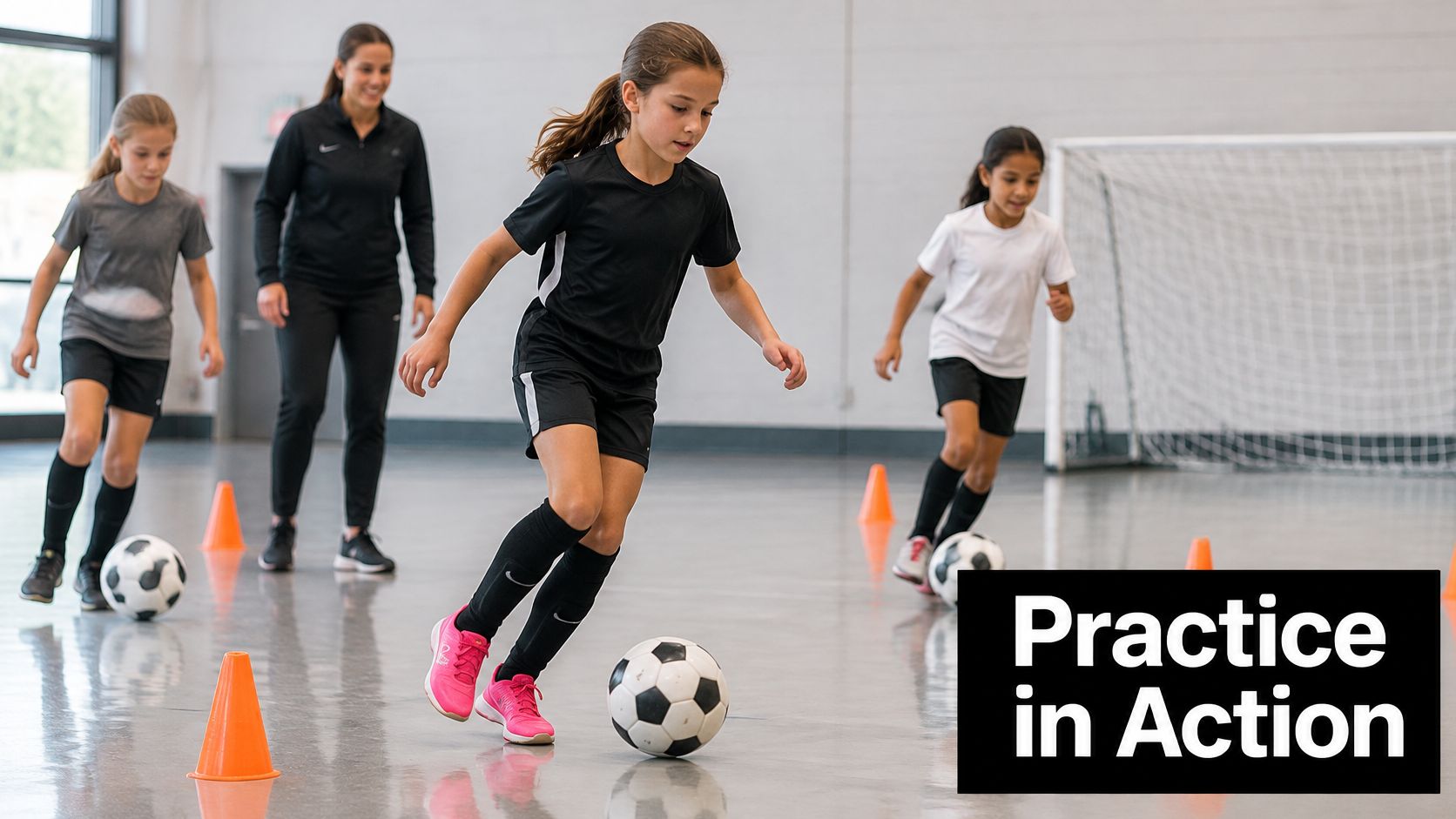
Say the theme is keeping the ball close. Players can try it on their own first, then with a partner, then against a defender. It is a little like practicing what to say before having the real conversation.
Sample Girls Soccer Session Flow
Session Part | Purpose | Younger Players | Older Players |
|---|---|---|---|
Arrival and movement | Settle into activity | Follow simple movement cues | Move and scan nearby space |
Ball mastery | Explore controlled touches | Dribble around markers | Turn and change pace |
Partner skill | Connect with someone | Exchange gentle passes | Receive and pass into space |
Small-sided game | Make real choices | Keep possession and try again | Solve pressure with teammates |
The main point is simple: each part should lead into the next. When the game starts, the skill already feels familiar instead of brand new.
Keep the opening movement part short, then give each player a ball when you can. A coach can stop play for a quick demo, but practice should not turn into a lecture.
The final game should give players a reason to use the skill, not demand the same move every time.
Adapt Drills for Each Age Group
For ages 4-6, “island dribbling” works well. Scatter a few markers, let each girl guide her ball around them, and have her stop beside an island when the coach calls out.
After that, partners can pass softly through a wide gate. End with a tiny game where keeping the ball, trying again, and laughing through mistakes all count.
Ages 7-9 can dribble toward a marker, change direction, then pass to a partner. Ask the receiver to cushion the ball before sending it back.
Add a supporting move after each pass. The passer steps into an open lane instead of standing behind another player.
Ages 10-13 can work in pairs against a nearby defender, choosing whether to pass quickly, shield the ball, or move into space.
For older players, give the drill one clear problem. Can two attackers get the ball past one defender into an end zone without forcing the pass?
Explore additional setups in JC Sports Houston’s guide to youth soccer drills.
Keep the Plan Flexible
The same theme can shape a class, private session, Thanksgiving Soccer Camp, or Christmas Break Camp. JC Sports Houston’s programs keep the child at the center, with coaches adjusting games and pace.
Widen a gate when passing starts to feel frustrating.
Add defensive pressure when players look ready.
Simplify the instruction when attention starts drifting.
Families planning practice snacks can consult the Gym Snack athlete fueling guide.
Request a free soccer trial and tell the coach what your daughter enjoys, what feels hard, and what she wants to try next.
Strong girls soccer training treats movement preparation as part of learning the game itself — never as a reason to keep girls off the field.
Movement Habits That Support Safer Play
Think about teaching a child to brake a bike before letting her race downhill. Soccer deserves that same patience. Players should get comfortable slowing down under control before a coach ever asks for their fastest sprint or sharpest cut.
That's where a good warm-up earns its place. It gives girls room to rehearse balanced landings, body position, and changes of direction right alongside touches on the ball. Parents who want more background can check out SunnyBay warm-up tips before workouts, then talk with their coach about what soccer-specific preparation looks like.
Preparation belongs inside practice. Speed isn't the first test of whether a player is ready to learn.
The good news? A coach doesn't need to stop play for a lecture on movement. Simple reminders can live inside games the kids already enjoy:
Receive and settle: Ask players to find stable feet as they collect a gentle pass.
Turn with control: Encourage an organized body position, with knees following the movement instead of twisting awkwardly.
Look before moving: Prompt girls to notice nearby players before changing direction.
A traffic-light dribbling game is a perfect example — reward the controlled stop, not whoever reaches the marker first.
Match the Challenge to the Player
Once those habits start sticking, a coach can add a teammate or a nearby opponent without demanding more speed right away. That approach connects preparation to the stopping, turning, and decision-making demands of soccer while keeping the activity fun and familiar.
Here's the thing parents sometimes miss: training demands should match age, experience, and recovery — not just how much effort a child is willing to give. A brand-new beginner and a seasoned player coming back after a busy weekend may need very different challenges on the same day.
Parents can support that conversation without coaching from the sideline:
Tell the coach about recent activity and how your daughter is feeling.
Ask how the challenge can be adjusted if she seems overwhelmed.
Bring concerns to the coach or director, as JC Sports Houston advises families, rather than starting a sideline debate.
No session removes every risk, and any honest program will tell you that. The real goal is attentive instruction that makes practice feel both challenging and cared for — the kind of environment that builds a lasting love of the game.
At your daughter's next session, ask her coach how preparation fits into small-sided play. That's where movement habits and ball technique grow together.
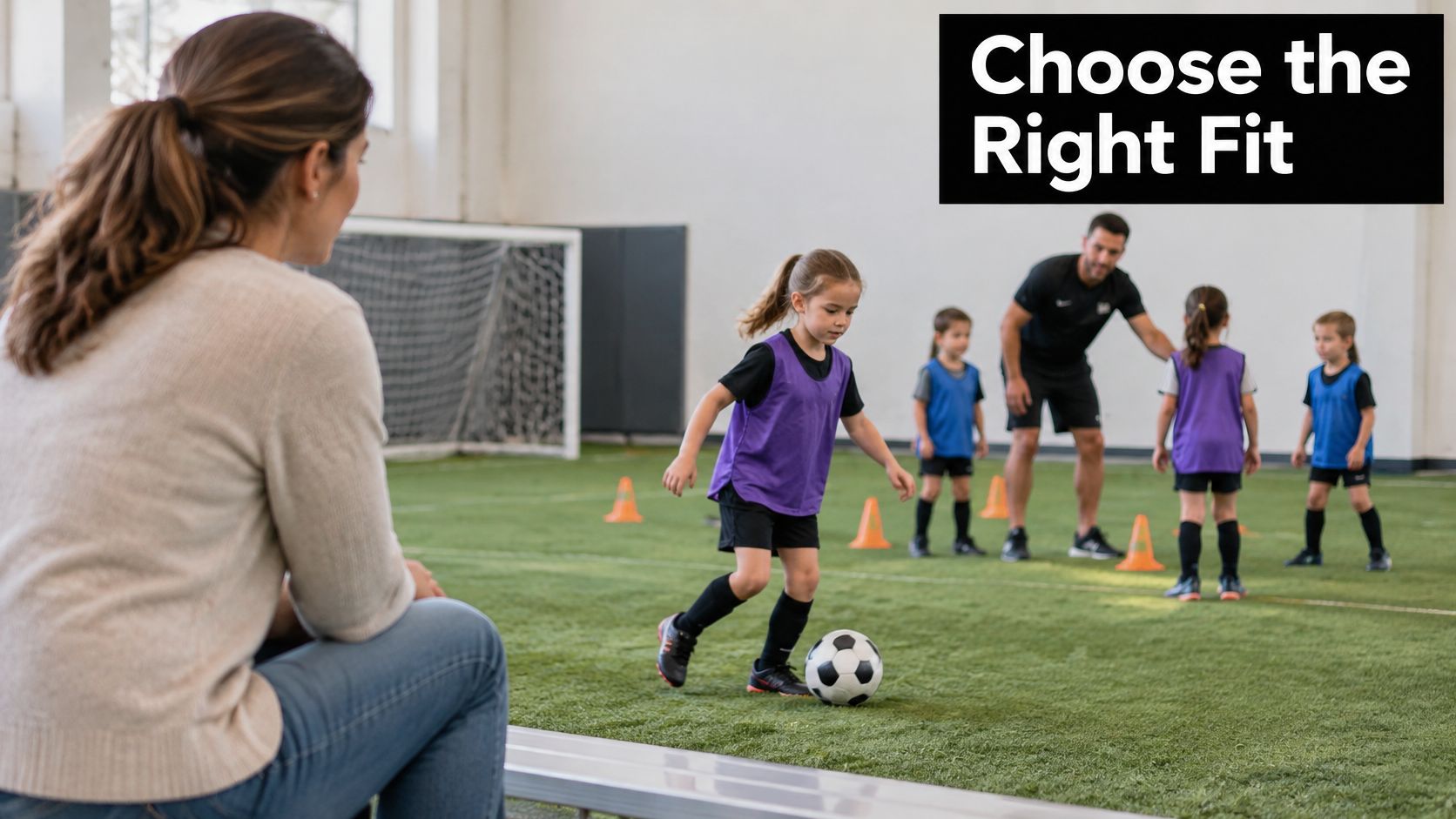
Start with your daughter, not with a list of programs. A shy beginner may need a calm first step, while a confident player may want more touches on the ball, sharper footwork, or teammates who already love the game. Picking the right girls soccer training path is a little like choosing shoes: the best pair is the one that fits how she moves right now.
Match the Option to the Need
A first class gives her a low-pressure way to feel the room, meet the coach, and try a few activities. An ongoing Coerver group builds rhythm week after week, while a private session narrows the focus to one skill or one sticking point. League play changes the picture again by adding teammates, game speed, and real decisions under pressure.
Compare Four Program Paths
First class: Best for a beginner or a hesitant child who needs a gentle introduction.
Ongoing Coerver group: Steady technical work in an age-based setting where confidence can grow.
Private session: Useful when one goal needs direct coaching and extra repetition.
League play: A good next step once she is ready to use skills with and against teammates.
Check the Program Essentials
At JC Sports Houston, look for age-appropriate grouping, experienced teachers who know the curriculum, provided equipment and materials, and the comfort of an indoor setting. A parent or caregiver stays in the building because these are not drop-off classes. Families can register through JC Sports Houston’s simple online process for whichever option fits best.
The practical details matter too. Weekly check-ins help parents stay close to what is happening, and optional SMS alerts can cover practices, games, camps, schedule changes, and cancellations. If school breaks are part of your planning, Thanksgiving and Christmas break camps may fit, and it is smart to review policies and pricing during registration.
The best program is the one your daughter joins willingly and wants to revisit.
Watch Three Signs of Progress
After each visit, ask yourself three simple questions: Was she involved? Did the coach move the skill forward? Did she talk about the next session or practice her moves during the week? Her answers will tell you more than a flyer can.
Ask what felt easy, what felt confusing, and what she wants to try next. A strong program keeps soccer at the center of the experience while giving parents a clear schedule and an easy way to register. At JC Sports Houston, families can review policies and pricing before choosing a season or camp.
Start With a Free Trial
If you want to see the coaching before committing to a season, request a free trial through JC Sports Houston for MultiSport or soccer ages 4-6, 7-9, or 10-13. Visit the indoor center, meet the teachers, and ask which girls soccer training path fits your daughter today.
My Daughter Has Never Played Soccer. Is That Okay?
Yes. At JC Sports Houston, beginners are part of the plan, especially in the youngest groups. Early classes lean on games, balance, coordination, and getting comfortable with the ball so confidence can grow before anything feels serious.
A first visit might mean weaving through markers, stopping a rolling ball, or giving it a gentle nudge toward a teammate. To a new player, that feels like play. To a coach, it is the start of real skill.
What Are the Different Soccer Options?
There are a few ways in, and each one can fit a different kind of learner:
Just for Girls classes create a girls-only soccer setting with the same step-by-step teaching style.
Group soccer classes welcome boys and girls and let players learn alongside teammates.
Private sessions narrow the focus to one player, one coach, and a specific goal.
Pick the format that matches your daughter right now. Some kids open up in a lively group, while others do better with quiet, direct coaching before joining a class.
Can Parents Drop Off Their Children?
Plan to stay. A parent or caregiver needs to remain in the building during class, so these are not drop-off sessions. Have your daughter check in with her coach and use the restroom before activities begin.
Staying nearby helps too. Families can ask questions, and coaches get a clearer picture of each child.
How Do Trials, Leagues, and Camps Work Together?
Start with a free trial for soccer ages 4-6, 7-9, and 10-13. Your family can meet the coaches, see the indoor setup, and get a feel for which path makes sense before committing.
From there, seasonal choices such as the Soccer League and MLS GO Indoor Soccer League add teammates, games, and a rhythm to the week. Break camps, including Thanksgiving Soccer Camp and Christmas Break Camp, give kids a way to keep touches sharp during school vacations and can be an easy low-pressure sample of the coaching style.
If something feels unclear, talk with the coach or director. They can point you toward the best fit and help with the next registration step.
Ready to explore girls soccer training options for your daughter in the Houston area today? Request a free trial from JC Sports Houston for soccer players.
Comments