

Sports for Toddlers: Why sports for toddlers matter

When you think about signing your toddler up for sports, it’s easy to get caught up in the idea of future championships. But let's be real—at this age, it's all about building a foundation for a happy, healthy, and confident kid.
The best sports for toddlers aren't really "sports" in the traditional sense. They're play-based activities like introductory soccer, tumbling, and multi-sport programs that focus entirely on fun and fundamental movement. These programs are designed to build core motor skills and, most importantly, create a positive connection with being active right from the start.
Why Early Sports Matter More Than You Think
That first time your little one steps onto a grassy field or a soft gym mat is a huge moment for both of you. It’s so much more than just play; it's the very beginning of a journey where they learn how their bodies work. Introducing sports now isn't about teaching complex rules or winning games.
Think of it as teaching a new language—the language of movement.
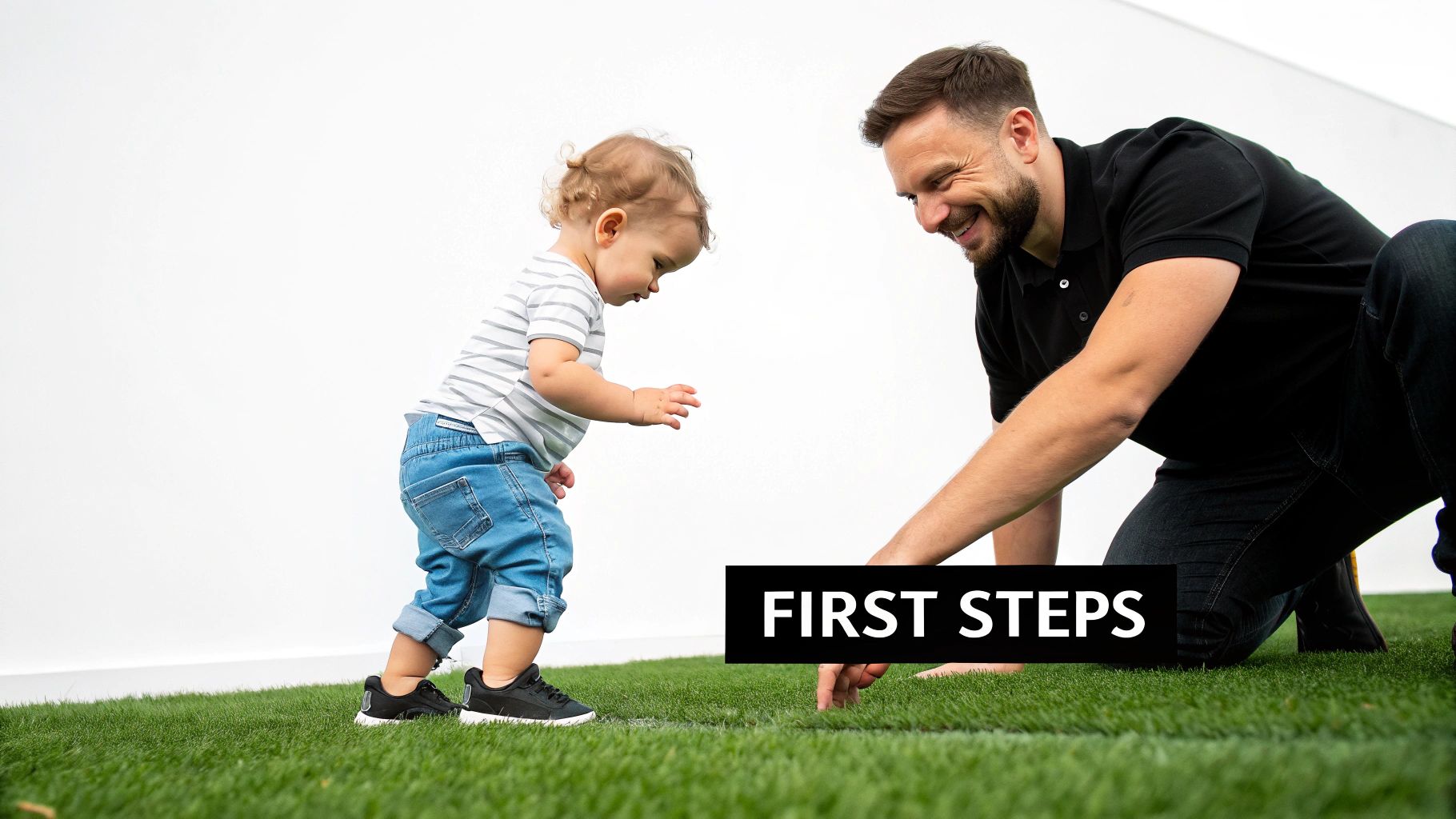
A simple kick, a clumsy throw, or a joyful tumble today is like learning the A-B-Cs of movement. This "movement alphabet" is the foundation for everything that comes later, from better coordination and teamwork to even problem-solving skills down the road.
The Building Blocks of Movement
When we talk about sports for toddlers, what we’re really talking about is developing key physical and cognitive skills through structured, intentional play. Two ideas are at the heart of this process:
Gross Motor Skills: These are the big movements that use the large muscle groups in the arms, legs, and torso. Every time your toddler runs, jumps, or throws a ball, they're strengthening these crucial skills, which are essential for balance and coordination.
Proprioception: It's a big word for a simple concept—your child's internal GPS. It’s their sense of where their body is in space. Activities like catching a ball or navigating around a cone help them understand where their limbs are without having to look, a skill that's vital for pretty much every physical activity imaginable.
The goal is to shift the focus from competition to celebration. Every small success—whether it's kicking a ball for the first time or simply participating with a smile—is a massive win for a toddler.
Setting a Positive Tone for Life
Ultimately, the most important thing to come out of early sports is a lifelong love for being active. A positive first experience, filled with high-fives, encouragement, and fun, sets a powerful precedent for the future.
It teaches toddlers that moving is joyful and that trying new things is exciting, not scary. This early mindset can shape their relationship with physical fitness for years to come. By prioritizing play and participation, you’re not just signing them up for a class; you’re giving them the gift of confidence and well-being that will last a lifetime.
The Big Wins of Starting Sports Early
When you watch your toddler joyfully chase a ball or tumble on a mat, it's easy to see it as just burning off that endless energy. But look closer. Underneath all that fun, something incredible is happening—every little jump, throw, and kick is building a powerful foundation for their future.
These early moments are about so much more than just physical fitness. They set the stage for a lifetime of confidence and healthy habits. When kids get a positive start with organized activities, they're far more likely to stick with them. In fact, by 2023, 57.0% of children between 6 and 11 were involved in sports, a number that's been on the rise. You can dig into more of these youth sports trends over at USAFacts.org.
Building a Strong Physical Foundation
The most obvious benefit is physical, but it goes way deeper than just running around. Every time your little one tries to balance on one foot, they're not just being wobbly—they're strengthening their core and tuning into their proprioception, which is the body's amazing internal GPS for knowing where it is in space.
Think about a simple game of catch with a big, soft ball. It’s a complete developmental masterclass packed into one activity:
Hand-Eye Coordination: Their brain is figuring out how to track the ball and tell their hands exactly where to go. This is the very same skill they’ll use later to hold a crayon or learn to write their name.
Gross Motor Skills: Catching that ball fires up all the large muscles in their arms and torso, building the strength they need for, well, everything!
Agility: They’re learning to shift their body on the fly, which is what helps them stay upright on the playground instead of taking a tumble.
Fueling Brain Power Through Play
Sports are a workout for the brain, too. A well-run class is a fantastic environment for toddlers to practice listening, processing information, and making quick decisions—all without a screen in sight.
When a coach calls out, "Okay, everyone, run to the blue cone!" your child is doing more than just running. They're practicing listening, identifying a color, and following directions. An obstacle course isn't just a physical challenge; it's a puzzle to solve. They have to figure out how to go over, under, or around things, creating new neural pathways for critical thinking.
Every game is a mini-lesson in cause and effect. Kick the ball too hard, and it sails away. Wait your turn, and you get to have fun. These simple connections are the absolute building blocks of logical thinking.
Learning to Be a Teammate
This might be the most underrated benefit of all. Toddler sports are often the first time little ones get to experience being part of a team, and the social and emotional growth is huge. The field or the gym mat becomes their very first classroom for teamwork.
This is where they learn real-world skills like sharing a ball, waiting for their turn to score a goal, and cheering for a friend. These moments teach them how to handle a little frustration and how to feel proud of their own small wins. It’s where they learn to be part of a group, celebrating together and supporting each other—lessons that will stick with them long into preschool, friendships, and beyond.
Finding The Perfect Sport For Your Little One
Choosing your toddler's first sport isn't about scouting for a future pro. It's about finding the right flavor of fun that clicks with their unique personality and gets them excited to move. The goal here is simple: introduce movement in a way that feels like pure, unstructured play.
Lots of families start with something like soccer, and kids often get a huge kick out of having their own gear. Even something as simple as these fun custom soccer ball stickers for kids can make them feel a real connection to the sport before they even step on a field. It gives them a little sense of ownership and gets them pumped for the adventure.
Top Sports Activities For Toddlers
Let's be real—not all sports are built for the toddler crowd. The best ones break down big movements into small, silly games that make sense in a toddler's world.
Here are a few of the most popular and effective options we see parents loving:
Multi-Sport Programs: These are pure genius for short attention spans. One minute they're kicking a soccer ball, the next they're trying to balance on a colorful beam. This constant variety keeps them hooked while they explore a huge range of movements.
Introductory Soccer: These classes are all about fun. They use games to teach toddlers the basics of running, stopping on a dime, and kicking a ball. It's a fantastic way to build leg coordination and practice listening skills in a group. For more ideas, check out our guide on the best sports for 3-year-olds.
Tumbling or Beginner Gymnastics: This is where they build serious foundational strength. Tumbling is amazing for developing core muscles, balance, and just figuring out where their body is in space. They learn to roll, jump, and climb in a safe, super-padded environment, which does wonders for their physical confidence.
Swimming Lessons: While the main focus is water safety, parent-and-tot swim classes are an incredible way to build coordination and strength. The water's gentle resistance gives them a great full-body workout without them even noticing.
The "best" sport is simply the one your child enjoys the most. At this stage, joy is the single most important metric for success. If they are smiling and eager to go back, you’ve found a winner.
This map helps visualize how different activities are all connected to the core parts of your toddler's development.
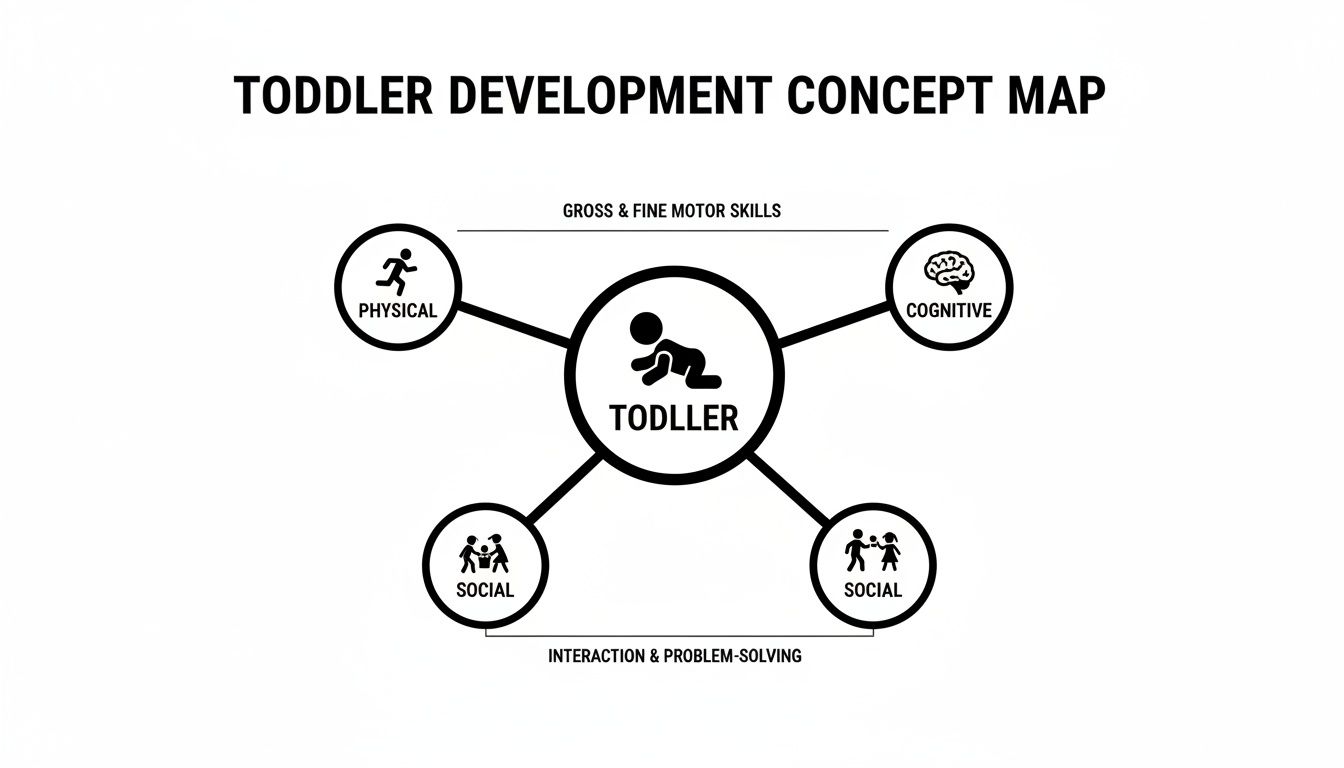
As you can see, whether it’s soccer or tumbling, the physical, mental, and social perks are all woven together. It all comes back to active, happy play.
To help you narrow it down, here’s a quick comparison of what each sport offers.
Best Starter Sports for Toddlers at a Glance
Sport Activity | Key Skills Developed | Best For Toddlers Who Are... | Example Activity |
|---|---|---|---|
Multi-Sport | Versatility, listening, following directions | High-energy and have short attention spans. | "Red Light, Green Light" with a soccer ball. |
Introductory Soccer | Kicking, running, agility, teamwork | Natural runners and love to kick things. | Dribbling the ball to a parent "goal." |
Tumbling/Gymnastics | Balance, core strength, body awareness | Cautious or love to climb and roll. | Walking like animals (bear crawl, crab walk). |
Swimming | Full-body coordination, water safety | Water-lovers, in need of low-impact fun. | Kicking on the side of the pool with help. |
Ultimately, each of these activities provides a fantastic foundation. The key is to match the energy of the sport with the personality of your little one.
How to Know When Your Toddler Is Ready
Figuring out the "right time" to start structured sports for toddlers can feel like a total guessing game for parents. While lots of programs open their doors to kids around age two, the perfect start date isn't about the calendar. It's all about spotting the developmental signs that show your little one is ready to jump into a group setting and actually have fun.
Think of it less as a strict deadline and more like a series of green lights. When you start noticing these signs pop up consistently, it’s a great signal that they’re ready for the next adventure.
Physical Readiness Markers
Before anything else, your toddler needs a certain level of physical confidence to join in safely and happily. Age is just a number here—what really matters is how comfortable they are with moving their body.
You’re not looking for athletic skill, just basic stability and coordination. Keep an eye out for these key milestones:
Steady Running: They can motor across the backyard without tumbling over every few steps.
Basic Jumping: They can get both feet off the ground, even if it's just a tiny hop.
Climbing Confidence: They can tackle small steps or playground equipment without needing a ton of help.
If your toddler is still mastering a steady walk, a structured class might be more frustrating than fun. The goal is to build confidence, so making sure they have these foundational movements down first is key.
Cognitive and Social Cues
A toddler's brain is a busy place! Their ability to enjoy a class depends on more than just running and jumping. Their social and cognitive readiness is just as crucial. And don't worry—a short attention span is 100% normal and expected at this age!
Instead, look for little signs that they can connect with instructions and other kids:
Following Simple Directions: Can they follow a two-part request like, "Please pick up the ball and bring it to me"? This shows they can process and act on instructions.
Showing Interest in Peers: Do they watch other kids at the park with curiosity? An interest in what other children are doing is a fantastic sign of social readiness.
Communicating Needs: They can use words, signs, or gestures to tell you they're happy, tired, or need a snack.
Every child develops on their own unique timeline. If your little one isn't showing all these signs yet, that is perfectly okay. The most important thing you can do is nurture a love for active play right at home. Tossing a ball in the backyard is just as valuable.
When you see a combination of these physical, cognitive, and social cues, it’s a strong signal that your child is probably ready to have a blast in a toddler sports program.
Choosing a Quality Toddler Sports Program
So, you’ve decided your little one is ready to hit the field (or court!). The next big step is finding the right environment for them to play, learn, and grow. But not all sports for toddlers programs are built the same, and picking a great one is the secret to a positive first experience. Think of yourself as an investigator, looking for clues that a program puts fun, safety, and genuine development above all else.
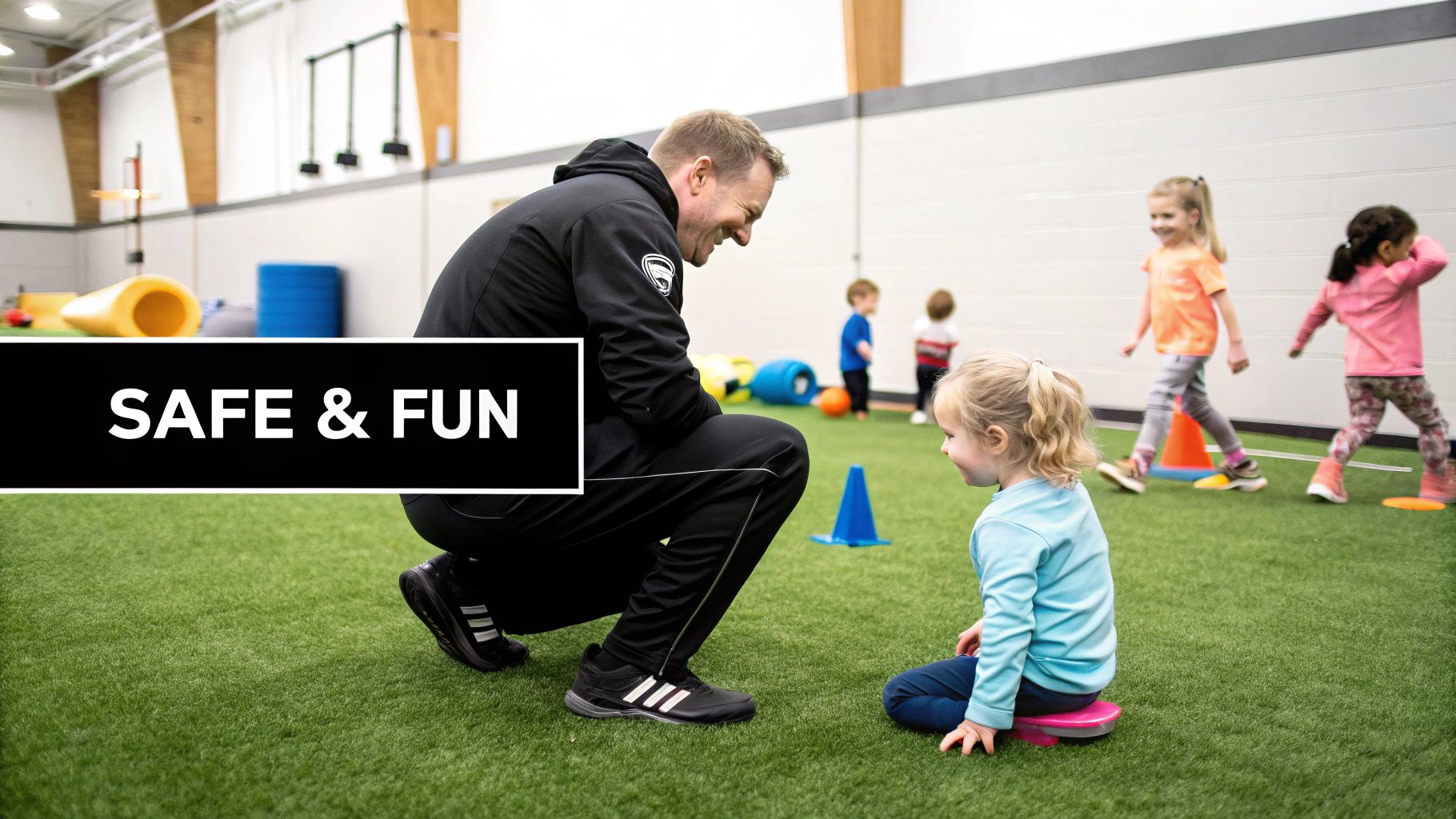
The best programs get it. They understand that a toddler's world is small, and their whole mission is to create a space that feels both exciting and secure. They know a happy kid is a learning kid, so they build their entire curriculum around play-based activities and tons of encouragement. When you walk into a class, you should feel that positive energy right away.
Key Questions to Ask Any Program
Before you sign up, have a real conversation with the program director. Their answers will tell you everything you need to know about their philosophy and how they run things. Arm yourself with these essential questions:
What are the coaches' qualifications? You’re looking for experience in early childhood development, not just sports. A great coach knows how to connect with toddlers on their level.
What is your student-to-coach ratio? For toddlers, a low ratio is a must for safety and individual attention. A good number is around 6-8 kids per coach.
How do you handle shy or hesitant children? The right answer involves patience, encouragement, and letting kids join in when they feel ready—no pressure.
What is your core philosophy? The magic words you want to hear are "fun," "play-based," "fundamentals," and "participation." Any mention of winning or competition at this age is a major red flag.
The answers to these questions are a window into a program’s soul. You can see how a top-tier program is structured by exploring why JC Sports is a leading choice for toddler sports in Houston.
What to Look For During a Trial Class
A trial class is your chance to see a program in action. It’s the ultimate test drive, letting you observe the environment firsthand and, most importantly, see how your child responds.
A brochure can promise you the world, but the vibe of a real class is impossible to fake. Trust your gut—if something feels off, it probably is. Pay close attention to how the coaches and kids interact.
Here’s your observation checklist:
Coach Engagement: Are the coaches down on the kids' level, making eye contact and offering high-fives? Or are they standing over them just barking instructions? Big difference.
Equipment and Safety: Is the equipment clean, colorful, and clearly designed for tiny hands and feet? The space should be well-maintained and free of any hazards.
The "Smile Test": This is the most important one. Just look around at the other toddlers. Are they laughing, engaged, and having a blast? Happy kids are the clearest sign of a fantastic program.
Starting Your Toddler's Sports Adventure
The journey into sports for toddlers is about so much more than just learning to kick a ball. It’s about building a foundation of confidence, watching their faces light up as they master a new skill, and finding a community where your little one feels right at home. Every wobbly run, every clumsy throw, every high-five with a coach—it's all part of building a happy, active life.
You’ve learned about the amazing benefits and what to look for in a quality program. Now it's time for the fun part! The goal is to move from planning to playing and find a program that feels like a perfect fit for your family and your child’s unique personality. This is where the real adventure begins.
Take the First Step with Confidence
The best way to know if a program is the right one is to see it in action. A trial class is the perfect, no-pressure way to get a feel for the environment, meet the coaches, and see how your child responds. It takes all the guesswork out of the equation. You can learn more about what makes a great first experience in our guide to sports programs for 2-year-olds.
To get the fun started right away, having the right gear at home can make a huge difference. You might even look into getting a toddler football net to encourage some backyard practice.
The most important goal is to spark a lifelong, positive relationship with being active. Finding a place where your child feels safe, celebrated, and excited to show up is the biggest win you can ask for.
Ready to see that joy for yourself? We invite you to book a free trial class at JC Sports Houston. Come see how our play-based approach helps toddlers grow, learn, and have an absolute blast doing it.
Got Questions About Toddler Sports? We've Got Answers.
Jumping into the world of sports for toddlers always brings up a few questions. From wondering if your little one is really ready to figuring out how they'll fit into a group, it’s all totally normal. Here are some quick, straightforward answers to the questions we hear most often from parents just like you.
What’s the Best Age to Start?
Most programs say they’re for kids between 2 and 4 years old, but there's no magic number. It's not about their age—it's about their readiness. If your toddler can run without too many wobbles, follow a simple instruction ("kick the ball!"), and seems genuinely interested in moving around, they're probably good to go.
The goal at this stage should always be about fun and trying new things, not becoming the next superstar. We’re just trying to build a positive vibe around movement that gets them excited to come back week after week.
How Long Should a Toddler Sports Class Be?
For toddlers, short and sweet is always the way to go. A class that runs between 30 to 45 minutes is the sweet spot. That’s just enough time to jump into a few fun games but short enough to end on a high note before focus fades or meltdowns begin.
A great program is all about action. It should be packed with fast-paced games that keep the kids moving, engaged, and smiling from start to finish—no long, boring lectures allowed.
My Toddler Is Really Shy. Will a Sports Class Be Too Much?
A quality toddler sports program can actually be the perfect place for a shy child to blossom. The trick is to find a class with a low student-to-coach ratio and a super encouraging atmosphere that celebrates trying, not just succeeding.
A structured group environment gives shy kids the space to observe from a distance and jump in only when they feel ready. It’s a wonderful, low-pressure way for them to build social confidence at their own speed.
Ready to see if your little one is ready to play? At JC Sports Houston, we believe a positive first experience makes all the difference. Come see our fun, play-based approach for yourself by scheduling a free trial class today at https://jcsportshouston.com.
Comments