

A Parent's Guide to 3 Year Old Soccer Success

When you hear "soccer for a three-year-old," it's easy to picture a tiny, competitive league. But that couldn't be further from the truth.
At this age, soccer is all about guided play, not performance. Think of it as a fun, energetic way to introduce your toddler to being active, learning to move their body, and hanging out with other kids in a happy, low-pressure setting. The whole point is to explore movement and build a little confidence—not to master the rules of the game.
Is Your Toddler Ready for 3 Year Old Soccer?
Trying to figure out if your little one is ready for an organized sport can feel like a huge decision. The good news? Readiness for 3 year old soccer has almost nothing to do with how athletic they are. Instead of worrying if they can kick a ball straight, it helps to see it as a structured playdate with a little running around.
The real goal here is to create a positive, happy feeling about being active and trying new things. It’s all about celebrating the effort, not the outcome. A great program will be full of smiles, high-fives, and encouragement.
Key Developmental Signs of Readiness
So, how do you know if your child is actually prepared? Forget about sports skills for a minute and look for a few simple developmental cues that show they’re ready for a group play environment.
A quick-reference table can help you spot the signs that your toddler might be ready to jump in.
Developmental Readiness Checklist for 3 Year Old Soccer
Developmental Area | Signs of Readiness | What This Looks Like in Soccer Class |
|---|---|---|
Gross Motor Skills | They can run, walk, and maybe even hop without tumbling over all the time. | Running from one cone to another or chasing after a ball without losing balance too often. |
Listening Skills | They can follow a simple, one-step direction like "come here" or "pick up the cone." | When the coach says, "everyone stomp like a dinosaur," they join in the fun. |
Social Comfort | They seem okay being around other kids, even if they just play alongside them (parallel play). | They don't get overly distressed in a group and can participate, even if they're not interacting directly yet. |
Separation Comfort | They can handle being away from you for a short period (around 30-45 minutes). | They're comfortable on the field with the coach and other kids while you watch from the sidelines. |
Ultimately, these signs are just guides. Every child develops at their own pace, and the right program will meet them where they are.
This early intro to sports can build a powerful foundation for the future. While official leagues through organizations like US Youth Soccer start later, these toddler programs are where the initial spark of confidence and love for the game begins. It's no surprise that soccer has a 26% play rate among youth—these fun, low-commitment entry points for the littlest players make the sport incredibly accessible.
The core idea is simple: if your toddler is ready for a playground, they are likely ready for a toddler soccer class. It’s about harnessing their natural energy in a fun, guided environment.
And remember, development happens off the field, too. Supporting their cognitive and creative growth with things like the best educational gifts for 3 year olds can help them get ready for all kinds of new learning experiences. If you're thinking about an even earlier start, our guide on soccer for 2-year-olds offers some great insights into what that looks like.
The Surprising Benefits of Starting Soccer Early
Signing up your three-year-old for soccer is about so much more than just kicking a ball around. Sure, the sight of toddlers waddling after a soccer ball is pretty much the cutest thing ever, but the real magic is happening under the surface. This is a powerful, play-based way to give them a head start on skills they'll use for the rest of their lives, both on and off the field.
This early introduction can spark a lifelong love for being active. In countries like Brazil and Germany, kids have a ball at their feet practically from the time they can walk, which builds creativity and confidence from day one. In the US, there are already over 3 million registered youth soccer players, but that journey often starts right here, with programs designed specifically for those tiny feet. You can learn more about how soccer serves as a lifetime sport and the positive impact it has from a young age.
Physical Growth and Coordination
To the untrained eye, a toddler soccer class might look like pure, unadulterated chaos. But look closer. Every single movement—every chase, every sudden stop, every clumsy kick—is a building block for critical physical skills.
This is a step beyond unstructured playground time because it adds purpose to their movements. A child isn't just running for the sake of running; they're running toward a target—the ball. That simple shift dramatically improves:
Balance: Constantly shifting their weight to kick or stop a ball is a fantastic core workout that builds stability.
Coordination: Getting their feet and eyes to work together to track and kick a moving object is a surprisingly complex task. This is the foundation of foot-eye coordination.
Spatial Awareness: Figuring out how to navigate a field with other kids and cones helps them understand where their body is in space.
Cognitive Skill Development
A 3 year old soccer class is also an incredible workout for their rapidly developing brain. The whole environment is packed with chances to listen, process information, and make quick decisions, all cleverly disguised as a game.
Think about a simple drill like "Red Light, Green Light" with a soccer ball. A toddler has to hear the command, figure out what it means, and then tell their body what to do—either stop the ball with their foot or start dribbling again. This isn't just play; it's a fundamental exercise in focus and following directions.
This kind of structured fun helps toddlers practice essential cognitive functions. They learn to pay attention to a coach, wait their turn, and remember the "rules" of a game. These are all vital skills they'll need for preschool and everything that comes after.
Social and Emotional Foundations
Maybe the most important benefits, though, are social and emotional. For a lot of three-year-olds, a soccer class is their very first taste of a structured team environment. It’s a gentle introduction to big concepts like sharing a coach's attention, taking turns, and celebrating little wins with their new friends.
These early interactions are huge for building resilience. When a child falls down and gets right back up, or when they miss the ball and try again, they're building grit. Cheering for a teammate who scores a "goal" teaches empathy and the basics of teamwork, laying the groundwork for a confident, well-rounded kid. The focus is always on trying your best and having fun, never on performance.
A Look Inside a Typical Toddler Soccer Class
If you’re picturing a tiny World Cup with intense drills and a coach barking orders, you can take a deep breath and relax. A 3-year-old soccer class is less about serious sport and more about structured, high-energy playtime. The whole session is designed around one simple idea: fun.
Forget everything you know about traditional soccer practice. For a three-year-old, the coach isn't a tactician; they're a friendly guide whose main job is to inspire smiles, high-fives, and participation. The goal is simple: make sure every kid leaves feeling happy and successful, whether they kicked the ball once or a dozen times.
The Anatomy of a Play-Based Session
A good toddler class follows a predictable, engaging routine that keeps those short attention spans locked in. It’s a smart formula that turns basic skills into exciting games, so kids are having too much fun to even notice they’re learning. This is worlds away from older age groups that might focus on technical drills.
Here’s what a session usually looks like:
Imaginative Warm-Up (5-10 minutes): The class kicks off with games to get little bodies moving. Think "animal walks" like bear crawls and frog jumps, or maybe a silly game of tag where everyone’s a monster chasing the coach. The focus is purely on movement, not soccer.
Skill-Building Through Story (15-20 minutes): This is where the magic happens. Instead of being told to "dribble around the cones," kids might be asked to help the coach "drive their racecar" around the "volcanoes." Every skill is wrapped in a story. Kicking a ball isn't just a kick; it’s "waking up a sleeping giant" or "sending a secret message" to a teammate.
Goal Scoring Fun (5-10 minutes): Even shooting practice becomes a celebration. Toddlers might be "feeding the hungry monster" (the goal) or knocking down a "castle" of cones. Every single attempt is cheered on, creating a low-pressure space where just trying is what counts.
The secret to a great toddler class is making everything a game. The soccer ball is just another prop in a big, imaginative world, and the coach is the lead storyteller and cheerleader.
The Coach as a Guide, Not a Drill Sergeant
The coach’s role is absolutely central. They are masters of redirection, experts in being silly, and a source of endless encouragement. They get that a shy child might need a few minutes to watch from the sidelines, or that another might be more fascinated by the color of the cones than the ball—and that’s perfectly okay.
Ultimately, a 3-year-old soccer class is a safe space for toddlers to explore movement, build confidence, and have a fantastic first experience with a group activity. It’s all about planting a seed of love for being active, one silly game at a time.
How To Choose The Right Houston Soccer Program
Finding the perfect soccer program for your three-year-old can feel like a huge task. With so many options out there, how do you know which one will truly be a great fit?
The key is to look past the fancy websites and focus on what really matters for this unique age group. A top-tier program for 3-year-old soccer is all about fun, safety, and engagement. Everything else comes second.
The best programs get that at this age, soccer is just a vehicle for developing coordination, listening skills, and social comfort. Competition has no place here; instead, every session should be filled with encouragement and high-fives.
What To Look For In A Toddler Program
When you're checking out different options, a few things should be non-negotiable. These are the details that separate the great programs from the just-okay ones.
A great place to start is understanding what a typical class looks like. The graphic below shows the simple, fun-filled flow you should expect from a program that gets it.
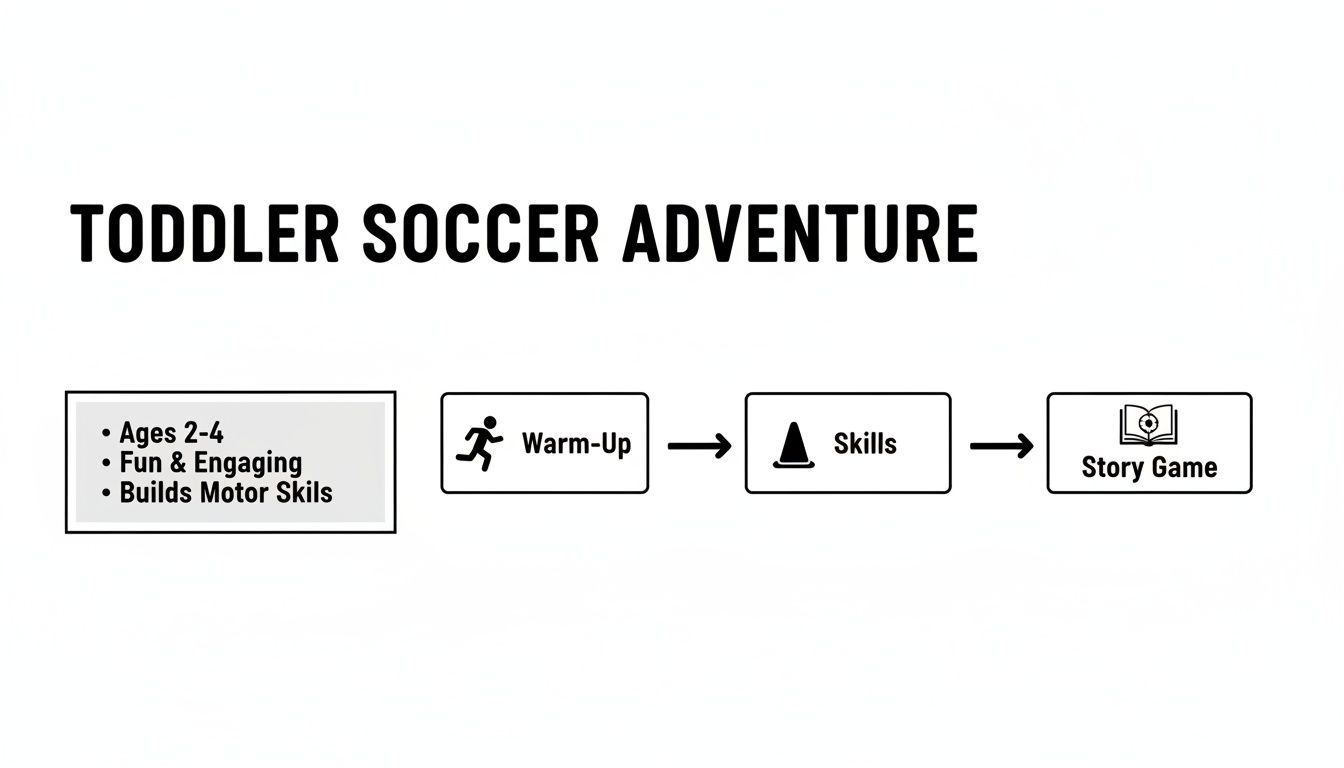
As you can see, a great toddler soccer class is a mix of energetic warm-ups, skill-building disguised as games, and imaginative story-based activities.
Beyond the class structure, make sure the environment itself is set up for success.
When evaluating programs, it helps to have a clear checklist. The table below breaks down the most important features to look for and shows you how we approach them at JC Sports Houston.
Comparing Toddler Soccer Program Features
Feature to Consider | What to Look For | How JC Sports Houston Delivers |
|---|---|---|
Coach-to-Player Ratio | Small groups are essential. You want your child to get individual attention, not get lost in a crowd. | We maintain low ratios to ensure every child feels seen, supported, and gets personalized encouragement from our coaches. |
Age-Appropriate Curriculum | Look for creative games and storytelling, not rigid drills. The focus should be on imagination and movement. | Our BlastBall program uses story-based games to teach fundamentals. Kids are always engaged because they're part of an adventure! |
Safe & Welcoming Space | The facility should be clean, secure, and inviting. For Houston, indoor is a huge plus to avoid weather issues. | Our indoor, climate-controlled facilities are built for toddlers. They're safe, comfortable, and ensure classes run year-round. |
Coaching Philosophy | Coaches should be patient, energetic, and experienced with this specific age group. Enthusiasm is contagious! | Our coaches specialize in early childhood development. They bring the energy and know how to make learning fun and positive. |
Ultimately, you're looking for a program that feels less like a sports practice and more like a guided playdate. Your child should be excited to go each week, and you should feel confident they're in a positive, nurturing environment.
The JC Sports Houston Advantage
For families in the Houston area, JC Sports offers a unique program perfectly suited for toddlers. Our indoor facilities are a game-changer, eliminating worries about Houston’s unpredictable heat, rain, or humidity. This means classes are consistent and comfortable all year.
We pride ourselves on a curriculum designed by experts in early childhood development, focusing on creative skill-building and fostering a genuine love for being active.
But you don't have to take our word for it. For more tips on making your selection, check out our guide on choosing the right soccer academy in Houston.
Ready to see the difference for yourself? We invite you to sign up for a free trial class today and let your little one discover the joy of soccer in a fun, supportive setting.
Fun and Simple Soccer Drills to Try at Home
The fun of a 3 year old soccer class doesn't have to stop when you leave the field. Bringing that excitement home with a few simple, playful activities is a fantastic way to keep the momentum going and build up your little one's confidence.
Think of these less as "drills" and more as "games." They're designed to be fun for both of you, using things you already have around the house in a small space. The key is to keep it light and short. Just a few minutes of a fun game can make a huge difference in how comfortable they feel with a soccer ball at their feet.
Sleeping Giant Ball Taps
This game is perfect for developing ball control and teaching your child to use different parts of their feet—without them even realizing they're learning! It’s a quiet, silly game that builds focus and coordination.
The Setup: You lie down on the floor and pretend to be a "sleeping giant." Place the soccer ball near your feet.
The Challenge: Your child's mission is to quietly tap the ball with their toes as many times as they can without "waking the giant."
The Fun Part: If they tap the ball too hard, you "wake up" with a silly roar and gently chase them for a second before the giant falls back asleep.
This activity encourages soft, controlled touches, which is the absolute foundation of good dribbling. It’s a low-energy game that packs a big developmental punch by teaching the difference between a gentle tap and a hard kick.
Dribble Through the Noodle Forest
Ready for an adventure? You can transform your living room or backyard into a magical forest with just a few household items. This game turns learning to dribble into an imaginative quest.
Create the Forest: Use pool noodles, pillows, or even a line of stuffed animals as "trees" to create a simple obstacle course.
The Goal: Encourage your child to dribble the soccer ball all the way through the "forest" without letting it touch any of the trees.
Add a Story: Tell them they’re a brave explorer on a secret mission or a bunny hopping through the woods. Giving it a story makes it a hundred times more engaging.
These simple games do so much more than just build skills; they reinforce the idea that soccer is a joyful activity the whole family can share. For more ideas on building these foundational skills, you can check out our guide on how to improve soccer dribbling for young players.
Essential Gear and Safety Tips for Your Little Kicker
Getting your toddler ready for their first 3 year old soccer class should be simple and fun, not a stressful shopping trip. The great news is, you don’t need a bag overflowing with expensive equipment. At this age, the name of the game is comfort, safety, and fun—not professional-grade gear.
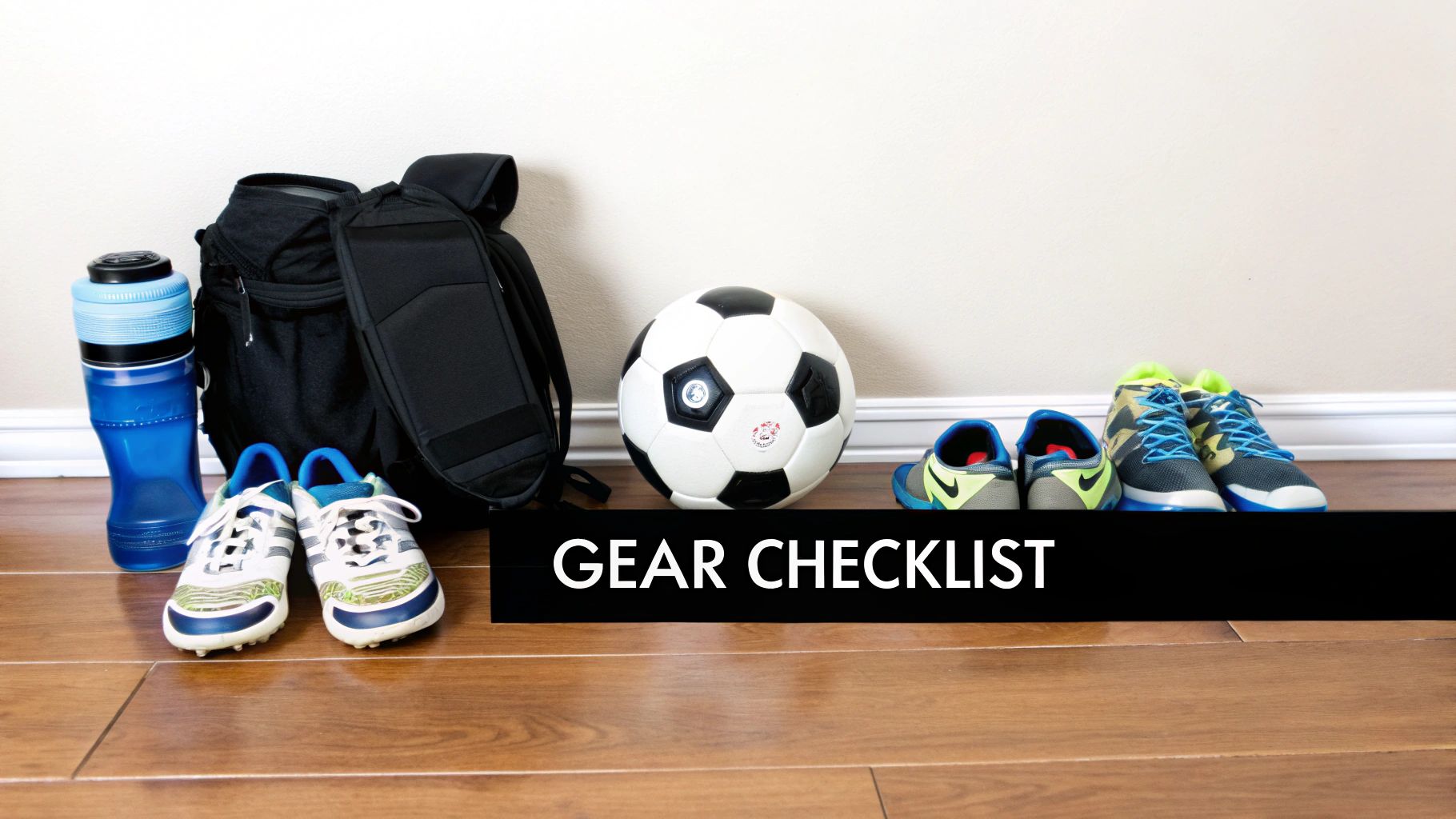
You can absolutely skip the fancy jerseys and pricey cleats for now. All your little one truly needs are a few key items to get started on the right foot (pun intended!).
The Must-Have Gear Checklist
Let’s keep it simple and focus on what they'll actually use in class. Here’s a quick rundown of the essentials:
Comfortable Athletic Clothes: Anything they can run, jump, and tumble in freely is perfect. Think shorts or sweatpants and a t-shirt. Breathable fabric is always a good idea for our little bundles of energy.
Supportive Sneakers: For most indoor and many outdoor toddler programs, a solid pair of sneakers is all the footwear they need. They provide plenty of support and traction for a three-year-old’s activity level.
Properly Fitting Shin Guards: This one is a non-negotiable safety item. Even accidental kicks happen when you have a dozen toddlers chasing a ball! Shin guards protect those sensitive little shins from bumps and bruises, which goes a long way in building their confidence to play without fear.
A Size 3 Soccer Ball: This is the smallest and lightest official ball size, made specifically for tiny feet. While most good programs provide soccer balls during class, having one at home is fantastic for practicing and continuing the fun.
The goal isn't to create a mini-superstar overnight. It's about making sure your child is comfortable and protected so they can forget about what they're wearing and focus on having a blast.
Keeping Your Toddler Safe and Happy
Beyond the gear, a few simple safety habits will ensure every soccer session is a positive one. Any quality program will make safety a top priority, but your awareness as a parent is just as important.
Always bring a water bottle to keep them hydrated, even if the class feels short. It's also a good idea to watch for signs of tiredness—a three-year-old’s energy can go from 100 to 0 in a flash.
Finally, choose a program that provides a safe playing environment, with attentive coaches who truly understand the unique needs of toddlers. That makes all the difference.
Answering Your Top Questions About Toddler Soccer
Diving into any new activity with your toddler brings up a lot of questions. We get it. Starting 3 year old soccer is no different, and it's completely normal to wonder about everything from potential shyness to what the real point of the class is.
We hear these concerns from parents all the time, so let's tackle them head-on. Our goal is to give you the confidence that you're making a great choice for your child's development and, most importantly, for their happiness.
What If My Child Is Shy or Won't Participate?
This is probably the number one worry we see, and the answer is simple: it’s totally okay! Many three-year-olds need time to warm up to a new space, new friends, and new activities. A great coach understands this and will never, ever push a child to join in before they're ready.
Often, a shy child will start by just watching from the sidelines, taking it all in. This is their way of learning and getting comfortable. The best thing we can do is offer patience and positive encouragement. We celebrate the small steps, like if they give the coach a high-five or decide to kick the ball just once. Participation will come when they feel safe and secure.
The objective for a shy toddler isn’t to become the star player in one day. It’s to leave the class feeling a little more confident and curious than when they arrived. The right program creates a space where just being there is a victory.
What Is the True Goal of Soccer at This Age?
If you’re expecting to see complex rules or perfect teamwork, you might be in for a surprise. Honestly, the true goal of 3 year old soccer has very little to do with the sport itself. At its core, it’s all about building a positive, happy association with being active.
Here’s what we’re really aiming for:
Having Fun: This is priority number one. Classes should be full of laughter, silly games, and tons of encouragement.
Building Motor Skills: Simple things like running, stopping, and kicking are foundational movements that do wonders for balance and coordination.
Social Exposure: It's a gentle first step into being in a group, listening to a coach, and sharing space with other kids.
Fostering a Love of Movement: We want to plant a tiny seed that being active is a joyful part of life, not a chore.
The soccer ball is really just a fun prop. The real wins are the smiles, the effort, and the small boosts in confidence your child will feel each week.
At JC Sports Houston, our coaches are experts at making every child feel welcome and successful, no matter their personality or how long it takes them to warm up. We believe in creating a positive first sports experience that lasts a lifetime.
Ready to see how we make learning fun? Sign up for a free trial class at jcsportshouston.com and let your little one discover the joy of the game in a supportive, encouraging environment.

Comments