

A Parent's Guide to Soccer Programs for Preschoolers

When you hear "preschool soccer," don't picture intense drills or competitive matches. Think smaller. Think simpler. Think fun.
Soccer programs for preschoolers are all about introducing kids aged 3 to 5 to the beautiful game through play. The focus isn't on creating the next soccer superstar; it's about fostering a love for being active in a positive, totally pressure-free zone. It's their first, fun-filled step into the world of sports.
Why Preschool Soccer Is More Than Just a Game
Choosing your child's first sports activity feels like a big deal. You want something that builds them up, not burns them out. That’s exactly where these programs fit in. They’re designed to plant the seeds for a healthy, active life by making movement feel like pure joy.
Think of it less like formal training and more like a structured playdate with a purpose. The real goal is to get kids to connect physical activity and teamwork with having a great time. That positive link is what sticks with them for years to come.
Building Foundational Skills Through Play
A good program knows that preschoolers learn best when they don't even realize they're learning. By turning skill-building into imaginative games, we help them develop crucial abilities without the pressure.
Here’s a quick rundown of the developmental wins you can expect:
Gross Motor Skills: Running, jumping, and kicking are the ABCs of athletics. They'll do all of this and more.
Coordination: Fun games help them connect what their eyes see with what their body does, like chasing and kicking a ball.
Social Interaction: This is huge. They'll learn to take turns, listen to a coach, and play alongside other kids in a group setting.
Listening and Following Directions: Simple instructions like "everyone freeze!" or "kick the red ball!" help sharpen their focus and listening skills.
To help you see the benefits at a glance, we've put together a quick summary table.
Preschool Soccer at a Glance: Key Developmental Wins
This table breaks down the core benefits your little one gains from a well-structured preschool soccer program.
Benefit Category | What Your Preschooler Learns |
|---|---|
Physical Development | Improves balance, coordination, and strength through running, kicking, and jumping. |
Cognitive Skills | Learns to follow multi-step directions, make quick decisions, and understand game rules. |
Social-Emotional Growth | Practices sharing, taking turns, and celebrating teammates' successes in a group setting. |
Confidence Building | Gains a sense of accomplishment by mastering new skills and participating in a team. |
These early wins aren't just about sports; they're life skills that set your child up for success in the classroom and beyond.
At this age, the game isn't about mastering soccer—it's about mastering themselves. They're learning how their bodies move, how to listen, and how to be part of a team.
Setting the Stage for Future Success
This guide is your playbook. We're here to help you find the perfect introduction to sports for your little one. We'll walk you through the key benefits, show you what a typical class looks like, and give you a checklist for evaluating your options.
Our goal is simple: to help you confidently pick a program that makes your child's first sports experience a positive and memorable one. Understanding why sports for toddlers matter is the first step on this awesome journey.
The Foundational Benefits of Starting Soccer Early
Putting your child in a soccer program when they’re young is about so much more than just scoring goals. Think of it as planting a seed for a healthy, active, and confident life. The real magic happens in how these programs support the whole child—physically, mentally, and socially.
The goal isn't to create the next superstar overnight. It's about building a genuine love for moving and playing in a joyful, pressure-free space. That positive first impression of sports can shape how they feel about being active for years to come.
Physical Growth and Coordination
For a preschooler, the soccer field is basically a giant laboratory for movement. Every little action, from chasing a colorful ball to trying to kick it, is a building block for their gross motor skills. This is where they strengthen their legs, find their balance, and figure out how their bodies work.
Balance: Just standing on one leg to kick a ball is a huge developmental win for a little one.
Coordination: They’re learning to connect what their eyes see with what their feet need to do—a skill that helps with everything from climbing at the playground to learning to ride a bike.
Stamina: Running after balls, even for short bursts, builds their cardiovascular endurance in a way that just feels like pure fun.
Cognitive and Listening Skills
A preschool soccer class is a lot like a fun, active game of 'Simon Says.' Coaches use simple, direct instructions wrapped in imaginative stories and games. This whole setup helps kids practice listening and following directions, which are essential skills for getting ready for school.
They learn to process instructions on the fly, like "everyone dribble to the blue cone!" A simple command like that teaches them to spot colors, follow a sequence, and control their bodies all at once. Beyond the physical side, preschool soccer also supports emotional regulation and sensory development, much like other sensory activities for preschoolers.
Social and Emotional Development
This might be the biggest win of all. On the field, kids learn how to exist in a shared space, take turns, and interact with other kids and a coach. They get to feel the simple joy of working together and celebrating the small wins as a group.
This early taste of teamwork teaches some priceless lessons:
Sharing: Figuring out that everyone gets a turn with the ball.
Cooperation: Working with a buddy to complete a fun activity.
Resilience: Shaking off a fall and jumping right back into the game with a little encouragement.
The most important lesson a preschooler learns in soccer isn't how to kick a ball. It's how to be a good teammate—a skill that will serve them well long after they leave the field.
It’s interesting, too. While some reports show a dip in overall youth soccer participation, programs focused on these early age groups are absolutely thriving. The U.S. Soccer Foundation’s Soccer for Success initiative, which often introduces the sport to preschoolers, saw its participation jump by a massive 64% last year. This trend shows just how much parents and communities are recognizing the powerful, positive impact these programs have.
Ultimately, figuring out what is the best age to start soccer is less about a specific number and more about finding a program that meets your child where they are developmentally.
What a Preschool Soccer Class Actually Looks Like
If you’re picturing a mini-World Cup with serious drills and kids standing in neat lines, you’re in for a surprise. A great soccer class for three and four-year-olds is really a whirlwind of organized chaos, all powered by imagination.
The whole session is built on one simple, powerful idea: learning through play. Instead of a coach barking orders, you'll see a storyteller leading an adventure. The kids might be superheroes protecting their soccer ball "treasure" from silly monsters or jungle explorers navigating a field of "volcano" cones. It's this fun, narrative-driven approach that keeps them totally hooked.
Every class is a rapid-fire series of short, dynamic activities. A typical 30- to 45-minute session is carefully paced to match their short attention spans and keep the energy high from start to finish.
The Flow of a Fun-Filled Session
You won’t find kids waiting around for their turn here. The class is designed for constant movement, making sure every single child gets as many touches on the ball as possible. A well-run class usually follows a simple, repeatable pattern.
Warm-Up Adventure (5-10 minutes): Forget static stretching. This is all about fun movement. Think "Red Light, Green Light" with a soccer ball to practice stopping and starting, or a "Jungle Run" where kids dribble while stomping like elephants or hopping like kangaroos.
Skill-Building Games (15-20 minutes): This is where core skills are cleverly disguised as play. "Shark Attack" teaches kids to dribble inside a specific area to avoid the "shark" (the coach!), while "Feed the Animals" has them practice kicking their ball into different colored goals, or "animal pens."
Small-Sided Scrimmage (5-10 minutes): The grand finale! This is a super simple, low-pressure game—often 3v3—with small nets and hardly any rules. The only objective is to chase the ball, have fun, and try to kick it toward the goal.
This structure keeps things moving and exciting. The secret is variety; a good coach will switch up the activities every few minutes, keeping those little minds engaged and wondering what’s next.
A preschooler’s currency is fun. The second an activity feels like a chore, you’ve lost them. The best programs get this and build their entire curriculum around imaginative, play-based learning.
Why Small-Sided Games Are a Game-Changer
You’ll almost never see a full-field game in a quality preschool program. Instead, coaches use small-sided games—fewer players in a much smaller space. This isn't just a random choice; it's a critical part of helping little ones learn.
With fewer kids on the field, each child gets way more chances to touch the ball, make their own decisions, and feel like they’re part of the action. It completely avoids that classic scene where one or two kids dominate the ball while everyone else just watches.
In a small-sided game, every single player is needed. It builds confidence like nothing else and guarantees that every child walks away feeling like they were a star of the show.
How to Choose the Right Soccer Program for Your Child
Deciding on your child’s first sports experience is a big deal. With so many programs out there, how do you find the one that’s a perfect match? The trick is to look past the cool uniforms and focus on what really matters for a preschooler’s happiness and development.
A great program is built on three pillars: positive coaching, a smart curriculum, and a safe, welcoming space. Think of yourself as a detective searching for a program that puts fun and learning first, not winning. That’s where your child will truly thrive.
The Coach: The Heart of the Program
For preschoolers, the coach is everything. A great coach for this age group isn't a drill sergeant; they're more like a super enthusiastic and patient guide. They should be encouraging, positive, and amazing at connecting with little ones.
When you go to observe a class, pay close attention to how the coach interacts with the kids. Are they smiling and getting down on the kids' level? A coach who dishes out high-fives and celebrates effort creates an atmosphere where children feel safe to try, fail, and try again without any fear.
The right coach doesn’t just teach soccer skills; they build confidence. Look for someone who celebrates effort over the final score and makes every single child feel like a star player.
Curriculum and Class Structure
The curriculum is basically the game plan for each class. You want to see a program built around imaginative, play-based activities, not boring, repetitive drills. Kids this age learn best when they're caught up in a story or a fun challenge.
A well-structured session keeps kids moving and engaged from start to finish.
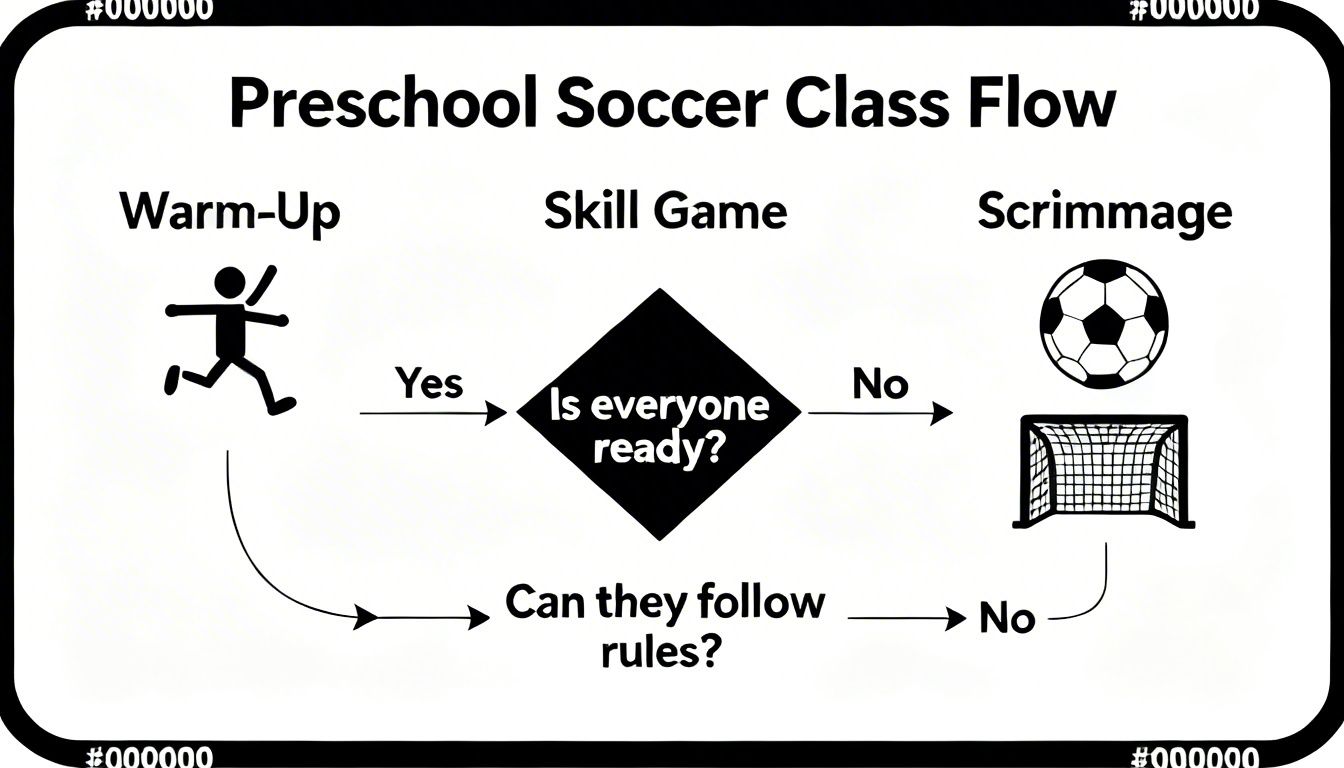
This kind of flow ensures kids stay active and interested, moving smoothly from a fun warm-up to skill games and finishing with a simple scrimmage.
Key Factors to Evaluate
Beyond the coach and curriculum, a few other details can make all the difference. As you compare programs, it helps to have a checklist to make sure you're covering all your bases.
Here’s a simple table to guide you as you look at different options.
Program Evaluation Checklist
Feature | What to Look For | Why It Matters for Preschoolers |
|---|---|---|
Coach-to-Player Ratio | Small class sizes, ideally 1 coach for every 8-10 children. | Ensures your child gets enough personal attention and doesn't get lost in the crowd. |
Safety First | A secure playing area (indoor or out), age-appropriate goals and balls. | A safe space allows kids to play freely without parents having to worry about preventable bumps and bruises. |
Clear Communication | Regular updates from the program about schedules, what to bring, and class policies. | Keeps things simple for busy families and shows the program is organized and professional. |
Curriculum Focus | Play-based games that use imagination (e.g., "dribble past the sleeping giant"). | Makes learning fun and keeps young attention spans hooked for the whole session. |
Finding the right fit is more important than ever. The global market for youth soccer has exploded, with a huge part of that growth coming from preschool programs focused on creative development. With nearly 60 million kids in the U.S. playing youth sports, it’s essential to find a program that truly aligns with your family’s values.
For a deeper look into what makes a program stand out, check out our guide on choosing the right soccer academy in Houston for your child.
Alright, you've narrowed down a few great soccer programs for your preschooler. Now comes the real talk: how much does it cost, and how will it fit into your already-packed family schedule? Figuring out the budget and time commitment upfront is key to making this a fun, stress-free adventure for everyone.
The price tag on these programs can swing quite a bit based on where you live, whether it’s an indoor or outdoor setup, and how long the season runs. Most of the time, you'll pay one registration fee that covers a set number of classes, usually for an 8- to 12-week season. The good news is, that fee often includes a few extras to get your little one started.
What’s Usually Included in the Fee?
To make life easier for parents, most programs bundle everything into a single registration cost. This means you likely won't have to run out and buy a bunch of gear right away.
A Team Jersey: Nothing makes a kid feel like part of the team more than their very own shirt.
End-of-Season Award: A small medal or certificate is a great way to celebrate their effort and participation.
All Equipment: The program will have all the soccer balls, cones, and nets ready for every class.
This all-in-one approach is part of a bigger picture. Youth sports are a major investment for families in the U.S., with costs for soccer families jumping 69% in just five years. Even so, more and more kids are signing up, which shows just how much parents believe in the benefits of starting sports early. You can check out more on this trend in youth sports spending.
What a Typical Schedule Looks Like
Preschooler programs are built for short attention spans and busy family lives. The schedules are designed to be consistent but not overwhelming.
Think of the class as a mini-adventure that fits perfectly between naptime and dinner. It's a manageable commitment designed with young families in mind.
Classes are almost always held once a week and run for about 30 to 45 minutes. That’s the sweet spot for keeping a three- or four-year-old engaged and having a blast without them getting tired or bored.
Got Questions About Preschool Soccer? We've Got Answers.
Even after learning all the great things about preschool soccer, it's totally normal to have a few more questions pop up. Choosing your child's first sports experience is a big deal, and you want to feel 100% confident before that first class. We get it.
So, let's dive into some of the most common questions we hear from parents just like you.
What’s the “Right” Age to Start Soccer?
This is probably the #1 question we get, and the honest answer is: there's no magic number. While many programs start around age three, the most important thing isn't their birthday—it's their individual readiness.
A child who's ready for a group soccer class usually shows a few key signs. They can run without tumbling over too much, follow simple two-part directions like "pick up the cone and bring it to me," and seem generally comfortable (or at least curious) around other kids. If that sounds like your little one, they're probably ready to have a blast, whether they're two-and-a-half or four.
Will My Shy Child Be Okay in a Group Class?
Absolutely. In fact, a great preschool soccer program can be one of the best places for a shy child to blossom. A good program is built to be a safe, welcoming space for every single personality type, from the most outgoing kid to the quietest observer.
Skilled coaches are experts at creating an inclusive vibe where every child feels seen and supported.
A good coach's main goal is to build confidence, not just soccer skills. They use tons of encouragement and positive feedback to gently invite shy children to join in at their own pace, never pushing or putting them on the spot.
You’d be surprised how quickly that nurturing environment helps a reserved child come out of their shell. They start to trust their coach and make new friends, building social confidence that will stick with them long after class is over.
What Should My Preschooler Wear to Soccer Class?
Keep it simple! There’s no need to run out and buy a full pro-style soccer kit just yet. The main goal is making sure your child is comfy and can move around freely and safely for the whole session.
For their first day, stick to these basics:
Comfy Athletic Clothes: A t-shirt and shorts or athletic pants are perfect.
Sturdy Sneakers: Closed-toe athletic shoes are a must. No need for soccer cleats at this age—regular sneakers are safer and more comfortable for them.
A Water Bottle: Label it with their name so they can find it easily during water breaks. Staying hydrated is key!
Do I Have to Stay and Watch the Whole Class?
For most preschool programs, especially in the beginning, parents are definitely encouraged to stick around. Your presence is a huge comfort for your child as they get used to a new place, a new coach, and new friends.
Seeing your smiling, familiar face on the sidelines can make all the difference in turning a potentially nervous experience into a super positive one. It helps set your little one up for a fun and successful season right from the start.
Ready to Kickstart Your Child’s Soccer Journey in Houston?
As you can see, a great preschool soccer program is about so much more than just learning to kick a ball. It’s one of the first and best ways to build a foundation of confidence, coordination, and social skills that will serve your child well for years to come.
From following directions in a fun, story-based game to feeling the pure joy of being part of a team, every session is packed with developmental wins.
The right program makes all the difference. It creates a positive, pressure-free introduction to sports that can spark a lifelong love for being active. It's about celebrating every little kick, every giggle, and every new friend made along the way.
Take the First Step in Humble, Kingwood, or Atascocita
For parents in the Houston area, finding a program that truly gets this positive, play-based philosophy is everything. But the best way to know if a program is the right fit for your family is to see it in action.
Observing a class lets you experience the coaching style for yourself and, more importantly, see the happy, engaged faces of the kids. Making that first kick a memorable and joyful one is what it’s all about.
Ready to give your child a positive first step into the world of sports? At JC Sports Houston, we’re passionate about creating a fun, supportive environment for our youngest athletes. We invite families from Humble, Kingwood, Atascocita, and all across Houston to see what makes our programs so special.
Comments