

Performance Improvement Strategies: A 2026 Coach's Guide

Wondering why some young athletes improve quickly while others repeat the same drills without carrying those skills into a game? The gap often isn't effort. It's the design of the learning environment, the quality of feedback, and whether practice gives children enough meaningful opportunities to make decisions.
These performance improvement strategies translate research-backed methods into practical coaching choices for parents, coaches, and youth sports programs. The list covers game-based learning, progressive instruction, video feedback, individualized coaching, seasonal planning, family involvement, multi-sport exposure, coach development, and simple progress tracking. Each strategy includes a way to apply it at JC Sports Houston, plus an at-home idea that families can use without turning the living room into a formal training facility.
The most useful approach isn't to introduce every method at once. Choose the strategy that matches the athlete's current need, apply it consistently, and observe how the child responds. A preschooler may need movement variety and playful repetition, while an older player may benefit from a specific technical goal and short video review.
1. Small-Sided Play and Game-Based Learning
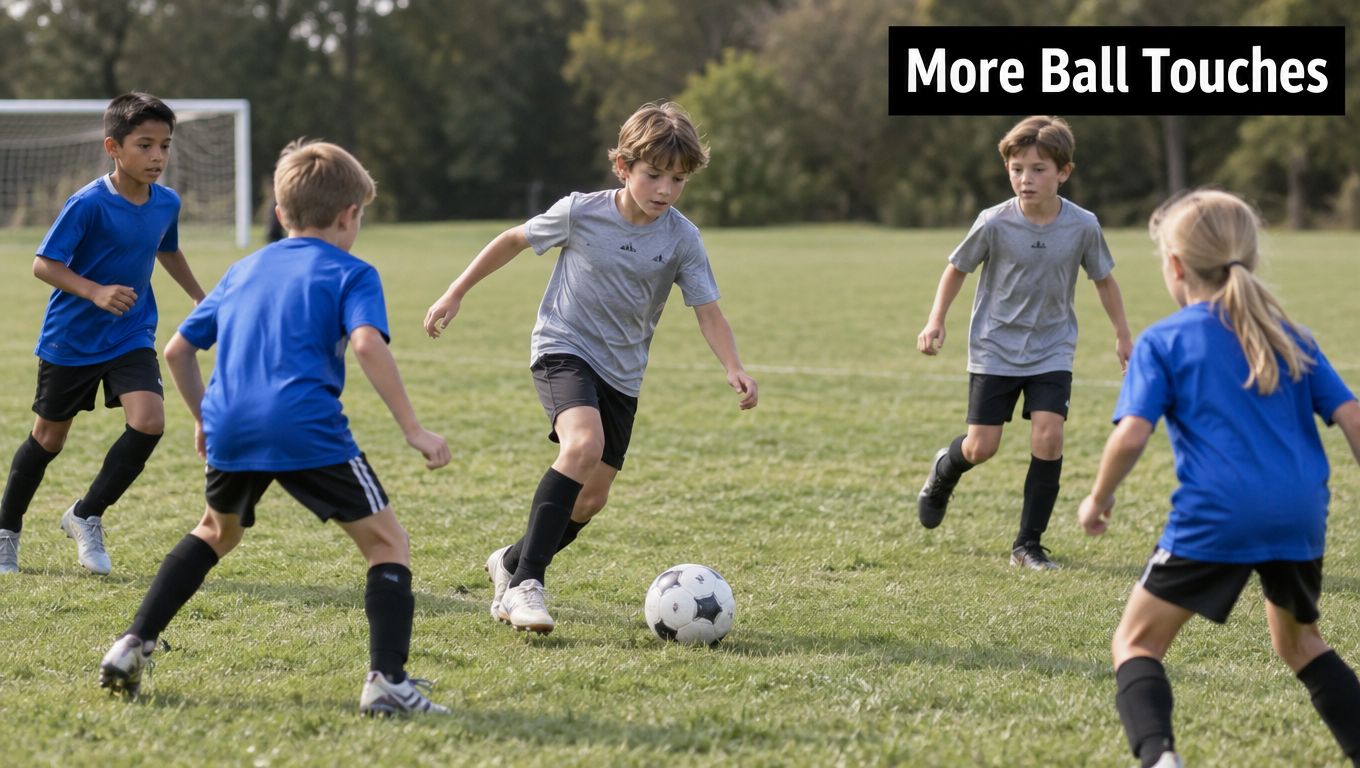
A young player learns more when they have the ball, read the situation, and choose an action. Small-sided games reduce the number of players and the playing area, creating more chances to pass, dribble, defend, move into space, and recover from mistakes. Instead of waiting in a line for a turn, children stay involved in the action.
Research supports this approach. A review of small-sided games found that the method is appropriate for teaching young players, while an umbrella review reported positive effects on aerobic capacity and tactical and technical behaviors. One meta-analysis found a statistically significant improvement in technical execution compared with control training, with an effect size of 0.59, a 95% confidence interval of 0.29 to 0.89, and p < 0.001. These findings are reported in the review of small-sided games for youth development.
At JC Sports Houston, coaches can use small-sided formats in soccer and multi-sport classes so children learn through realistic movement rather than isolated repetition. The same principle works at home. Create a small target area with cones, play one-on-one with a soft ball, and reward a creative turn or change of direction, not just a successful finish.
Practical rule: Use small-sided games as the main learning environment, not merely as a warm-up at the end of practice.
Keep the space scaled to the athlete, rotate roles, and let children try solutions before offering corrections. A coach can guide the game with one constraint, such as requiring a pass before a shot, without controlling every decision. Families can find more ideas in small-sided soccer games for youth players.
2. Progressive Skill Development and Age-Appropriate Instruction
A child doesn't need the most advanced drill available. They need the next challenge they can understand, attempt, and repeat with growing control. Progressive instruction starts with foundational movement and technique, then adds pressure, speed, opposition, and decision-making as the athlete becomes ready.
For a young beginner, a coach might start with stopping and rolling a ball, then progress to dribbling around a marker, changing direction, and protecting the ball from a defender. A school-age player may be ready to combine those actions with scanning, passing, and movement after the pass. The sequence matters because advanced exercises can't compensate for missing fundamentals.
JC Sports Houston can make progression visible by using skill maps for each program. Coaches can record whether a player is developing balance, coordination, ball control, passing technique, spatial awareness, or confidence under pressure. Parents should receive language they can understand, such as “your child is beginning to use the inside of the foot consistently,” rather than a vague label such as “needs work.”
Match instruction to the child
Good progression changes more than the drill. It changes the explanation. Younger children often respond best to demonstrations, short cues, imaginative challenges, and immediate encouragement. Older children can discuss why a movement works, compare options, and reflect on what they noticed during play.
At home, choose one skill and create a simple ladder:
Start with control: Roll or gently pass the ball and ask the child to stop it with a selected surface.
Add movement: Have the child take the first touch toward an open space.
Add a decision: Call left or right at the last moment.
Add pressure: Use a time limit or a passive defender.
Celebrate the transition from one step to the next. Progress isn't always a new trick. Better balance, quicker recognition, and greater willingness to try are meaningful developments too.
3. Video Analysis and Performance Feedback
Children often understand a movement more clearly when they can see it. A short recording gives the coach and athlete a shared reference point, replacing general comments such as “work harder” with a specific observation, such as “your first touch moved toward the defender instead of into open space.”
A smartphone is enough to begin. Record one skill or game situation, not an entire practice, and review only a few moments with the athlete. Ask what they noticed before giving your own feedback. That question turns video review into an observation exercise rather than a judgment.
JC Sports Houston can use video in private sessions or Soccer Lab work to compare a player's current movement with the technique being taught. Families can reinforce the same cue at home with a short dribbling sequence. The youth soccer training videos resource can also help parents understand how visual demonstrations support practice.
“Show the athlete one change they can try immediately, then let them try it.”
Consent and privacy come first. Parents should provide explicit permission before a child is recorded, and programs should store and share clips securely. Coaches should avoid turning video into a highlight-only tool. A positive clip can build confidence, but a constructive clip can reveal a repeatable pattern that deserves attention.
A useful review format is simple:
Notice: What happened before, during, and after the action?
Name: Which technical or tactical choice affected the result?
Try: What single adjustment will the athlete test next?
Review: Did the adjustment help in the next attempt?
The coach doesn't need expensive analysis software to create a feedback habit. Consistency, privacy, and a focused coaching question matter more than production quality.
4. Individualized Training Plans and 1-on-1 Coaching
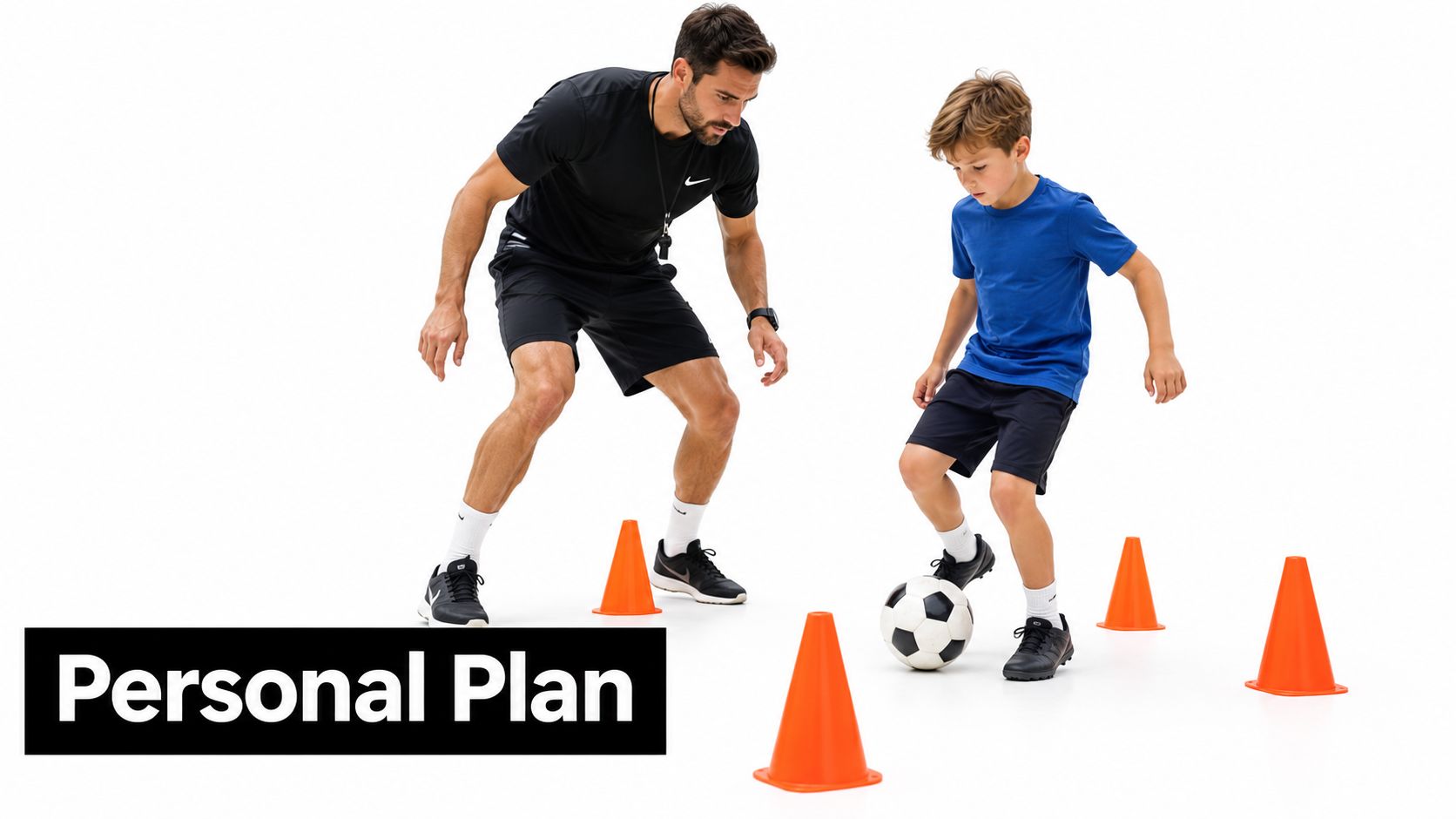
Group practice creates valuable competition and shared energy, but it can't give every athlete the same amount of individualized attention. A private or semi-private session lets the coach adjust the task immediately, repeat a difficult movement without slowing a group, and build a progression around the athlete's actual needs.
Start with an assessment rather than a generic package. The coach should identify a small number of priorities, such as first touch, striking technique, footwork, balance, or confidence in one-on-one play. Then agree on what improvement will look like in observable terms. “Become a better player” is too broad. “Use the outside foot to change direction under light pressure” gives the athlete a clear target.
JC Sports Houston's private sessions can support this type of focused practice. Parents can learn more about one-on-one soccer coaching and ask how the coach documents goals, shares feedback, and connects private work to team play.
Make individualized coaching efficient
Private coaching works best when the athlete practices between sessions. At home, a parent can set up three cones and ask for controlled dribbling through the pattern, followed by a change of direction at the final cone. Keep the activity short enough that technique remains sharp. The parent should observe one cue, such as keeping the ball close, rather than correcting every movement.
Semi-private coaching can also be useful. Two or three athletes with similar goals can receive individual correction while still learning to react to another player. That format can offer more decision-making than solo work and more personal attention than a large group.
The trade-off is cost and scheduling. Private coaching isn't automatically better than a well-run group session. It becomes valuable when the athlete has a specific gap, needs confidence after a setback, or is ready for a level of technical detail that the group can't provide.
5. Positive Reinforcement and Growth Mindset Coaching
A child who fears mistakes will often choose the safest action, even when the game calls for creativity. Positive reinforcement helps create a different pattern. The coach notices effort, decision-making, recovery, and improvement, not only goals, wins, or technically perfect execution.
Specific praise is more useful than constant approval. “You looked up before receiving the pass,” or “you tried the turn again after losing the ball,” tells the athlete which behavior deserves repetition. Empty praise can feel disconnected from what happened. Precise feedback helps a child connect effort with development.
JC Sports Houston's emphasis on creative, well-rounded players fits this approach. In a practice, a coach might reward a brave attempt to dribble past an opponent even if the move doesn't succeed. At home, parents can ask, “What did you try?” before asking whether the child won.
Replace judgment with useful language
Growth-oriented coaching doesn't mean avoiding standards. It means separating the athlete from the current result.
Name the process: “Your foot placement was better on that attempt.”
Normalize revision: “That choice didn't work this time. What other option could you try?”
Use ‘not yet' carefully: “You haven't controlled that turn consistently yet.”
Invite reflection: “What did you see before you passed?”
Recognize recovery: “You lost the ball, then worked to win it back.”
The approach has a real trade-off. Constant positivity without honest instruction can leave athletes unsure about what to improve. Effective reinforcement combines encouragement with a clear next action. A coach can say, “That was a brave attempt. Next time, take the touch farther away from pressure.”
Parents also shape the mindset after competition. Asking about enjoyment, effort, and learning can keep one result from defining the athlete's identity. Children still need accountability, but accountability works better when they understand that improvement comes from practice, feedback, and repeated attempts.
6. Periodized Training and Seasonal Programming
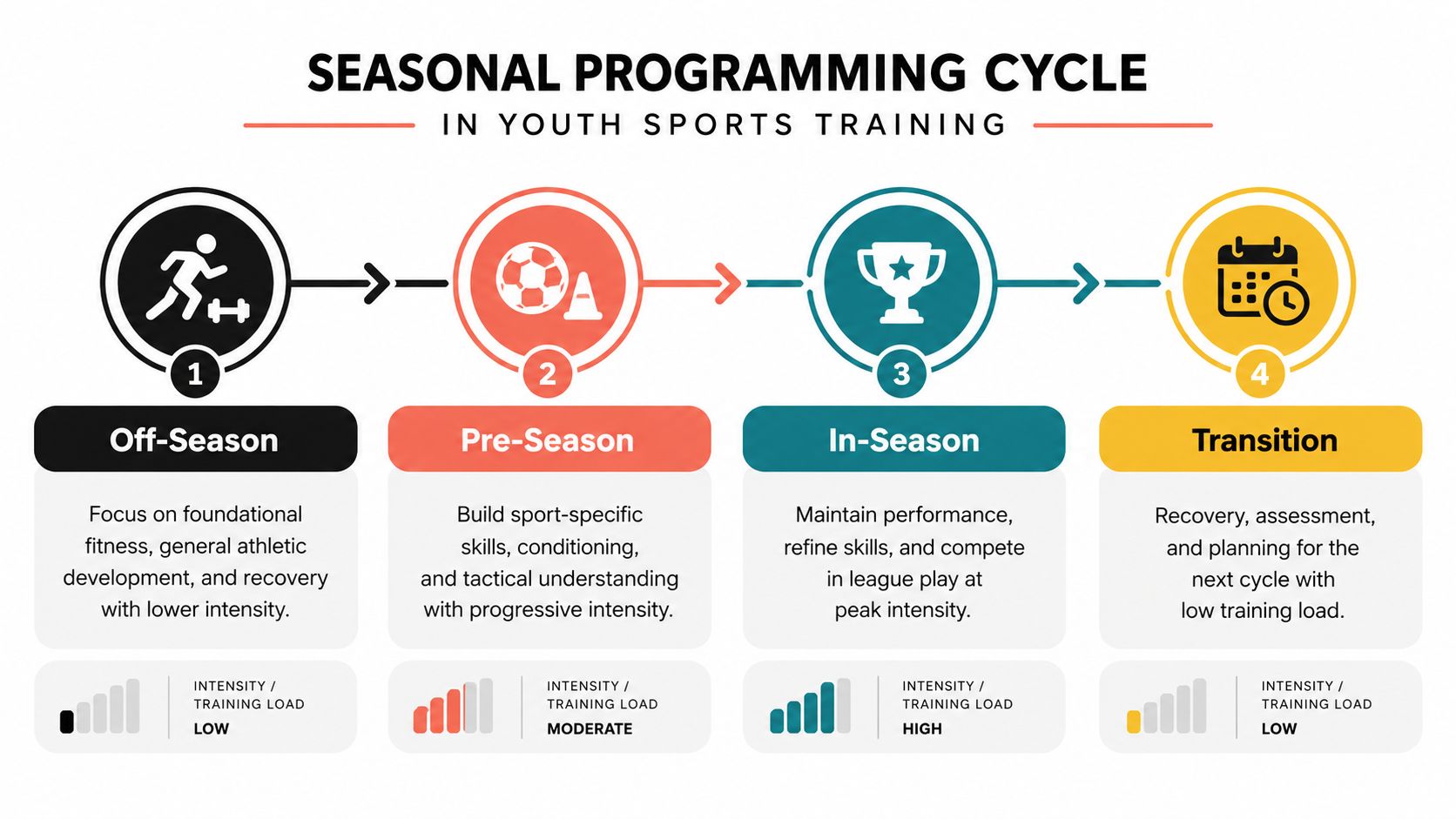
What if the same training plan is part of the problem? Young athletes need their work to change across the year, because repeating the same drills, intensity, and competition load can flatten motivation and leave little room to target weaker areas. Seasonal programming gives each phase a job.
A useful cycle usually moves through foundational movement and technical work, sport-specific preparation, competition, then recovery or reflection. The right mix depends on the child's age, schedule, experience, and the rest of their physical activity. A school break camp may focus on skill exploration and enjoyment, while a league stretch should place more weight on applying those skills under pressure.
JC Sports Houston's seasonal soccer, baseball, and basketball leagues, along with break camps and summer programs, give families options across the calendar. Coaches can match the emphasis to the season so a player is not treated as if every month has the same goal. Parents should share school sports, other clubs, and rest periods before adding more training.
Build a manageable training rhythm
A training log does not need to be complicated. It can record the activity, the athlete's energy, the main skill focus, and any discomfort. That small record helps adults spot patterns and avoid piling on intensity when the child needs recovery.
Use the season to guide the work. Foundation phases are the time to build coordination, balance, movement quality, and basic technique. Preparation phases add speed, pressure, and sport-specific decisions. Competition phases keep key skills sharp while managing fatigue and enjoyment. Transition phases are for reflection, recovery, and choosing the next development priority.
The Strive Workout Log periodization guide gives families and coaches a useful reference for organizing those phases. The practical question is simple: does the plan fit the child's life, or does it crowd out sleep, school, family time, and unstructured play?
At home, match the season instead of adding another hard session. During a technical phase, a child might work on gentle touches and passing accuracy. During recovery, an easy family game or free movement is a better fit than extra conditioning.
7. Parent Education and Family Involvement
A child's progress improves when the adults around the program use the same expectations. Parents do not need to become assistant coaches. They should understand what the program teaches, how competition is handled, which skills fit the child's age, and how to discuss progress without adding pressure. A short orientation can establish those expectations before problems arise.
JC Sports Houston can support families with clear program information, simple home activities, and regular updates. If a class prioritizes creative decision-making, parents can allow the child to try different options instead of calling out instructions to pass or shoot. That consistency gives athletes room to learn from decisions and feedback.
Home practice works best when it stays brief, playful, and connected to the coach's current focus. Roll a ball for the child to stop and redirect, toss a soft ball for a catch-and-move game, or set up a short obstacle path for balance and coordination. Stop while the child still wants another turn. Extra repetition has less value when it turns practice into a conflict.
Use coach conversations to keep support specific:
What is the current priority? Ask which skill deserves attention instead of requesting a long list of drills.
What should we avoid? Some athletes need less extra instruction, particularly during busy competition periods. More activity is not always better if it reduces recovery or enjoyment.
What does progress look like? Ask for observable behaviors, such as checking for space or controlling the first touch, rather than comparing the child with teammates.
How can we encourage effort? Repeat the cues and language the coach uses so the child receives a consistent message.
Programs also need clear communication boundaries. Families should know how updates are shared, when coaches respond, and how concerns are handled. Parents should follow the code of conduct and avoid coaching from the sideline unless invited.
Family involvement is visible in punctual attendance, appropriate rest, constructive conversations, and support for enjoyment. Those choices help children absorb feedback and remain engaged over time. The goal is a reliable environment around training, not a second coaching session at home.
8. Multi-Sport Exposure and Cross-Training
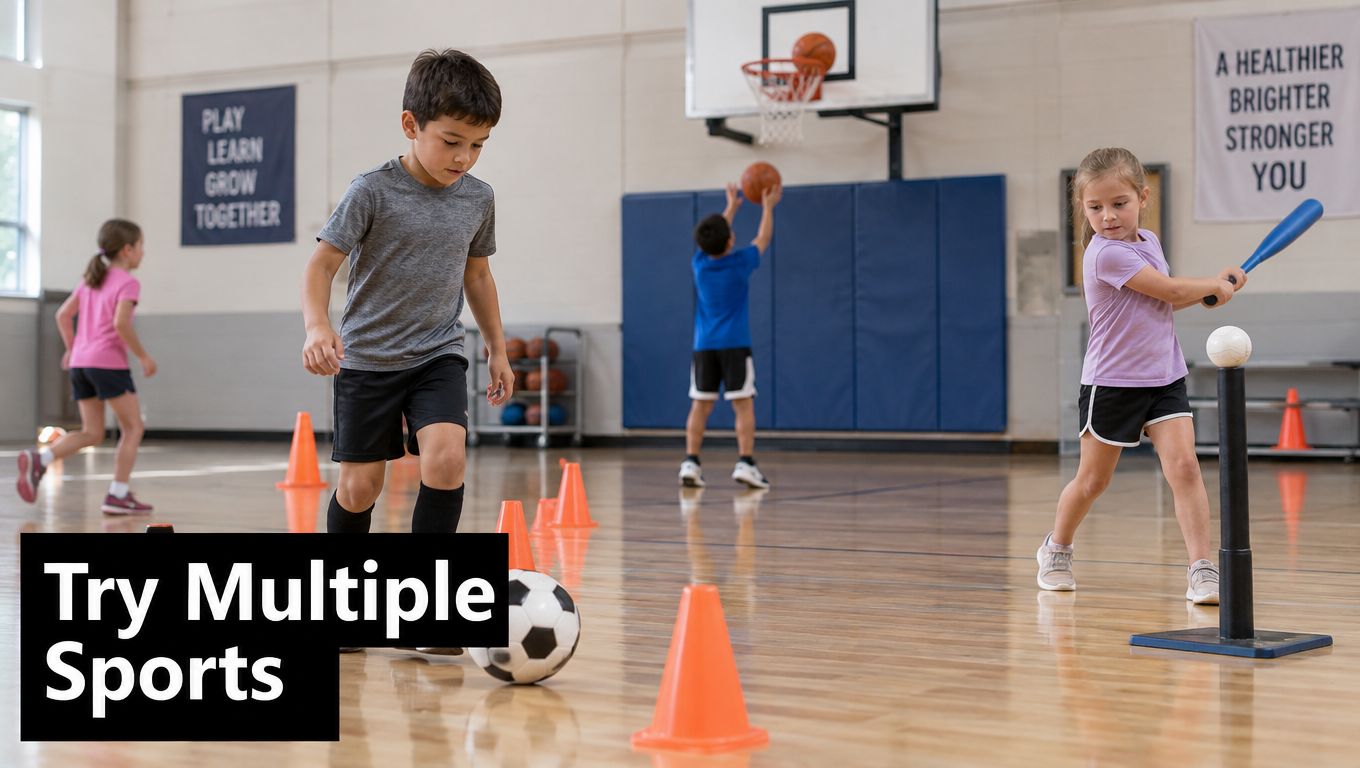
A child who runs, jumps, balances, throws, catches, strikes, rotates, and changes direction builds movement solutions that can transfer across sports. Variety also gives children different ways to cooperate, compete, solve problems, and stay involved when one activity feels difficult.
JC Sports Houston's multi-sport classes for toddlers give children room to test these movements. A session may shift from a soccer activity to a basketball game and then a tee-ball exercise. Each change asks the child to adjust to a new object, space, rhythm, and set of rules. The aim is a confident mover who enjoys unfamiliar tasks, not an immediate specialist.
Parents can make these connections visible without turning play into a technical lesson. Balance during a soccer feint may support a stable batting stance. Tracking a tee-ball may help with catching a basketball. Lateral movement in basketball can help a child defend space in soccer.
At home, follow the child's interest and rotate the challenge:
Movement games: Use pillows, lines, or cones for safe stepping and balance tasks.
Ball skills: Alternate rolling, tossing, catching, kicking, and striking with soft equipment.
Reaction games: Call a color or direction, then let the child move to the matching marker.
Creative play: Let the child invent a rule or rearrange the layout.
Keep the practice short enough to remain enjoyable. A child who wants another turn is usually giving you useful feedback about the right stopping point.
Scheduling creates the main trade-off. Families should not treat every activity as a competitive commitment. A recreational class, free-play session, and seasonal league can serve different purposes, while the weekly plan still needs room for recovery, school, and unstructured play.
Early specialization can appear efficient because it concentrates practice in one sport. For many young children, variety protects curiosity and supplies coaches with more movement skills to develop later. Parents can postpone major specialization decisions until a child shows sustained interest, readiness, and a clear desire for focused training.
9. Coach Education and Professional Development
What separates a useful youth coach from a technically knowledgeable one? The ability to turn sound instruction into clear, safe, age-appropriate practice. Coaches need knowledge of skills and tactics, along with practical methods for communication, motivation, attention, and feedback. An advanced drill has little value if children cannot understand its purpose or receive enough chances to apply it.
Professional development should continue after initial certification. JC Sports Houston can use staff meetings to examine one coaching decision at a time, such as shortening instructions, managing transitions, adapting a game for mixed ability levels, or responding when a child becomes frustrated. Peer observation adds another perspective. A coach leading a session may miss unclear cues or long inactive periods that another staff member can identify quickly.
Support for the coach affects the quality of support given to players. A workplace study on manager support in performance improvement reports that fewer than half of managers effectively address underperformance, according to this discussion of manager support and feedback in performance improvement, while organizations often identify gaps in training and resources. Although the study examines workplaces, the coaching lesson applies: staff need preparation, time to reflect, and guidance on giving specific feedback.
Set standards without scripting every coach
An internal coaching manual can define expectations for session planning, family communication, safety, and age-appropriate instruction. A mentoring system can pair newer staff with experienced coaches. Brief post-practice notes can record what worked, which players needed another explanation, and what should change at the next session.
Parents comparing programs can ask:
Does the coach demonstrate skills clearly?
Does every child receive meaningful involvement?
Are corrections specific and respectful?
Can children ask questions and make creative decisions?
Can the coach explain how the skill will progress?
These questions help families assess teaching quality rather than focusing only on a coach's playing background. A coach may use a quiet, structured style or a highly energetic one. Consistency belongs in safety, respect, developmental standards, and feedback. Within those boundaries, instructors can choose methods that suit their personality and the group.
For families evaluating options, this guide to finding a top youth sports coach provides another practical reference. The right fit is a coach who sets demanding standards while keeping children willing to attempt, question, and learn.
10. Data-Driven Tracking and Progress Measurement
What should a coach record to make improvement easier to see and act on? In youth sports, useful measurement stays close to daily behavior. A short record of skills, attendance, engagement, and coach observations can show whether an athlete is progressing and where instruction needs adjustment.
Begin with a baseline. Observe dribbling control, balance, passing technique, movement without the ball, and willingness to participate. Revisit those observations regularly, using consistent language and similar conditions where possible. The goal is to identify the next teaching decision and explain progress clearly to families, not rank children against one another.
At JC Sports Houston, coaches can pair skill checklists with brief notes from practices, private training, leagues, or camps. A useful parent update might explain that a player is starting to scan before receiving, controlling the ball better with the weaker foot, or returning to play after making a mistake. These details give a score meaning and show what changed in real play.
A workable tracking system may fit in a spreadsheet. Record four areas:
Technical behaviors: Control, passing, shooting, catching, throwing, or footwork.
Decision behaviors: Scanning, choosing space, supporting teammates, or responding to pressure.
Participation: Attendance, involvement, and willingness to attempt unfamiliar skills.
Next action: One priority for the next training period.
Review the record before planning the next session. If a player's passing technique has improved but they rarely look up before receiving, the coach can design a drill that combines scanning with pressure. If participation drops, the next step may involve a smaller challenge or a different form of encouragement.
Collect a metric only when it changes instruction or helps a family understand development. Goals scored, for example, depend on teammates, opponents, position, and playing time as well as individual technique. Pair outcome information with observations of the behaviors behind it.
Families exploring fitness assessment can consult this VO2 max fitness testing in Manchester resource from Telomyx. For most young athletes, age-appropriate skill and movement observations should come before complex testing.
Top 10 Performance Improvement Strategies Comparison
Program / Method | Implementation Complexity 🔄 | Resource Requirements ⚡ | Expected Outcomes ⭐ / 📊 | Ideal Use Cases 💡 | Key Advantages 📊 |
|---|---|---|---|---|---|
Small-Sided Play and Game-Based Learning | Medium 🔄, organize multiple small games and progressions | Low ⚡, minimal equipment; more coach attention per group | ⭐, increased touches, decision-making, engagement | Youth development, early technical learning (3–12) | High repetition and enjoyment; cost-efficient field use |
Progressive Skill Development and Age-Appropriate Instruction | High 🔄, curriculum design and staged progressions | Medium ⚡, coach training, assessment tools | ⭐, better retention, confidence, reduced injury risk | Long-term athlete development, age-group programs | Clear benchmarks and efficient long-term progression |
Video Analysis and Performance Feedback | Medium 🔄, filming protocols and review workflows | Medium–High ⚡, cameras, software, review time | ⭐, objective feedback; faster technical correction | Private coaching, camps, performance review sessions | Concrete, visual feedback; parent-ready documentation |
Individualized Training Plans and 1-on-1 Coaching | High 🔄, bespoke planning and frequent reassessment | High ⚡, qualified coaches, scheduling, higher cost | ⭐, fastest targeted skill gains and confidence boosts | Private lessons, remedial work, elite pathway | Highly personalized progress; efficient error correction |
Positive Reinforcement and Growth Mindset Coaching | Medium 🔄, consistent coach language and culture shift | Low ⚡, coach training and ongoing reinforcement | ⭐, increased resilience, motivation, retention | All youth programs; especially toddlers/preschoolers | Stronger coach-player relationships; improved well-being |
Periodized Training and Seasonal Programming | High 🔄, multi-phase annual planning and load control | Medium ⚡, planning tools, some coach education | ⭐, optimized performance peaks; fewer overuse injuries | Competitive leagues, year-round development models | Sustainable year-round development and peak timing |
Parent Education and Family Involvement | Medium 🔄, curriculum, communication systems, scheduling | Medium ⚡, staff time, materials, meetings | ⭐, better home support, realistic expectations, retention | Programs serving toddlers/preschoolers and community leagues | Aligned expectations; accelerates home practice and support |
Multi-Sport Exposure and Cross-Training | Low–Medium 🔄, program variety and station rotation | Medium ⚡, multi-use facilities, versatile coaches | ⭐, broader athleticism; lower burnout and injury | Early development (3–10), recreational programs | Transferable motor skills; long-term participation gains |
Coach Education and Professional Development | High 🔄, ongoing certification, mentoring, evaluations | High ⚡, training costs, time investment, certification fees | ⭐, markedly higher instruction quality and safety | Any program prioritizing retention and quality delivery | Better outcomes, credibility, and reduced liability |
Data-Driven Tracking and Progress Measurement | Medium–High 🔄, assessment protocols and data workflows | Medium–High ⚡, software, staff time, data security | ⭐, objective progress metrics; informed decisions | Programs wanting parent reporting, talent ID, ROI evidence | Transparent progress tracking; targeted program adjustments |
Putting Strategies into Play
The strongest performance improvement strategies share a practical pattern. They give the athlete a clear challenge, provide enough repetition to learn, create opportunities to make decisions, and use feedback to guide the next attempt. They don't depend on pressure, endless drills, or a single test to prove that development is happening.
Start with the environment. If a young player rarely touches the ball, use a small-sided format that increases involvement. If the player can perform a skill alone but loses control during games, add a defender, a decision, or a changing target. If the athlete avoids trying new moves, adjust the feedback so effort and problem-solving receive attention alongside results.
Then match the strategy to the child. Progressive instruction is more useful than advanced exercises when foundations are still developing. Individual coaching can help with a specific technical need, but group play remains essential for reading teammates and opponents. Video can clarify a movement, but a long review may reduce motivation. Data can show a pattern, but a complicated tracking system won't help if coaches don't use it to change practice.
Parents have an important role in making these methods work. Ask the coach for one current priority and one simple home activity. Keep home practice short and positive. Talk about what the athlete noticed, tried, or learned instead of making every conversation about winning. Support rest and variety so sports remain a source of development rather than another source of pressure.
Coaches should review their own systems with the same honesty they expect from players. Are children getting enough involvement? Are instructions brief enough for the age group? Does every session include a chance to make decisions? Does feedback identify a behavior the athlete can repeat? Are seasonal plans coordinated with the family's schedule and the child's total activity?
A useful starting plan for the next practice might look like this:
Choose one development priority, such as first touch, balance, passing, or spatial awareness.
Create a game or movement activity that gives the athlete repeated chances to use it.
Add one constraint that encourages the desired decision without removing creativity.
Give one specific cue during play, then allow the athlete to try again.
End with a brief reflection about what felt easier, harder, or different.
Record one observation for the next session.
At home, parents can use the same structure with a soft ball, a few markers, and a playful challenge. A child doesn't need a professional facility to practice awareness, movement, coordination, or confidence. They need an activity that fits their level and an adult who knows when to guide, when to encourage, and when to let the child solve the problem.
JC Sports Houston offers age-appropriate multi-sport classes, Coerver-based soccer training, private sessions, leagues, and school-break camps for families in Humble, Kingwood, Atascocita, and nearby Houston communities. The programs emphasize small-sided play, creativity, progressive instruction, and sport-specific development in a welcoming indoor environment. Families can request a free trial to experience the coaching approach and identify which training format best fits their athlete.
The right next step may be a group class, a private session, a seasonal league, or a more intentional home activity. Choose one strategy, apply it consistently, and use the athlete's response to decide what comes next.
JC Sports Houston provides multi-sport classes, Coerver soccer training, private sessions, leagues, camps, and coach-led activities for young athletes in the Humble, Kingwood, and Atascocita areas. Visit JC Sports Houston to explore age-appropriate programs, request a free trial, and give your child a practical starting point for creative, measurable development.
Comments