

A Parent's Guide to Soccer for 3 Year Olds

Thinking about signing your 3-year-old up for soccer? It’s so much more than just watching them chase a ball around a field. Forget the competition for now—these early, playful experiences are a powerhouse for their development, building coordination, balance, and the pure joy of movement in a way that’s just right for a curious preschooler.
The Real Benefits of Toddler Soccer
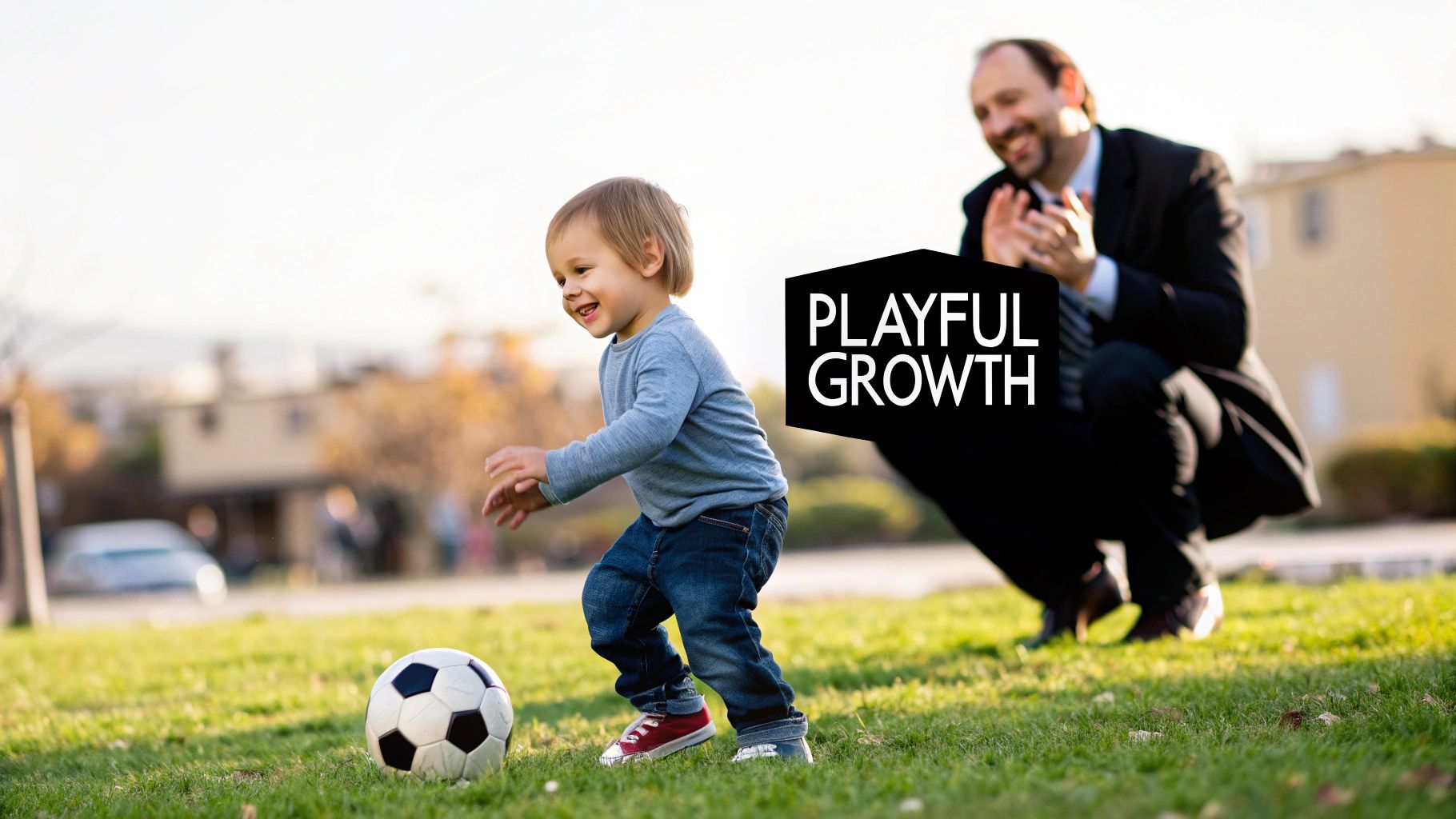
When you enroll your three-year-old in a soccer class, you’re not just signing them up for a sport; you’re giving them a head start on some pretty crucial life skills.
The structure of a class, even a very playful one, introduces toddlers to concepts like listening to a coach and cooperating with other kids. It’s often their first taste of a group setting, and that’s incredibly valuable. Your child gets to navigate social dynamics in a fun, low-pressure environment where they can learn about sharing, taking turns, and celebrating small wins together.
More Than Just Kicking A Ball
Of course, the physical benefits are huge. They’re laying the groundwork for a healthy, active life right from the start.
Globally, youth soccer is booming, and programs for toddlers are surging as parents recognize the massive developmental perks. Early childhood studies even show that starting soccer at age 3 can boost motor skills by up to 25% compared to kids who are less active. All that dribbling, kicking, and chasing in small-sided games builds coordination and balance in a really natural way.
At this age, success isn’t measured by goals, but by giggles, effort, and a willingness to try something new. Every chase, tumble, and kick contributes to their growing confidence and resilience.
These activities secretly build a strong foundation for physical, social, and emotional growth. Toddler soccer classes aren't just about the physical skills; they're a fantastic environment for building emotional intelligence in toddlers and promoting empathy through teamwork.
Here’s a quick look at how these fun activities translate into major developmental wins.
Developmental Wins: What Your 3-Year-Old Gains From Soccer
Developmental Area | Skills Gained Through Soccer | Real-World Example |
|---|---|---|
Gross Motor Skills | Running, jumping, kicking, changing direction, stopping. | Chasing after the ball helps them run with more control and purpose. |
Coordination | Hand-eye and foot-eye coordination. | Learning to connect their foot with the ball to make it move. |
Social Skills | Taking turns, sharing, listening to a coach, teamwork. | Waiting for their turn to kick the ball in a "Red Light, Green Light" game. |
Cognitive Skills | Following simple instructions, problem-solving, focus. | Figuring out how to dribble the ball around a cone without touching it. |
Emotional Skills | Building confidence, resilience, celebrating effort. | Getting back up with a smile after tripping over the ball. |
As you can see, a simple game of soccer is packed with opportunities for growth that extend far beyond the field.
Foundational Skills For Life
Beyond the immediate fun, soccer for 3-year-olds teaches skills that translate directly into everyday life. The focus and coordination required to follow a moving ball can even support pre-literacy skills.
While soccer is a fantastic starting point, exploring the best sports for 3 year olds can help you find the perfect fit for your child's unique personality and energy levels. Check out our guide here: https://www.jcsportshouston.com/post/best-sports-for-3-year-olds-fun-safe-activities-for-young-learners
Ultimately, the goal is to foster a love of movement that lasts a lifetime.
What to Expect From Your Pint-Sized Player
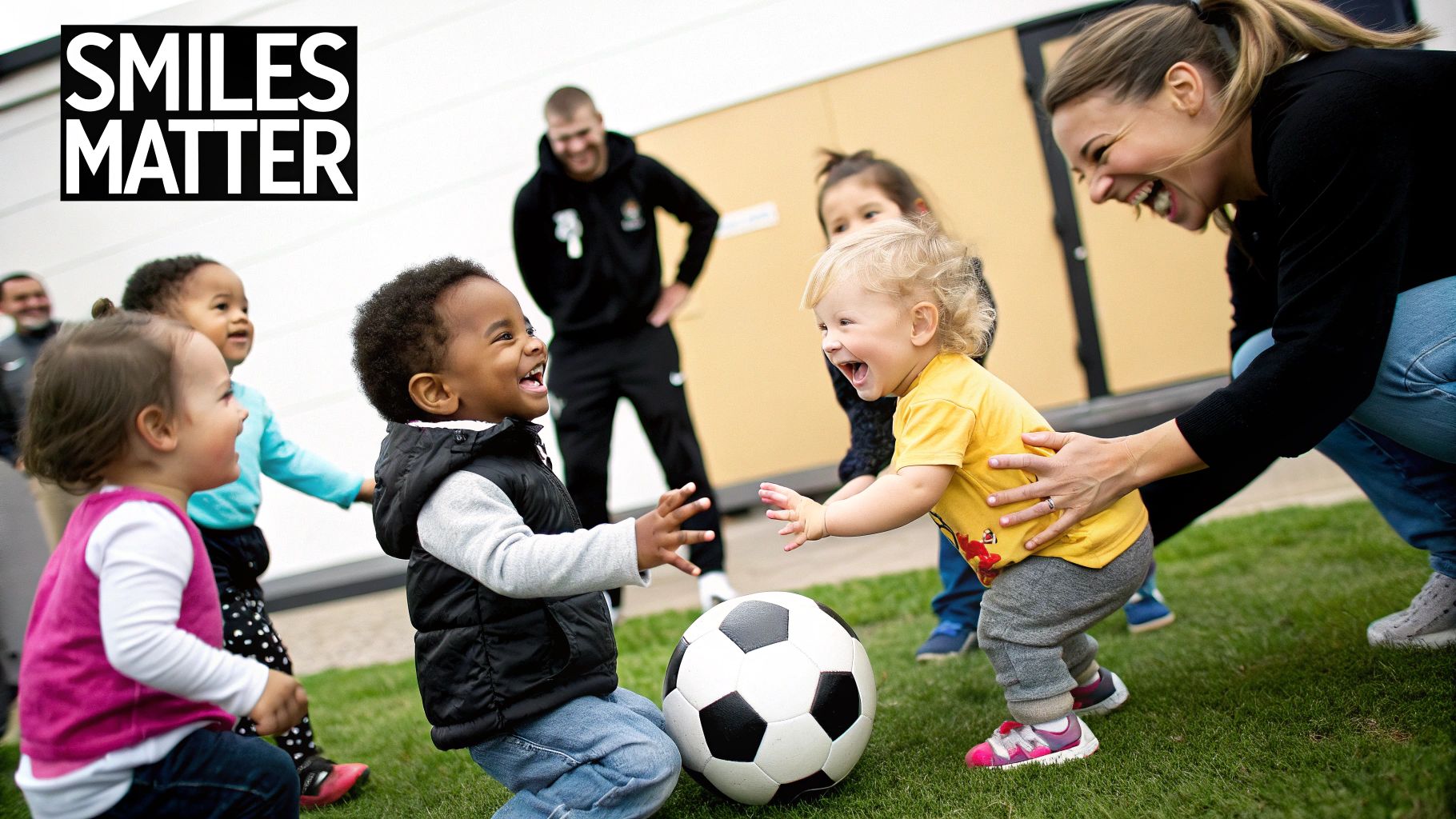
Before your three-year-old steps onto the field, let’s talk about what their first soccer experience will really look like. If you're picturing neat lines, focused drills, and strategic passes, you might be in for a hilarious surprise.
What you'll actually see is a wonderful, chaotic phenomenon we coaches affectionately call "beehive soccer." It’s that glorious moment when a swarm of tiny players converges on the ball all at once, giggling, tripping, and running in every direction except a straight line.
This is completely normal. In fact, it’s a sign that things are going exactly as they should for soccer for 3 year olds.
Embrace the Glorious Chaos
At this age, a toddler’s world revolves around them. They aren't thinking about teamwork or passing to an open player. Their entire focus is on that cool, round thing at their feet and the fun of chasing it.
Wandering off mid-game to inspect a dandelion? Totally normal. Stopping to wave at you from across the field? Par for the course.
Their attention spans are short, often lasting just a few minutes before they need a new, engaging prompt. Don't mistake this for a lack of interest—it's just how their brains are wired right now. Success isn’t about scoring goals; it's about big smiles, trying hard, and wanting to come back next week.
The real win is seeing your child run around with a grin on their face, feeling happy and confident. Celebrate every kick, even the ones that go backward, because each one is a tiny victory in their journey with sports.
Understanding these developmental milestones helps you become their best cheerleader. Your role is simple: provide endless positive reinforcement for their effort, not their performance. A simple "Great running!" or "I love how you tried to kick the ball!" makes all the difference.
Measuring Success in Toddler Terms
So, if we aren't counting goals, what should we be looking for? The true measure of a successful soccer session for a three-year-old comes down to fun and engagement.
Here’s what really matters:
Active Participation: Is your child moving and trying the activities, even for a little bit?
Positive Social Moments: Are they interacting with other kids, even if it’s just running alongside them in the "beehive"?
Willingness to Try: Are they attempting to kick the ball or listen to the coach’s silly, imaginative instructions?
Pure Fun: Most importantly, are they laughing and smiling?
Your enthusiastic support from the sidelines is crucial. A positive, pressure-free environment is what makes them fall in love with being active. This first taste of soccer for 3 year olds is about planting a seed for a lifetime of movement, not creating the next superstar.
Let them be little, let them be silly, and enjoy the show.
A 45-Minute Session Plan for Maximum Fun
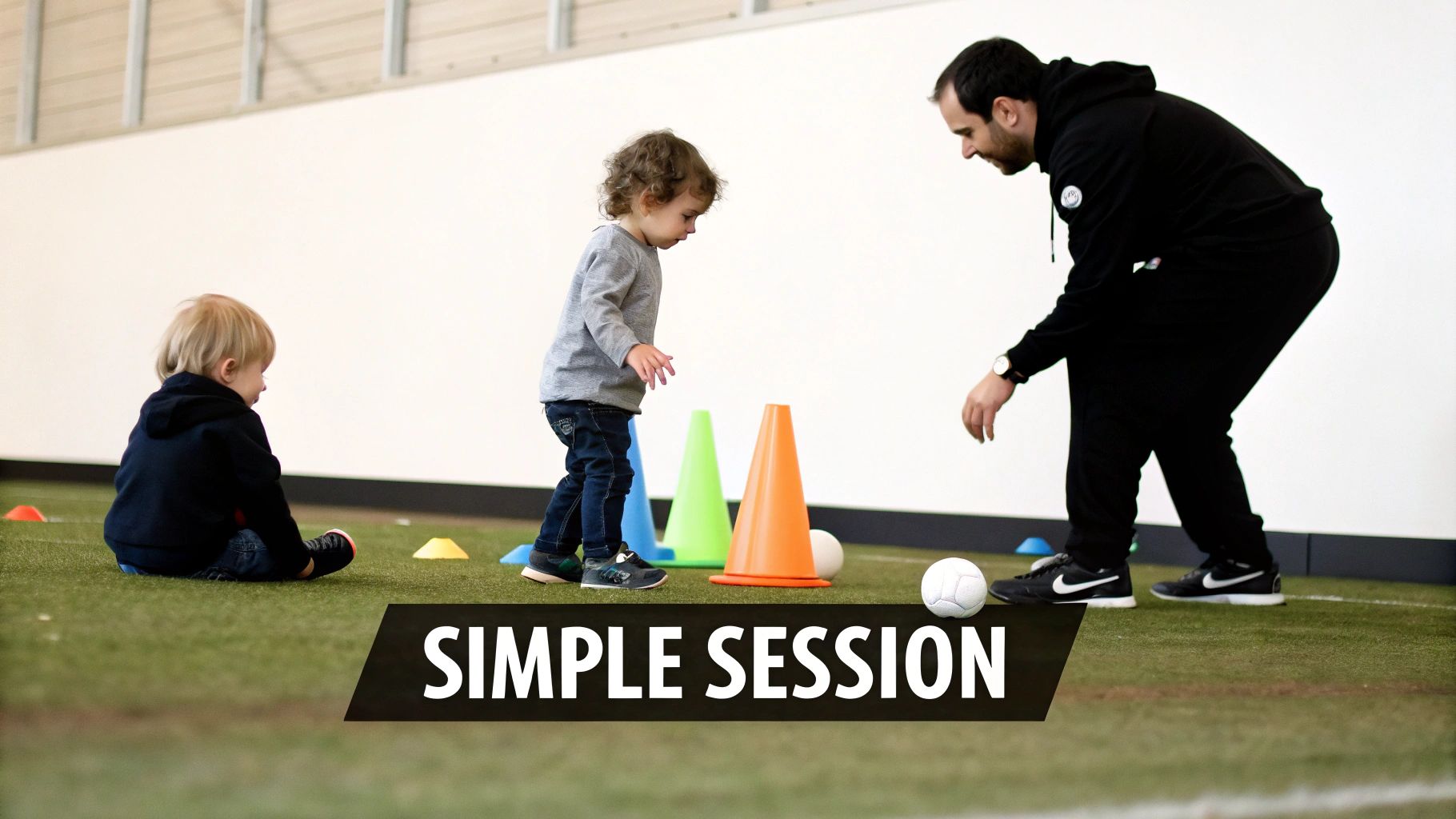
Ready to lead your own mini-practice? The absolute key to success with soccer for 3-year-olds is keeping things moving, imaginative, and incredibly fun. Forget complex drills or formations; a 45-minute session should feel like structured playtime with a ball at their feet.
This simple plan is broken into short, engaging segments designed to hold a toddler's attention while secretly building those foundational skills. Remember to bring tons of energy and a big smile—your enthusiasm is contagious!
The Welcome and Warm-Up (5–10 Minutes)
The first few minutes are all about getting the kids from the car to active play. Start with a high-energy welcome to get everyone excited, comfortable, and ready to move.
A great warm-up for this age is a simple game of "Follow the Leader." You can lead them through animal walks like bear crawls, frog jumps, or crab walks. This gets their bodies moving and listening without the pressure of a soccer ball just yet.
Pro Tip: Use silly sounds and exaggerated movements. The more fun you're having, the more they will, too.
Imagination-Based Skill Games (25–30 Minutes)
This is the core of your session, where the real magic happens. Give every child their own ball to maximize touches and minimize waiting around. The trick is to frame every activity as a story-based game—it’s far more engaging than just calling it a "drill."
Here are three games that work wonders with toddlers:
Red Light, Green Light Dribbling: A classic for a reason! Players dribble their soccer balls forward on "green light" and have to stop the ball with their foot on "red light." It’s a brilliant way to teach basic ball control and listening skills.
Sleeping Giants: Have all the kids lie down and pretend to be sleeping giants with their soccer balls. When you shout "Wake up, giants!" they jump up and start dribbling around the space. When you shout "The giants are getting sleepy!" they lie back down with their ball. This builds awareness and dribbling in open space.
Feed the Animals: Set up cones or small pop-up goals ("the animals") around the field. The mission is for the kids to "feed" the hungry animals by kicking their soccer balls to hit the targets. This introduces the concept of kicking with a purpose.
Remember, the goal isn't perfect execution. It's about joyful participation. If a child kicks the ball and runs the other way, that’s totally okay! Just gently guide them back to the game with encouragement.
The growing popularity of toddler sports isn't just a trend. The U.S. Soccer Foundation's Soccer for Success program, for example, saw an explosive 39% average annual growth. Introducing sports at age three also aligns with research linking early participation to lifelong healthy habits and even a 20% lower rate of obesity by age 12. You can find more details in the latest youth soccer participation report.
Keeping a toddler's attention means you need a plan, but also the flexibility to change it up. Here's how we structure our 45-minute classes to keep the energy high and the learning fun.
Sample 45-Minute Soccer Session Breakdown
Activity Segment | Time Allotment | Sample Game Idea |
|---|---|---|
Welcome & Warm-Up | 5 minutes | Follow the Leader (animal walks) |
Game 1 (Dribbling) | 10 minutes | Red Light, Green Light |
Water Break | 5 minutes | Quick drink & re-energize |
Game 2 (Control) | 10 minutes | Sleeping Giants |
Game 3 (Kicking) | 10 minutes | Feed the Animals (target practice) |
Grand Finale & Cool-Down | 5 minutes | Goal-scoring celebration & stretches |
This breakdown provides a great starting point. The most important thing is to read the room and adjust based on the kids' energy levels.
The Grand Finale and Cool-Down (5 Minutes)
Always end the session on a high note, leaving them excited for next time. A "goal-scoring celebration" is a perfect way to do this.
Let every child take a turn kicking their ball into an open net and then doing their favorite victory dance or silly celebration. High-fives all around are mandatory! Finally, gather them for a quick cool-down stretch, like reaching for the sky and then touching their toes, to signal that soccer time is over.
How to Choose the Right Toddler Soccer Class
Signing your three-year-old up for their first sports program is a huge step! It's a fantastic way to channel all that toddler energy and introduce them to a world of fun and movement. And you’re not alone—youth sports are booming.
With 60 million kids now participating in organized sports across the U.S., specialized programs for toddlers have popped up everywhere. Soccer, in particular, is a massive draw for the little ones. But this popularity means you have a lot of options, and not all programs are created equal, especially for this unique age group.
The best classes for three-year-olds put fun and safety first—way before any talk of rules or competition. It's all about building confidence and a love for being active. Research shows that kids who start sports early are 30% more likely to stay active as teenagers. You can dive deeper into these youth sports participation trends to see just how much this space is growing.
What to Look for in a Great Coach
For a three-year-old, the coach makes or breaks the entire experience. Their ability to connect with tiny humans is far more important than any professional playing career they might have had.
When you're observing a class, look for a coach who is:
Patient and Enthusiastic: They should have a seemingly endless supply of energy and a genuine smile.
An Expert in Fun: Instructions sound more like a game ("Okay, everyone, let's tiptoe past the sleeping lion!") than a rigid drill.
Kind and Encouraging: They’re generous with high-fives and celebrate every little effort, not just a perfect kick.
A great toddler soccer coach is essentially a master of organized chaos. They create a safe, joyful environment where every child feels seen and successful, no matter how many times they trip over the ball.
The Right Class Environment
The vibe of the class—both physically and socially—is just as important as the coach. When you're checking out a program, pay close attention to the details that create a positive and welcoming atmosphere.
You’re looking for a space where kids feel comfortable enough to be silly, make mistakes, and just be themselves. It should feel inviting from the moment you walk in. Our guide on how JC Sports helps build confident young players through toddler soccer dives into this philosophy more deeply.
Here’s a quick checklist to help you size up any program:
Small Class Sizes: The ideal coach-to-player ratio is around 1 to 8. This ensures every child gets the attention they need.
Age-Appropriate Curriculum: The activities should be imaginative and play-based. If you see kids standing in long lines waiting for their turn, that’s a big red flag.
Focus on Fun: Does it sound like the kids are having a blast? Laughter is the ultimate measure of success for this age group.
Safe Playing Area: Whether it’s an indoor facility or an outdoor field, the space should be clean, hazard-free, and have plenty of room for little legs to run around safely.
Essential Gear and Safety Tips for Tiny Players
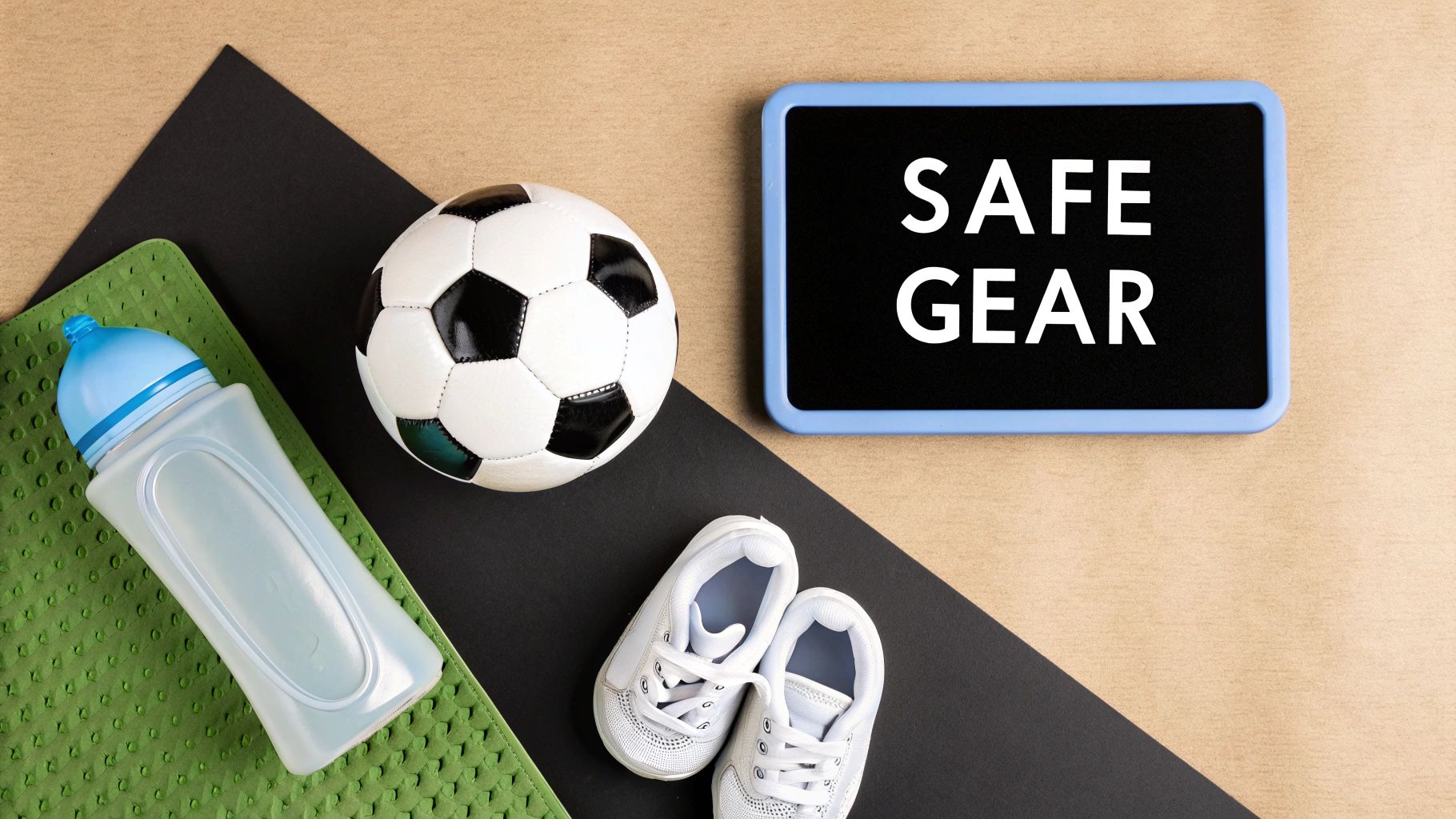
Getting your toddler ready for their first soccer session is way easier than you might think. For this age group, less is definitely more. You can forget about the fancy cleats and official team kits—right now, it's all about comfort and safety.
When it comes to soccer for 3 year olds, the priority is simply having fun and moving freely. A simple t-shirt and shorts or athletic pants are perfect. As for shoes, a sturdy pair of sneakers is all they need to run, kick, and play. Shin guards are not necessary at this stage, as our classes focus on fun games, not aggressive competition.
What You Absolutely Need
Before heading out the door, a quick check for these basics is all it takes. Keeping it simple means less stress for everyone.
Comfortable Clothes: Just make sure they're dressed for the weather in clothes that aren't too loose or restrictive.
Supportive Sneakers: A good grip and proper fit are key to preventing slips and tumbles on the field.
A Size 3 Soccer Ball: This is the smallest and lightest official size, making it perfect for little feet to control.
A Water Bottle: Hydration is super important, even for short sessions. Don't forget it!
One pro-tip from a coach who has seen it all: label everything! To avoid the inevitable mix-ups with water bottles and balls, grab some durable personalized sports labels.
Creating a Safe Playing Environment
Once you have the right gear, the next step is making sure their play area is safe. A hazard-free space lets your child focus on the fun without you having to worry.
Before any kicking starts, I always recommend doing a quick "field sweep." Just walk the area and clear out any potential dangers like rocks, sticks, or random trash. Check that the ground is relatively even to minimize tripping. If you're playing in the backyard, set clear boundaries away from things like driveways or pools.
Safety isn't just about the physical space; it's also about tuning into your child's needs. A toddler can go from 100% energy to completely wiped out in a flash, and they often can't tell you what's happening.
Learning to Read Your Toddler
Understanding your child's cues is probably the most important safety skill you can have as a parent. They might not say, "I'm tired," so it's your job to become a bit of a "fatigue detective."
Keep an eye out for those subtle signs of exhaustion. Are they getting a little cranky? Tripping more often? Suddenly losing interest in a game they loved two minutes ago? These are all classic signs.
Offer water breaks often, even if they don't ask for one—make it a fun, routine part of the activity. If your child seems overwhelmed or just plain tired, it’s completely fine to call it a day. The goal is to build a positive association with the sport, and pushing them too hard is a surefire way to backfire.
Answering Your Top Questions About Toddler Soccer
As a parent, you're going to have questions before signing your toddler up for a new activity. It’s completely natural! You want to know it's the right fit and, most importantly, that your child is going to have a great time.
We hear these common questions all the time from parents considering soccer for 3 year olds. We've put together some clear, reassuring answers to help you feel confident as you start this fun new adventure with your little one.
Is My Three-Year-Old Really Ready for Soccer?
This is the number one question we get, and the short answer is: absolutely, as long as the program is designed specifically for them!
Let's be clear: toddler soccer isn't about learning complex rules or winning games. It’s all about structured play. We’re talking about running, listening to fun instructions, and getting comfortable kicking a ball. If your child enjoys being active and can follow a simple, one-step direction like "run to the red cone!" or "everybody, stop your ball!" then they are ready to roll. The goal here is pure, joyful participation.
We dive a lot deeper into this in our article about the best age to start soccer for kids, which is a great resource if you're on the fence.
Key Takeaway: Readiness at this age isn't about skill; it's about being ready to have fun in a group setting. A class built on imagination and play is the perfect starting point for any toddler.
What if My Child Is Shy and Won't Participate?
It's completely normal for a three-year-old to feel a little timid in a new place with new faces. We see it every season! Many kids spend their first class or two just watching from the sidelines, and that's perfectly okay.
The best thing you can do is stay positive and patient. Don’t push them to join in. Instead, offer gentle encouragement and celebrate the tiny wins—like if they take a single kick of the ball or give the coach a high-five. A great coach will know exactly how to handle this, working to build a connection and invite your child into the fun without any pressure. Trust us, once they see how much fun everyone else is having, their curiosity usually takes over.
What Should I Do if My Child Cries or Wants to Leave?
First things first: stay calm. Your relaxed vibe will help soothe your child's anxiety more than anything. Get down on their level and acknowledge their feelings. Something simple like, "I know this is new, and it's okay to feel a little unsure," can go a long way.
Sometimes, all a toddler needs is a quick cuddle or a moment with you on the sideline before they feel brave enough to try again. If they still really want to leave, don't force it. The goal is to build a positive association with soccer. Ending on a happy note—even if it's a little early—is always better than ending with tears.
Will My Child Actually Learn to Play Soccer?
Yes, but probably not in the way you're thinking. They won't be learning tactical formations or how to bend it like Beckham. Instead, they'll be learning the absolute foundational building blocks of soccer and, really, all physical movement.
Here’s what they’ll actually learn:
Ball Familiarity: How to stop a rolling ball with their feet (instead of just their hands!).
Basic Motor Skills: The tricky art of running and kicking at the same time.
Coordination: Building that crucial foot-eye coordination through super fun games.
Listening Skills: Following a coach's imaginative instructions during an activity.
These are the essential first steps that create a strong base for any future sport they might play. At this age, learning happens through play, and every moment they spend moving with a ball at their feet is a huge win.
At JC Sports Houston, we specialize in creating a fun, pressure-free environment where your little one can fall in love with being active. Our toddler programs are designed from the ground up to build confidence and coordination through imaginative play.
Ready to see for yourself? Sign up for a free trial class and watch your child's journey begin!

Comments