

A Parent's Guide to Soccer for 6 Year Olds

So, you're thinking about soccer for your 6-year-old? Fantastic choice. This is the perfect age to dive into the world's most popular sport, and it's an amazing fit for their boundless energy and natural love for play.
At this stage, soccer isn't about complex rules or intense competition. Think of it as a giant, organized game of tag with a ball, where every kid gets to run, laugh, and have fun. The real goal isn't scoring—it's creating a positive first experience with sports that they'll carry with them for years.
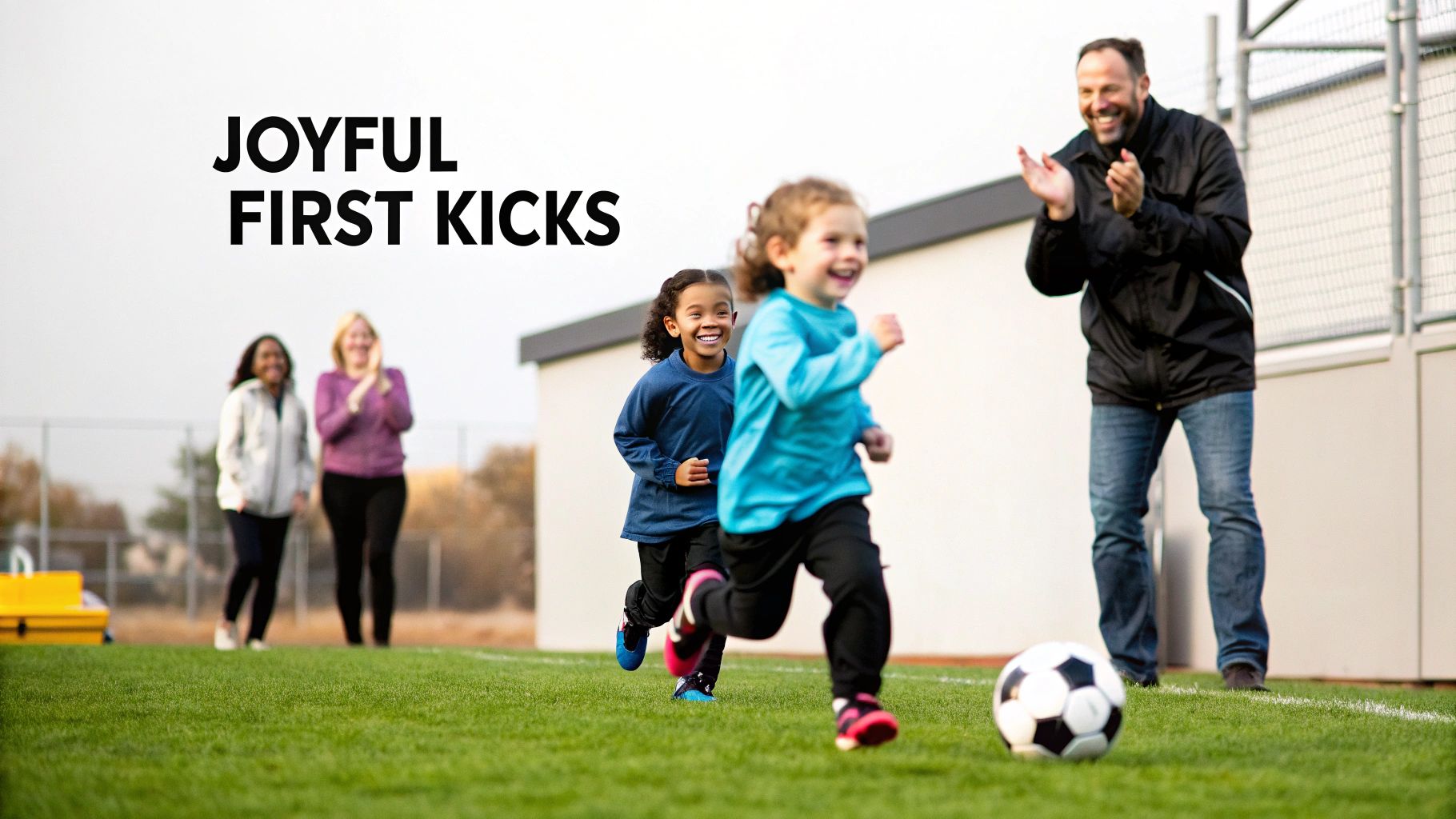
Why 6-Year-Olds and Soccer Are a Perfect Match
Six-year-olds are little sponges, soaking up new skills and ideas through active play. Soccer channels all that wonderful energy into something productive and fun, building a foundation for a healthy life. But the benefits go way beyond just kicking a ball.
On the field, your child will learn some of life's most important lessons without even realizing it.
Making New Friends: Nothing builds bonds like working together as a team. Kids learn to communicate, cooperate, and cheer each other on.
Learning to Listen: Following simple directions from a coach helps them build focus and respect—skills that are just as valuable in the classroom as they are on the field.
Building Real Confidence: There's a special kind of magic in mastering a new skill. That moment they stop a ball for the first time or make a solid kick? That’s pure, earned confidence.
The best youth soccer programs prioritize the sheer joy of playing. A great playing surface, like an artificial turf playground for safety and consistent play, makes a huge difference. No more worrying about muddy fields or grass-stained knees—just non-stop fun.
Youth soccer is exploding in popularity across the United States for a reason. Recent numbers show nearly 14.1 million players aged six and up are now playing outdoor soccer, with about one in every four kids giving the sport a try.
Here in Houston, our programs at JC Sports are built around this same philosophy of age-appropriate fun and genuine skill development. We believe in keeping kids moving and engaged, and you can read more about why that's so crucial in our guide on the essential benefits of keeping kids active.
What To Expect From A 6 Year Old Soccer Player
If you’re heading to your 6-year-old’s first soccer game expecting neat formations and strategic passing, you might be in for a surprise. What you'll actually see is a joyful, chaotic swarm of kids all chasing the ball at once.
Don't worry—this is exactly what's supposed to happen! This stage is often called "bunch ball" or "bee ball," and it’s a perfectly normal part of their development. At this age, a kid’s world is all about "me." They understand "me and the ball," but the concept of "us and the ball" just hasn't clicked yet. Their mission is simple: get the ball. And they'll follow it wherever it goes.
Understanding Their Developing Brain
Think of it like building with LEGOs for the very first time. Before a child can build an elaborate castle with a friend, they first have to learn how to stack one block on top of another. Soccer is no different. Each player is busy figuring out their own "block"—how to run, how to dribble, how to stop—before they can possibly understand how to fit into a larger team plan.
At six, the game isn't about mastering positions; it's about mastering their own bodies and building a positive relationship with the ball. A great listen to the coach is just as big a win as a goal.
Their attention spans are short, and they don’t have the ability to see the whole field. They’re laser-focused on the most important thing in their world: the ball right in front of them. This is why good coaching at this age is all about individual skills and super simple instructions, not complex plays.
Realistic Milestones For A 6 Year Old
So, what should you actually be looking for on the field? Instead of focusing on wins and losses, shift your attention to celebrating the small, individual victories. This is what builds real confidence and keeps the game fun—which is the only thing that matters right now.
At this early stage, it’s all about building a foundation of key physical, social, and cognitive skills. The table below breaks down what you can expect to see on the field and how you can support that growth at home.
Developmental Milestones For 6 Year Olds In Soccer
Developmental Area | What You'll See On The Field | How To Support This At Home |
|---|---|---|
Physical Coordination | Short bursts of dribbling, attempting to stop the ball with their foot, running without tripping (most of the time). | Kick a ball around in the backyard. Play games like Red Light, Green Light to practice stopping and starting. |
Cognitive Understanding | Following 1-2 simple instructions from a coach, like "kick the ball to the red cone" or "everybody freeze!" | Ask them to complete simple two-step tasks, like "please get your shoes and put them by the door." |
Social & Emotional Growth | Learning to take turns in a drill, saying "good game" to the other team, maybe helping a teammate who has fallen down. | Practice sharing toys with siblings or friends. Talk about what it means to be a kind teammate. |
Listening Skills | Looking at the coach when they speak, trying their best to do what was asked, even if it's not perfect. | Read stories together and ask them simple questions about what they heard. Give them your full attention when they speak to you. |
Remember, progress at this age is measured in small steps, not giant leaps. Celebrating these little wins makes all the difference.
Here are some of the key milestones that truly matter for a 6-year-old:
Basic Dribbling: They’re learning to keep the ball somewhere near their feet while moving. It won’t be pretty, but you'll start to see moments of actual control.
Stopping the Ball: Using the bottom of their shoe to stop a rolling ball is a huge achievement. This is the first step toward gaining control in a chaotic game.
Following Simple Instructions: When you see your child actually listen to the coach—whether it’s to "freeze!" or "try to find space"—that’s a massive win.
Learning Sportsmanship Basics: Simple things like giving a high-five, saying "good game," or helping a friend up are the first seeds of great teamwork.
When you set these kinds of realistic expectations, you help create a positive, supportive space where your child can simply fall in love with the game. For 6-year-olds, success is all about participation, effort, and fun. Everything else will come later.
How to Choose the Right Soccer Program
Choosing your child’s first soccer program can feel like a huge decision, but it really doesn’t have to be complicated. For a 6-year-old, the best program isn’t about creating the next superstar. It’s about finding a positive, safe, and fun environment that helps them fall in love with the game.
Think of it like picking a preschool. You're not looking for advanced calculus. You're looking for caring teachers, lots of play-based learning, and an atmosphere where your kid feels happy and supported. The exact same ideas apply to soccer for 6 year olds.
What to Look For in a Program
A great program is built around one thing: what's appropriate for this age. The coaching philosophy should put development and fun way ahead of winning. At this age, scoreboards and league standings are pointless. Smiles, high-fives, and effort are the only stats that matter.
Look for a program that focuses on small-sided games, like 3v3 or 4v4. This setup gives every child way more time on the ball, which means more chances to practice dribbling, passing, and just figuring things out. It’s the difference between standing in a long line and getting to play the whole time.
The single most important element of any youth sports program is a fun, child-centered environment. If kids aren't having fun, they won't want to keep playing, and the opportunity to build skills is lost.
A low player-to-coach ratio is another non-negotiable. One coach just can't give the individual attention needed at this age if they're wrangling a huge group. An ideal ratio is around 8-10 players per coach, which makes sure every child gets the guidance and encouragement they need to thrive.
Questions Every Parent Should Ask
Before you sign on the dotted line, come prepared with a few questions. This is the best way to see if a program’s values line up with your family’s. A quality organization will always be happy to give you clear answers.
Here’s a quick checklist to get you started:
Coaching Philosophy: How do you define a "successful" season for a 6-year-old player?
Coach Qualifications: Are your coaches trained specifically for youth development? Do they have background checks?
Session Structure: What does a typical practice look like? How do you balance structured drills with fun games and free play?
Safety Protocols: What are your procedures for injuries, water breaks, and bad weather?
This decision tree below is a great visual for some of the common (and perfectly normal) things you'll see in youth soccer.
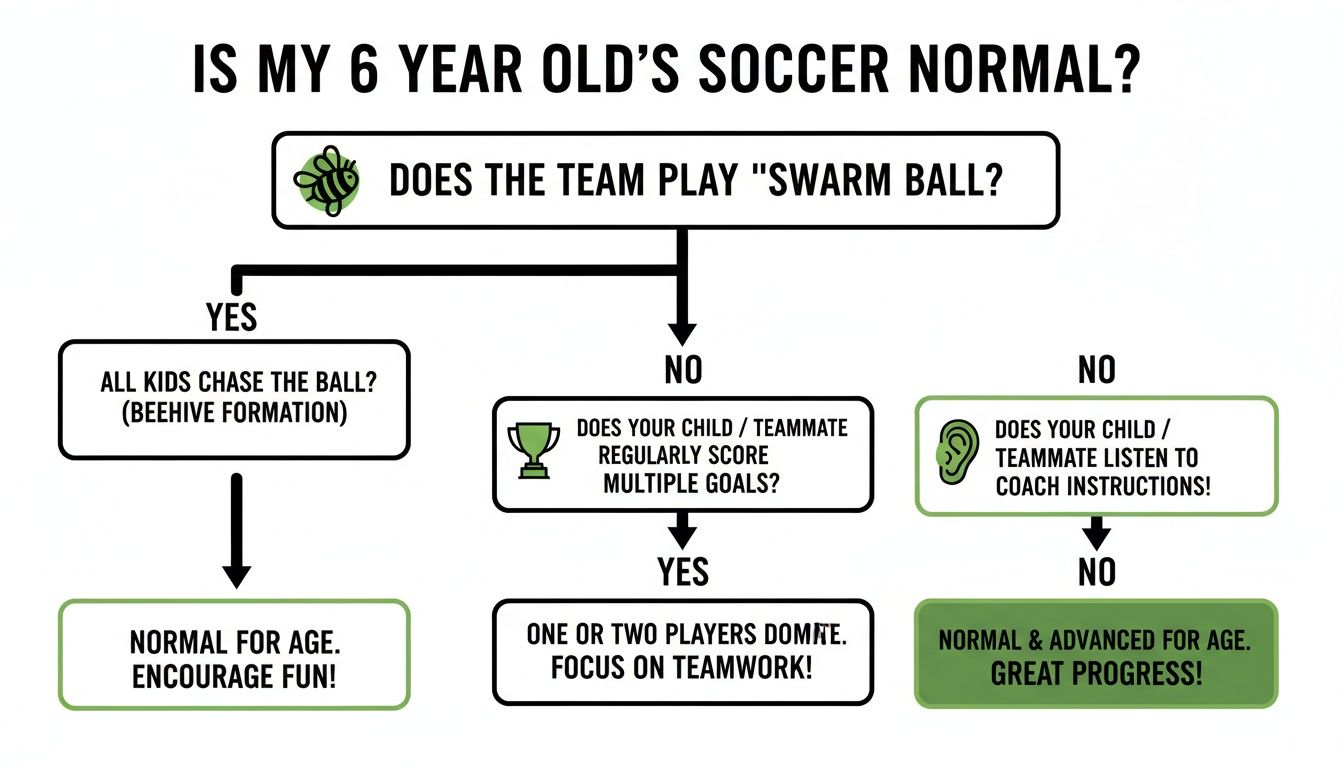
The key takeaway? Most of the "weird" stuff you'll see—like a swarm of kids chasing a single ball—is a completely normal and expected part of their development.
Making the Final Choice
When programs are structured the right way, they can have a massive positive impact on kids and communities. For instance, while national youth soccer participation has seen some dips, the U.S. Soccer Foundation's Soccer for Success program has grown by focusing on creating safe, accessible places to play. It’s a powerful reminder of what a well-run, community-focused program can do. You can read more about these positive participation trends.
Ultimately, the right fit comes down to your child. Some kids thrive in a laid-back community rec league, while others might prefer a more skill-focused clinic like the programs we offer at JC Sports Houston. Trust your gut—choose the place where you feel your child will be happiest and most encouraged to just be a kid.
Essential Soccer Drills That Are Actually Fun
The secret to teaching soccer for 6 year olds is making sure it never feels like practice. The best drills are the ones disguised as games, turning skill development into pure, unfiltered fun.
It's time to forget about boring lines and repetitive exercises. Instead, we can tap into their natural love of play by transforming classic backyard games into skill-building powerhouses. These activities are designed to improve core abilities like dribbling, ball control, and awareness—all while your child is just focused on laughing and running around.
You can easily set these up at home with just a ball and a few cones (or shoes, water bottles, or anything else you can find).
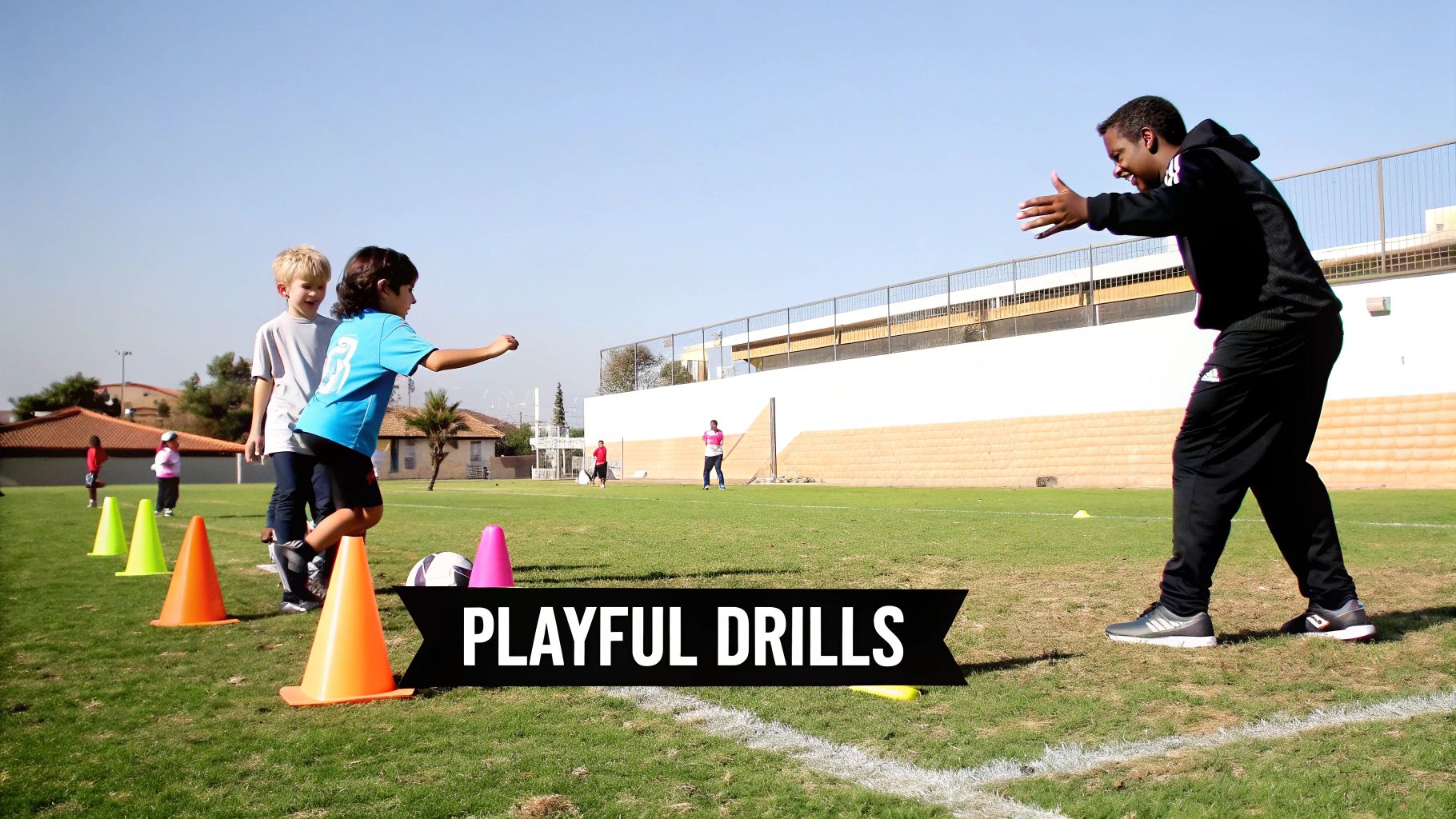
Dribbling With Red Light, Green Light
This timeless game is perfect for teaching a crucial soccer skill: dribbling with your head up. It naturally forces players to shift their focus from their feet to what's happening around them, building that all-important game awareness without them even realizing it.
How to Play:
Set Up: A parent or coach is the "stoplight" at one end of the yard. The child starts at the other end with their soccer ball.
Green Light: When you yell "Green Light!" the child dribbles the ball toward you, trying to keep it close.
Red Light: When you yell "Red Light!" they have to stop the ball as fast as possible, ideally by putting the bottom of their shoe right on top of it.
The Goal: The first one to reach the stoplight wins! If they move after you call "Red Light," they have to take a few steps back.
This simple game teaches kids to control their speed and stop the ball on command, which are foundational skills they'll use forever. For parents wanting to dive a little deeper, our guide on how to improve ball control in soccer for young players offers even more great tips and exercises.
Shielding With Shark Attack
"Shark Attack," which you might also know as "Sharks and Minnows," is a high-energy game that teaches one of the most underrated skills for young players: shielding. This is all about using your body to protect the ball from a defender. For a 6-year-old, this game makes that concept totally intuitive and exciting.
How to Play:
The Minnows: Each child (the "minnow") gets their own soccer ball.
The Shark: The parent or coach is the "shark" and starts in the middle of a defined space (your backyard is perfect).
The Game: The minnows have to dribble their soccer balls from one side of the "ocean" to the other without the shark kicking their ball away. If a minnow's ball gets kicked out, they become a shark for the next round.
This game naturally encourages kids to put their body between the defender (the shark) and their ball. They learn to turn and use their arms for balance, all while trying to escape a fun "danger." It’s basically problem-solving in motion.
Top 5 Fun Soccer Drills For 6 Year Olds
Turning simple games into effective soccer practice is all about knowing the "why" behind the fun. Here’s a quick-reference guide to some of our favorite game-based drills that build essential skills without ever feeling like work.
Drill Name (Game) | Core Skill Focus | How To Play (Simple Steps) |
|---|---|---|
Red Light, Green Light | Dribbling & Ball Control | Dribble on "green," stop the ball with your foot on "red." |
Shark Attack | Shielding & Dribbling | Dribble across a designated area while a "shark" tries to steal your ball. |
Follow the Leader | Close Control & Footwork | Copy the leader's dribbling moves and tricks in a line. |
Clean Your Room | Kicking & Awareness | Two teams kick all the balls from their side to the other. The team with fewer balls wins. |
Freeze Tag | Dribbling & Agility | Players dribble in a space. If tagged, they freeze until a teammate passes a ball between their legs. |
By using these kinds of drills, you’re not just teaching soccer. You're creating positive memories and helping foster a genuine, lifelong love for being active and playing a game.
Getting the Right Gear Without Breaking the Bank
Getting your child kitted out for their first day of soccer doesn't mean you need to spend a fortune. At this age, it’s all about the basics. You only need a few key items to make sure your 6-year-old is safe, comfortable, and ready to have a great time on the field.
Forget the flashy brands and focus on what really matters: fit and function. Think of it like a starter toolkit—you just need the essentials to get the job done.
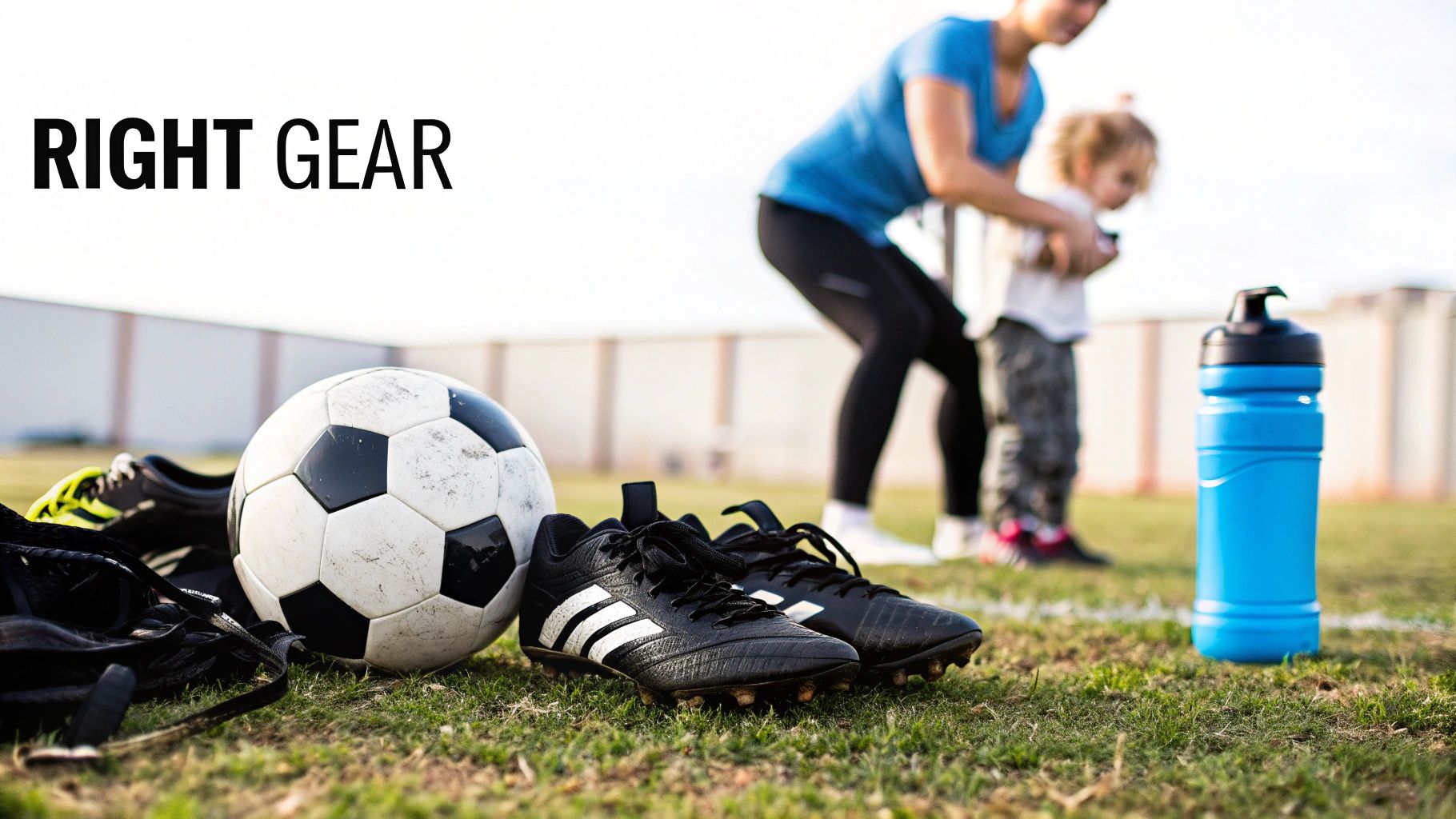
The Must-Have Checklist
Your shopping list is refreshingly short. These are the non-negotiables that will keep your child protected and allow them to jump right into the fun.
A Size 3 Soccer Ball: This is the official size for this age group for a reason. It's smaller and lighter, making it way easier for little feet to control without feeling clumsy or strained.
Shin Guards: This is easily the most important piece of safety gear. Accidental kicks to the shin are just part of the game, and a good pair of shin guards gives kids the confidence to run after the ball without fear.
Soccer Socks: You’ll need a pair of long socks that can be pulled up and over the shin guards. This is what holds them securely in place during all the running, jumping, and kicking.
Athletic Shoes: While soccer cleats offer the best traction on grass, a sturdy pair of sneakers will work just fine for beginners. The main thing is that the shoes provide good support.
The right gear does more than just protect; it empowers. A child who feels safe and comfortable is a child who is free to play, learn, and fall in love with the game.
Beyond the Basics
Aside from the gear you can buy, a couple of other things are just as important for a positive experience on the field.
Hydration is a big one. Always send your child with a water bottle (put their name on it!) and remind them to take sips often, especially when it’s warm out. Also, a few minutes of simple warm-ups like jogging or skipping can get their muscles ready for play and help prevent minor strains. These simple habits build a foundation for a healthy and safe journey in soccer for 6 year olds.
Your Questions About Youth Soccer Answered
Jumping into the world of youth sports brings up a ton of questions. As a parent, you just want to make sure you’re setting your kid up for a positive, encouraging experience. We get it. Here are some of the most common questions we hear about starting soccer for 6 year olds.
Is My 6-Year-Old Ready For Competitive Soccer?
The short answer is no, and honestly, that's a good thing. At six, the main goal should be building a genuine love for the game, not piling on the pressure of a competitive "travel" team. That world is better suited for older kids who have already built a solid foundation and are asking for a bigger challenge.
The best programs for this age group are all about fun and fundamentals. Look for local leagues that use small-sided games, like 3v3 or 4v4, because they give every child way more chances to actually touch the ball. Success should be measured in smiles and high-fives, not what the scoreboard says. The real win is creating a positive feeling about sports that sticks with them for life.
How Often Should A 6-Year-Old Practice Soccer?
For most six-year-olds, one practice and one game per week is the sweet spot. This schedule is just enough to build skills and introduce basic ideas without causing burnout or boredom. Young kids simply don't have the stamina or attention span for much more.
Keep the sessions short and full of energy. A practice that runs 45 to 60 minutes is perfect. Remember, quality beats quantity every time. A great practice is packed with fun, game-based activities that keep kids moving and laughing. And don't forget the power of unstructured play—just kicking a ball around the backyard is incredibly valuable for their development. For parents trying to juggle it all, finding resources for streamlining family logistics, including soccer practice can be a huge help.
What If My Child Doesn’t Want to Participate?
It's completely normal for a young kid to feel shy or hesitant in a new setting. The first step is to gently try and figure out why. Are they intimidated by the other kids? Is the coach’s style not clicking with them? A quiet conversation can tell you a lot.
Whatever you do, try not to force it. Instead, offer gentle encouragement. You could suggest they just try for ten minutes. A lot of the time, once they get moving and join the fun, the hesitation melts away. Sometimes, though, the program just isn't the right fit, and a different class with a more relaxed approach could make all the difference.
"A child’s hesitation is often a sign that they need more support, not more pressure. The right environment will make them feel safe enough to try."
What Are The Most Important Skills to Learn at This Age?
Forget about complex tactics like offside traps. The most critical skills for a six-year-old are the absolute basics of movement and coordination. As a parent, you can learn more about how to support this at home with our parent's guide on how to improve soccer skills.
At this age, it's all about these core building blocks:
Dribbling: Simply learning to keep the ball close while they move.
Stopping the Ball: Using the bottom of their shoe to gain control.
Listening: Following one or two simple instructions from a coach.
Balance and Coordination: Basic athletic movements like running, jumping, and changing direction.
Having Fun: This is the most important "skill" of all. A kid who enjoys playing is a kid who will want to keep learning for years to come.
At JC Sports Houston, we design our programs to answer these questions with a fun, positive, and age-appropriate approach. Our experienced coaches focus on building a love for the game first, ensuring your child's first soccer experience is a great one. Book a free trial class today!

Great guide for introducing young children to soccer in a fun and supportive way. For families looking to add a personal touch to team kits, bags, or jackets, soccer patches Dublin can be a fun option for celebrating their club and love of the game.