

Soccer and Basketball: A Parent's Guide to Balance

You're standing in the gym parking lot or on the sideline, trying to answer a simple question that somehow feels bigger than it should. Should your child spend time on soccer, basketball, or both? A lot of parents are really asking something deeper, like, “Which choice helps my kid grow, stay excited, and avoid burnout?”
The good news is that this doesn't have to be an either-or decision. Soccer and basketball both build athletic habits that matter for the long run, and they do it in different ways. When you understand what each sport teaches, it becomes much easier to choose a path that fits your child's age, personality, and energy level.
The Ultimate Playground Choice Soccer or Basketball
A parent usually notices the difference before the coach ever says a word. One child loves chasing a ball across an open field, while another feels at home on a smaller court, dribbling, pivoting, and reacting in tight spaces. Both kids are moving, both are learning, and both are having fun for different reasons.
The first thing to remember is that the two sports come from very different histories and playing environments. Modern soccer was codified in 1863 in England, though its roots go back more than 2,000 years through games in ancient China, Greece, and Rome, while basketball was invented in 1891 by Dr. James Naismith in Springfield, Massachusetts, as a less injury-prone alternative to football (Bundesliga history of soccer). That difference in origin still shows up today in how each sport feels to a child.
A family question, not a forever decision
A lot of parents worry that picking one sport means closing the door on the other. In real youth development, that's usually not how it works. Children often benefit more from trying both, especially in the early years when coordination, confidence, and enjoyment matter more than specialization.
Practical rule: If your child is still learning how to move, listen, and stay engaged, the “right” sport is usually the one that keeps them active and wanting to come back.
Soccer often appeals to kids who like steady motion and kicking with their feet. Basketball tends to click with kids who enjoy quick starts, stopping, turning, and using their hands to control the ball. Neither pattern is better on its own, but each one gives a child a slightly different athletic foundation.
For parents, the goal isn't to crown a winner. It's to notice which environment helps your child learn movement, teamwork, and self-control without turning practice into pressure.
Core Differences and Foundational Skills
The easiest way to compare the sports is to look at how the body moves and how the game flows. Soccer asks a child to keep running, scan the field, and connect passes with the feet. Basketball asks a child to move in sharper bursts, handle the ball with the hands, and react to changing spacing in a tighter area.
Soccer vs. Basketball At a Glance
Attribute | Soccer | Basketball |
|---|---|---|
Game flow | More continuous movement | More stop-and-start action |
Main coordination | Foot-eye control | Hand-eye control |
Common movement pattern | Running, cutting, kicking, changing direction over open space | Sprinting, sliding, pivoting, jumping, quick repositioning |
Primary spatial setting | Large field | Smaller court |
Core skill emphasis | Ball control with feet, spacing, endurance, field awareness | Dribbling, shooting, passing, quick decisions, court awareness |
Physical feel | Longer sustained effort | Repeated bursts of effort |
Team awareness | Reading lanes, support angles, and transitions | Reading passing lanes, help defense, and shot opportunities |
Soccer's pace rewards patience. A child has to stay involved even when the ball is far away, because the next play can open up quickly. Basketball compresses that same awareness into tighter space, where one step, one pivot, or one pass can change the whole possession.
The body adapts differently too. Soccer usually leans into longer, aerobic effort on a larger playing surface, while basketball relies more on repeated anaerobic bursts, short recovery windows, and fast changes of direction. That's why some kids look more relaxed in one sport and more explosive in the other.
What each sport teaches first
Soccer usually teaches children to use their feet with intention. A beginner learns how to trap a rolling ball, push it into space, and make simple decisions while moving. Basketball usually teaches children to control the ball with their hands while keeping their head up and their feet ready to stop, turn, or pass.
A useful way to think about it is this. Soccer asks, “Can you keep the ball and keep moving?” Basketball asks, “Can you control the ball while the court keeps changing around you?”
Coaching note: Children don't need to understand every tactic right away. They need repeated chances to move, fail, try again, and learn what their body can do.
That's why early instruction matters so much. Good beginner programs don't overload kids with jargon. They build simple habits, like balance, timing, and awareness, then let those habits grow into more advanced play later.
Surprising Skill Crossovers Between Sports
Parents are often told to choose one sport because the skills do not overlap much. That view is too narrow. Soccer and basketball both ask a child to read space and make fast decisions, even though one is played on a field and the other on a court. Research on visual-spatial demands in sports points to that shared need for quick awareness.
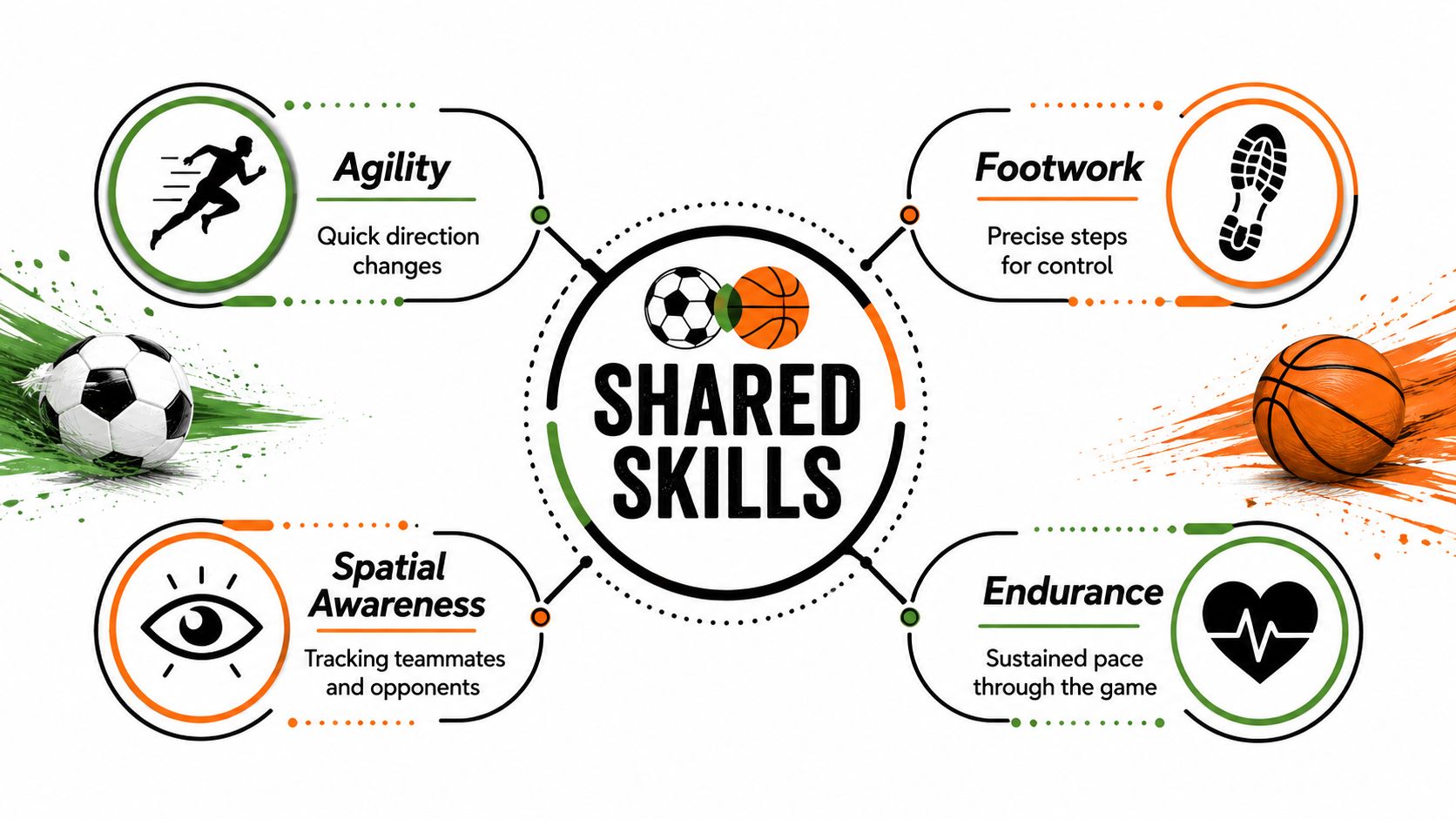
Shared skills show up in different clothes
A child who plays soccer learns to scan for teammates, defenders, and open lanes. That same habit helps on the basketball court, where the child must spot help defense, passing angles, and room to drive. The geometry changes, but the habit stays the same. Look early, decide quickly, keep moving.
Basketball adds another useful piece. It trains quick lateral movement, balance, and defensive footwork in a small area. Those movements can help a child stay more controlled in soccer when defending one-on-one, turning to track a runner, or adjusting to a sudden change of direction.
The transfer is real, but it has limits. A child does not automatically become a stronger basketball player just because they play soccer, and the reverse is true as well. What does carry over is the general ability to process a busy environment, stay calm, and react with purpose. That is one reason parents often see multi-sport kids adapt well when the pace changes.
For families who want a closer look at timing and split-second choices, this guide on improving reaction time connects well with the same idea. Faster reaction is less about rushing and more about seeing earlier.
Where the sports differ most
The biggest difference is the tool the child uses. In soccer, the feet do the delicate work. In basketball, the hands do. That changes everything from the first touch to the last pass. A child who spends time in both sports often gets better at adjusting body position quickly because they have learned to solve movement problems in more than one way.
The playing area shapes choices too. Basketball gives more frequent possessions, so a child gets constant repetition in passing, dribbling, and shooting decisions. Soccer gives more room and more time between touches, which teaches patience, scanning, and anticipation. One setting is like a busy hallway, the other is like an open playground. Each asks for a different rhythm.
Research on visual-spatial demands in sports shows that both soccer and basketball depend heavily on an athlete's ability to read space and make fast decisions, which helps explain why playing both can support game intelligence. The lesson for parents is simple. Cross-sport play can sharpen awareness, but each sport still needs its own coaching and repetition.
Choosing the Right Sport at the Right Age
Age changes everything. A toddler is not a mini teenager, and a seven-year-old is not a tiny varsity player. The best choice is usually the one that matches what the child can handle today, not what an adult hopes they'll become later.
For the youngest kids, the focus should stay on basic movement. Running, stopping, balancing, jumping, and changing direction are the primary goals. A multi-sport setting works well here because children can use both hands and feet while learning how to follow simple instructions and stay part of a group.
Simple standard: If the child is still learning how to share attention between the ball, the coach, and other children, the session should feel playful, short, and movement-heavy.
Age-based priorities that help parents decide
Ages 2 to 4: Keep the session playful and low-pressure. Look for programs that teach basic motor skills, not formal tactics.
Ages 5 to 7: Soccer often feels more intuitive because kicking and running are easy entry points, while basketball can be excellent for hand-eye coordination and stop-start movement.
Ages 8 and up: Children usually start noticing strategy, spacing, and roles more clearly, so both sports can become more interesting on the decision-making side.
For families choosing a structured program, it helps to read up on curriculum and safety for youth fitness before locking in a schedule. Good youth training should match the child's stage, keep the environment safe, and avoid turning every class into a test.
The biggest mistake I see is pushing a child into the “harder” sport too early. Some kids love basketball because the ball comes to them more often. Others prefer soccer because the motion feels freer and less stop-and-go. The right answer is usually the one that makes your child want another practice.
Balancing Both Sports A Sample Weekly Plan
A balanced week works better than a packed one. Children improve when they have enough repetition to learn something, then enough rest to keep the lesson from turning into fatigue. More activity only helps if the child still has energy left to listen, recover, and enjoy the next session.
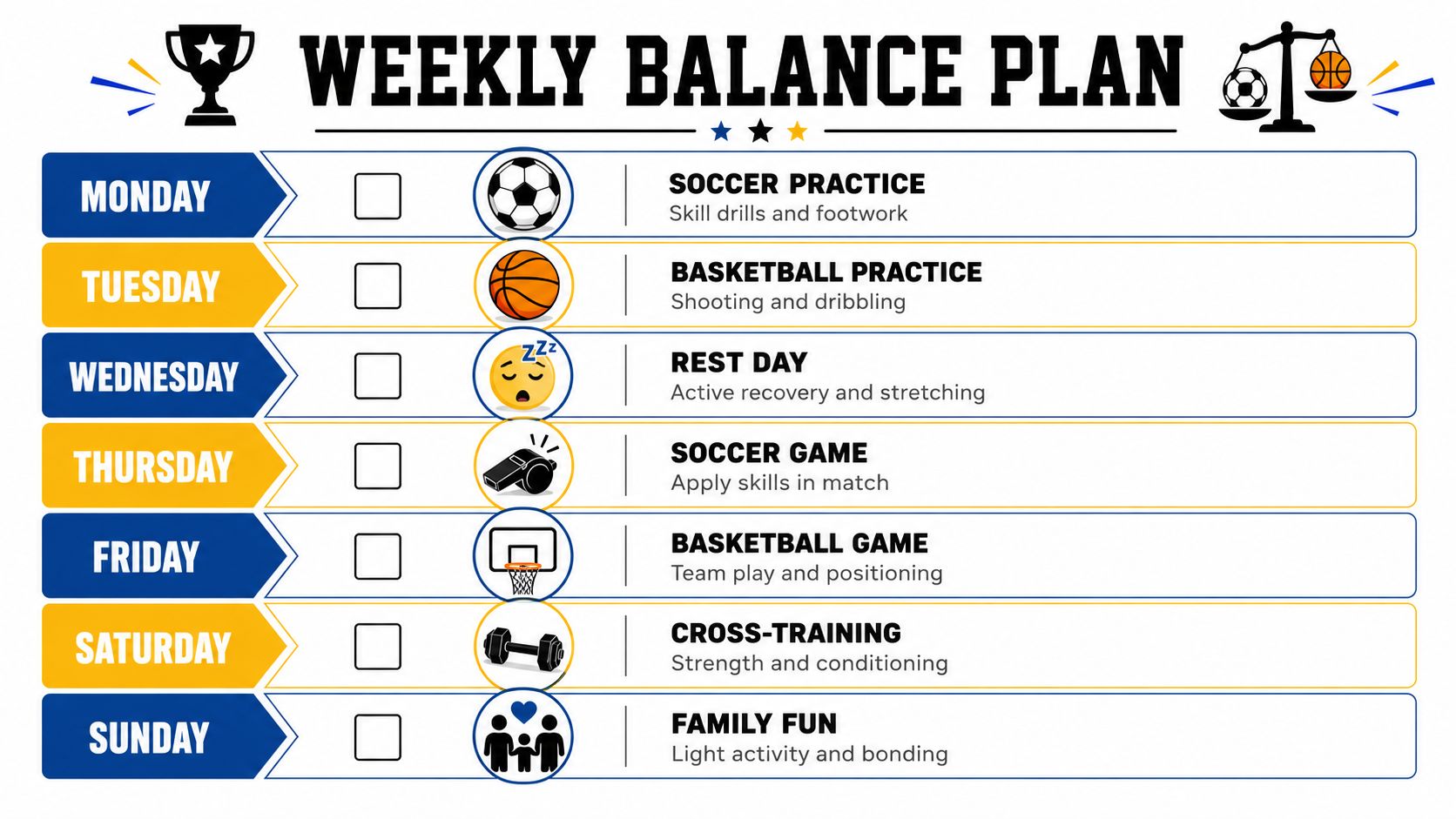
Here's a sample week for a child who likes both sports:
Monday: Soccer practice, with footwork and basic skill drills.
Tuesday: Basketball practice, with dribbling and shooting.
Wednesday: Rest day with light stretching or free play.
Thursday: Soccer game, to apply the week's footwork in a match.
Friday: Basketball game, to work on spacing and team play.
Saturday: Light cross-training, like movement games or simple conditioning.
Sunday: Family time and unstructured fun.
That kind of rhythm gives the child variety without crowding every day. It also leaves room for schoolwork, sleep, and plain old boredom, which matters more than adults sometimes admit. A kid who is never idle often never gets to process what they learned.
The cost and travel side matters too. Recent coverage points out that competitive youth soccer in the U.S. can cost families more than $3,000 per year, while basketball is often described as the more accessible grassroots option (The Guardian on youth soccer cost). For many families, that means local leagues and community programs are the way to keep both sports in the mix.
If you're trying to balance school demands with sports, this guide on academics and sports is worth a look. A good schedule should support learning, not compete with it.
A final caution. Don't use a weekly plan to chase perfection. Use it to create rhythm. The child who gets enough rest usually learns more than the child who is constantly “working.”
How JC Sports Develops the Multi-Sport Athlete
For parents who want a place that treats soccer and basketball as parts of the same long-term development story, JC Sports Houston offers a practical model. Its programs are built around age-appropriate instruction, small-sided play, and the idea that kids should grow as athletes before they're asked to specialize.
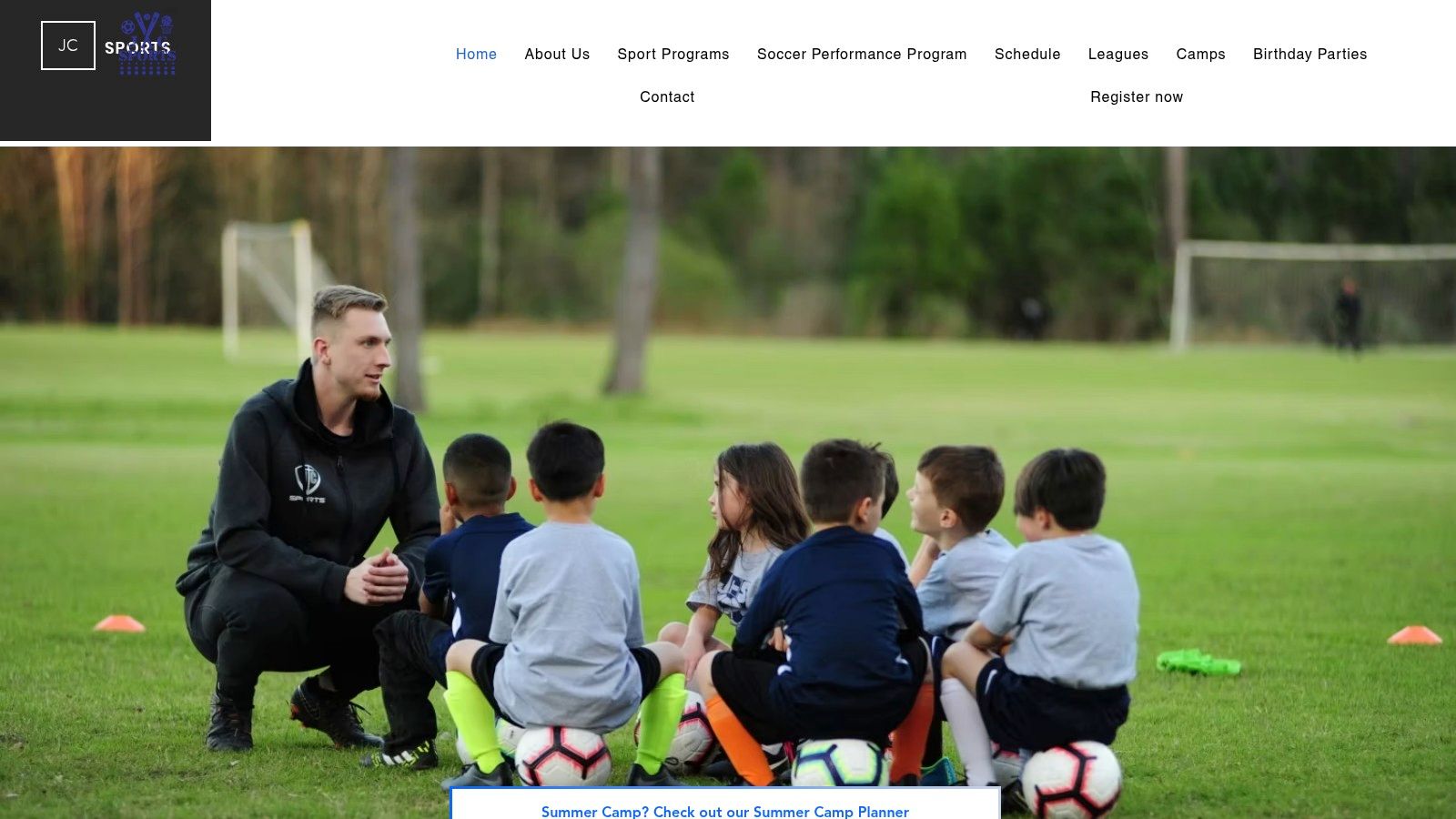
A setting that supports different entry points
The Multi-Sport format is useful for toddlers and young beginners because it lets them explore movement with both hands and feet. That matters for children who aren't ready to commit to one sport, or who need a broad foundation before one game starts to feel more natural.
JC Sports Houston also offers youth soccer and basketball programming, including skill-focused instruction and league play. For soccer, the center's Coerver-based training helps children work on technical foot skills, which can support balance, body control, and quick changes of direction. For basketball, the emphasis on basic play gives children a chance to learn movement, spacing, and simple team habits in a less intimidating environment.
The same philosophy shows up in camps, where children can sample sports in shorter bursts and see what sticks. That's helpful for families who don't want to overcommit before they know what their child enjoys most.
You can see how the structure is laid out in the multi-sport program, which fits families who want one place for different age levels and different sports needs. The value here isn't hype, it's continuity. A child can keep moving, keep learning, and keep building confidence without needing a different system every season.
Coach's takeaway: The best multi-sport environments don't ask kids to choose too soon. They give them enough repetition to learn and enough variety to stay curious.
That approach lines up with the motto “Developing well rounded, creative players.” For young children, that usually means more touching, moving, and thinking, and less early pressure to specialize before they're ready.
Frequently Asked Questions for Parents
Is it bad if my child likes one sport more than the other?No. Preference is normal. If your child clearly loves one sport, let that guide the schedule, but keep the other sport available as a low-pressure option when possible.
Should my child specialize early to get better faster?Not usually. Early specialization can narrow movement experiences too soon. A broad athletic base often helps children stay engaged and develop better overall control.
What gear do we need to start?Keep it simple. Comfortable shoes, clothes that allow movement, a ball that fits the child's age and size, and a water bottle are enough for most beginner settings.
How do I know if the schedule is too much?Watch for dread, constant fatigue, or a child who stops enjoying practice. A good schedule leaves room for school, rest, and free play, not just organized training.
If you want a place that supports both soccer and basketball with age-appropriate coaching, take a look at JC Sports Houston. Their programs are built for young athletes who need structure, variety, and room to enjoy the game.
Comments