

Soccer for Special Needs Near Me: 7 Houston Programs 2026

You're probably doing what most parents do first. Typing “soccer for special needs near me,” opening a handful of tabs, and then realizing most pages tell you where a program is, but not what happens when your child steps onto the field. For families in Humble, Kingwood, and Atascocita, that gap matters. You're not just looking for a nearby league. You're looking for a place where your child feels safe, supported, and included.
This guide is built to help you make that call faster and with more confidence. Before you compare programs, use this short framework whenever you contact one:
Coach Training & Philosophy: Ask whether staff have experience with adaptive sports and how they handle patience, transitions, and sensory needs.
Player Support Structure: Ask about coach-to-player support and whether they use buddies for one-to-one encouragement.
Safety & Accessibility: Ask how the field, facility, and session format are adjusted for mobility, sensory, or communication needs.
Trial Class Availability: Ask if your child can attend a trial before you commit.
Key Insight: A trial class is usually the fastest way to tell whether a program feels right. It shows you the coaching tone, the pace, and how staff respond when kids need extra support.
If cost is part of the decision, it also helps to review finding disability financial aid before you register.
1. HTX Soccer. Adaptive Soccer Program
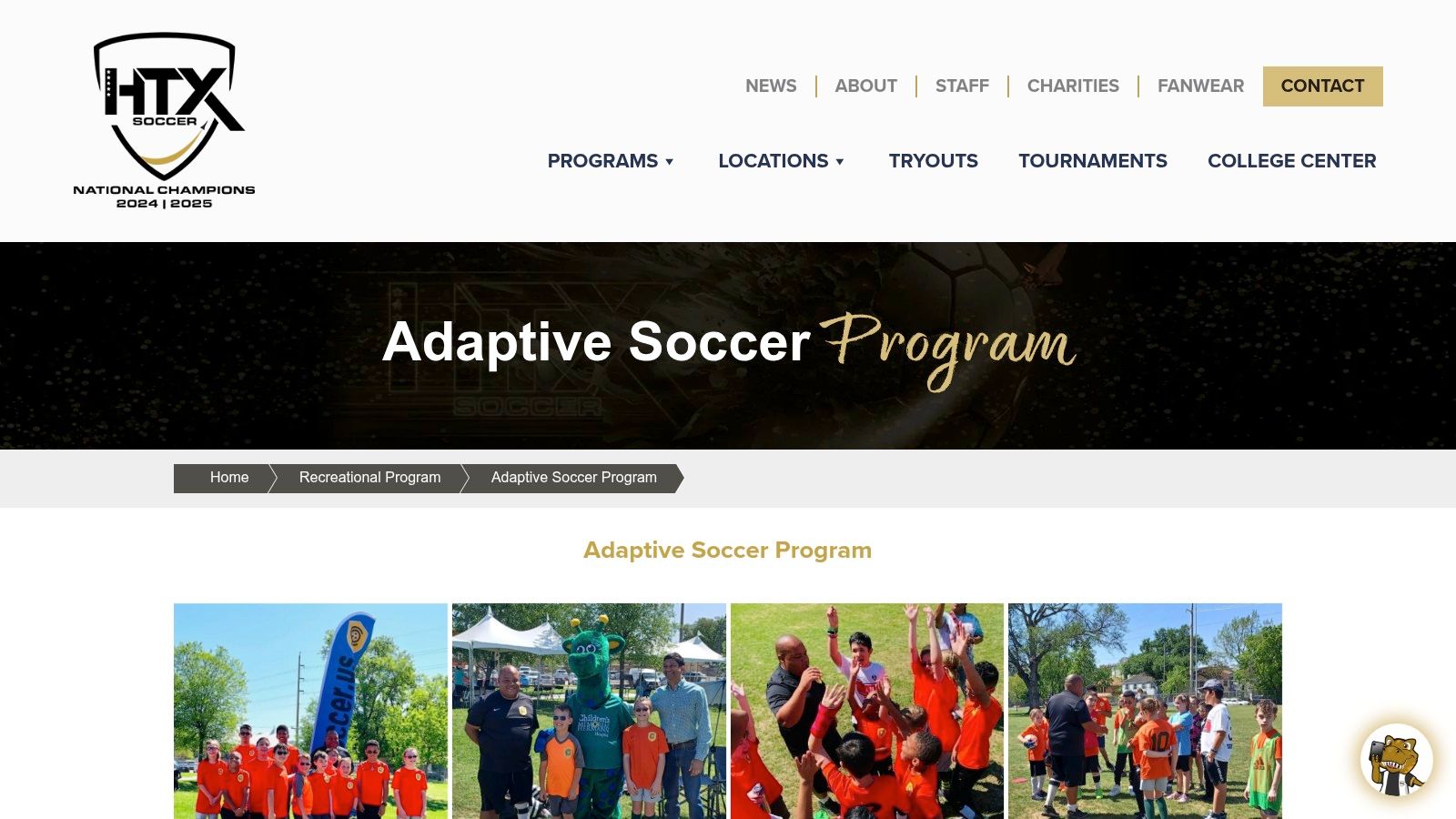
A parent drives 35 to 50 minutes to a program, gets their child out of the car, and knows within ten minutes whether the trip was worth it. The coach's tone, the pace of transitions, and how staff respond when a player needs extra time usually tell you more than a polished website ever will. HTX Soccer is one of the clearer options to evaluate because it is built as an actual adaptive program inside a larger club structure, not a generic rec listing with very little detail.
HTX is usually a strong fit for families who want soccer instruction, routine, and a real club environment. The program is designed for players with intellectual, developmental, or physical disabilities, and HTX also supports a CP Soccer pathway for ambulatory players with cerebral palsy, stroke, or traumatic brain injury. That wider pathway matters if your child may want more than a basic introduction over time.
The trade-off is straightforward. For Humble, Kingwood, and Atascocita families, the program can be a very good soccer fit and a difficult logistics fit. The Woodlands may be manageable for some families. Fulshear will be a harder weekly commitment for many. A strong program still has to work on a Tuesday night after school, therapy, and dinner.
This is the kind of program where parents should use the evaluation framework from the start, not after registration. Ask these questions before you commit:
How are drills adjusted for players who need more processing time or visual demonstration?
What happens if a child needs a break, leaves the activity, or struggles with transitions?
Is there one-to-one support available, or should families expect a more independent group format?
Can your child attend a trial session before joining for the season?
Those answers will tell you whether HTX is the right kind of adaptive for your child, not just whether it is the closest result in a search for soccer for special needs near me.
HTX often works best for kids who like structure and respond well to repeated skill work. If your child enjoys ball touches, short drills, and a predictable practice rhythm, that club format can be a real strength. If your child has high sensory needs or needs frequent movement breaks, ask very specific questions about waiting time, noise, and how coaches reset a player after overload.
Parents comparing adaptive programs with more traditional training environments may also find it helpful to review how youth soccer programs in Houston handle player development and program structure.
Practical rule: Do not stop at “adaptive.” Ask what staff change on the field, who provides support, and whether your child can try one session first.
You can explore current locations and season details on the HTX Soccer website.
2. Klein Soccer Club. TOPSoccer
Klein Soccer Club's TOPSoccer program is the kind of option many parents hope to find when they first search for soccer for special needs near me. It's community-based, low pressure, and built under the national US Youth Soccer TOPSoccer framework.
That framework matters. US Youth Soccer describes TOPSoccer as a nationally established recreational program for children and adults with intellectual, emotional, or physical disabilities, delivered through local affiliated clubs. The same program description explains that sessions typically use volunteer buddies and often run for six Saturday sessions of about one hour each, which gives families a predictable, manageable format.
What works well here
Klein is a good option for families who want a familiar club environment but don't want the intensity of mainstream league play. The buddy model can be especially helpful for players who benefit from consistent encouragement, extra prompting, or guided participation.
Here's where it tends to fit best:
Newer players: Good for children who are still learning to participate in group sports.
Families wanting structure without pressure: The session format is easier to manage than full competitive schedules.
Parents who value community feel: TOPSoccer programs often succeed because the atmosphere is welcoming first, technical second.
The limitation is age range and season timing. This program is built around youth participation, and that reflects a larger issue in adaptive soccer. Many existing options focus on children, while transition programming for teens and adults over 14 is much harder to find, as highlighted by KidsAbility's discussion of special needs soccer availability.
If your child is younger and you're also comparing general local soccer pathways, this overview of youth soccer in Houston gives useful context.
You can check registration details through Klein Soccer Club TOPSoccer.
3. Special Olympics Texas. Greater Houston Area Soccer
A child who has outgrown short introductory sessions often wants something different. They want a real team, teammates who know their name, a season to look forward to, and games that feel meaningful. Special Olympics Texas is often the program families consider at that point.
In the Greater Houston area, this option stands out because it can serve athletes who want more than a casual weekly activity. It offers traditional soccer for athletes with intellectual disabilities and Unified Sports formats that include athletes and Unified partners on the same team. That difference matters if you are comparing programs in Humble or Kingwood and trying to decide whether your child needs a supportive entry point, a social team setting, or a more defined competitive path.
A practical way to evaluate this program is to ask four questions before registering: Does my child enjoy game-day structure? Can our family handle a more fixed event calendar? Does my child do better with peer models and shared team identity? Are we looking for participation only, or for progression through local competitions? Special Olympics tends to fit families who answer yes to at least a few of those.
Unified play is one of its strongest features. For some athletes, practicing and competing with peers with and without disabilities improves motivation because the team dynamic feels more natural and more age-appropriate. For parents, the trade-off is that inclusive team settings still need good coaching and clear expectations. A Unified label by itself does not guarantee the right fit, so it is smart to ask how coaches group players, how they support communication needs, and what happens when an athlete needs extra prompting during practice.
Paperwork is usually part of the process. Medical forms, eligibility steps, and area-based coordination can take more effort than a lighter recreation program.
That extra structure is often worth it for athletes who like routine, goals, and the pride that comes with tournaments or organized competition. It can be a harder fit for families already balancing therapy schedules, inconsistent weekends, or a child who is still building tolerance for longer group activities. Neither choice is better in the abstract. The better choice is the one your child can join successfully and enjoy consistently.
You can connect with the nearest delegation through the Special Olympics Texas area offices page.
4. CP Soccer. Houston Regional Pathway
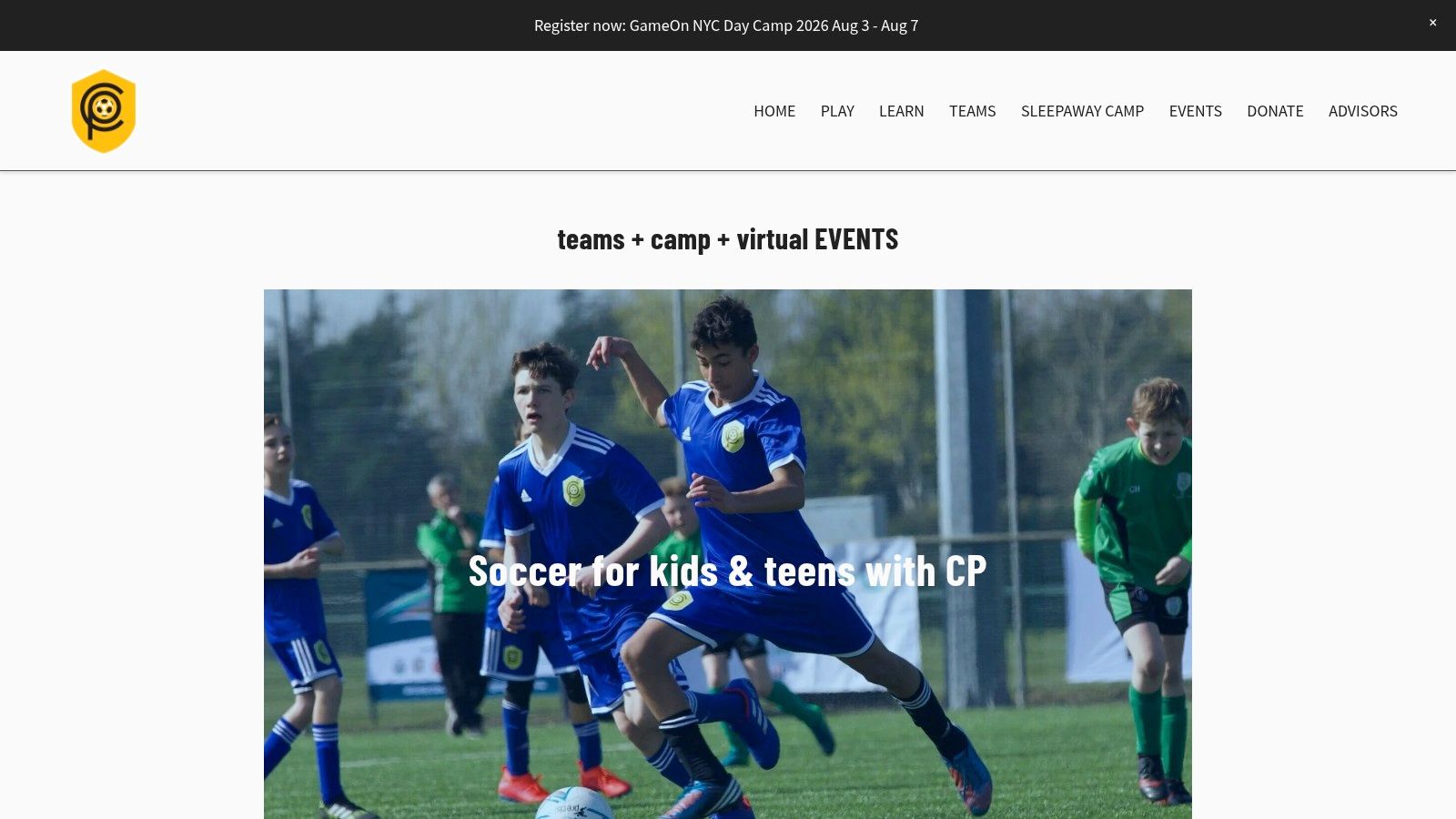
Most adaptive soccer roundups lump very different needs into one bucket. CP Soccer is different because it is designed specifically for ambulatory athletes with cerebral palsy, stroke, or traumatic brain injury. That focus is a major strength, not a limitation, if your child fits the intended population.
The Houston pathway operates through regional development opportunities and local partnerships, including HTX-supported programming. Families looking for soccer for special needs near me often don't realize that condition-specific soccer exists at all. When it does, the coaching tends to be more precise because the program is built around a narrower set of movement profiles and sport adaptations.
Who should choose this route
CP Soccer is worth prioritizing when your child wants development, not just participation. It's one of the few paths that can support beginners while also connecting motivated players to higher-level Para and national development opportunities.
That said, it isn't the broadest fit.
Best for: Ambulatory athletes with CP, stroke, or TBI who want soccer adapted for their physical profile.
Less ideal for: Families looking for a general adaptive social program across a wide range of disabilities.
Key question to ask: Is the current local training calendar active, and what support is available for new players entering for the first time?
The practical upside is clarity. You're not trying to retrofit your child into a generic adaptive session. You're stepping into a program designed for this athlete group from the start.
You can review entry points through CP Soccer's get involved page.
5. YMCA of Greater Houston. Adaptive Sports
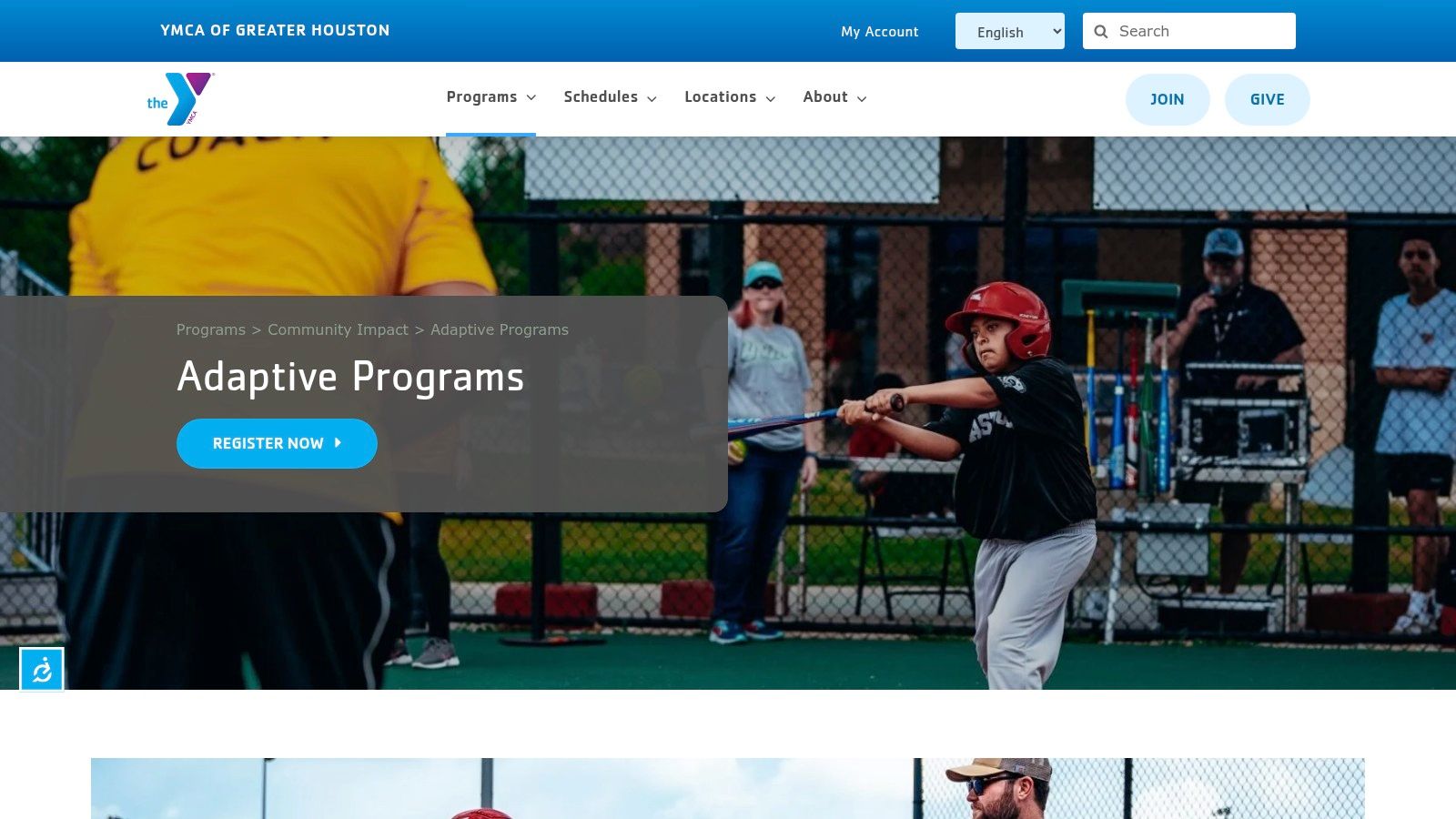
The YMCA is often the most approachable place to start, especially if your child is new to organized movement programs or your family wants flexibility across multiple activities. Its adaptive programming isn't soccer-only, which can help if you're still figuring out whether your child enjoys the sport itself or needs a supportive entry point into group recreation.
For many Humble and Kingwood families, convenience matters almost as much as coaching. The YMCA's broad footprint around Houston gives it an edge over smaller adaptive programs that may be excellent but harder to reach consistently.
Recreation first is sometimes the right answer
Not every child needs a club pathway right away. Some do better in a recreation-first environment where the emphasis is participation, comfort, and building familiarity with group routines.
That's where the YMCA tends to work well:
Easier starting point: Good for children who need a gentler introduction to sports.
Broader family support: Financial assistance and community services can reduce barriers for some households.
Flexible expectations: Seasonal offerings and modified rules usually create less pressure than competitive league formats.
The downside is consistency. Not every branch offers adaptive soccer every season, so you'll need to call your local location instead of assuming the nearest YMCA runs the exact program you want. Families who are building confidence in sports more generally may also appreciate this perspective on fun and safe youth sports that build confidence.
You can start with the YMCA of Greater Houston adaptive programs page.
6. Houston Dynamo FC x Special Olympics Texas. Unified Sports Soccer

A parent sees the Houston Dynamo name and assumes they have found the weekly program. Then they call, only to learn this option usually runs through Special Olympics Texas announcements and partner events rather than a standing local season. That difference matters because it changes how you should evaluate the fit.
Houston Dynamo FC x Special Olympics Texas Unified Sports Soccer works best as a high-interest add-on experience. The draw is real. A professional club setting can make athletes feel seen, included, and connected to the wider soccer community in a way a standard practice field sometimes cannot.
Parents in Humble and Kingwood should screen this option with a few practical questions right away: How often are events offered? Is my child joining with an existing Special Olympics delegation? Will there be Unified teammates without disabilities on the field? What level of structure, support, and repetition should I expect on event day? Those answers tell you whether this is the right next step or a memorable extra.
For some athletes, big-stage events light a fire. They increase buy-in, spark conversations at home, and give children a strong sense that they belong in soccer spaces. As noted earlier in the article, organized soccer settings can support social development for some athletes. The trade-off is consistency. Event-based programming rarely gives a child enough repetition to build skills week after week.
That is why I would treat this as a supplement to a primary program, not the foundation. If your child needs routine, predictable coaching, and time to get comfortable with peers, use a recurring local program for the weekly work. Add Dynamo-affiliated Unified opportunities for motivation, visibility, and community experience.
This option can also be especially meaningful for athletes who use mobility equipment or need families to think carefully about access on event day. Parents comparing equipment needs may also find this buyer's guide to standing power chairs useful as part of their broader planning.
You can follow opportunities through the Houston Dynamo FC Unified Sports announcement.
7. U.S. Power Soccer Association. Houston-Area Powerchair Soccer
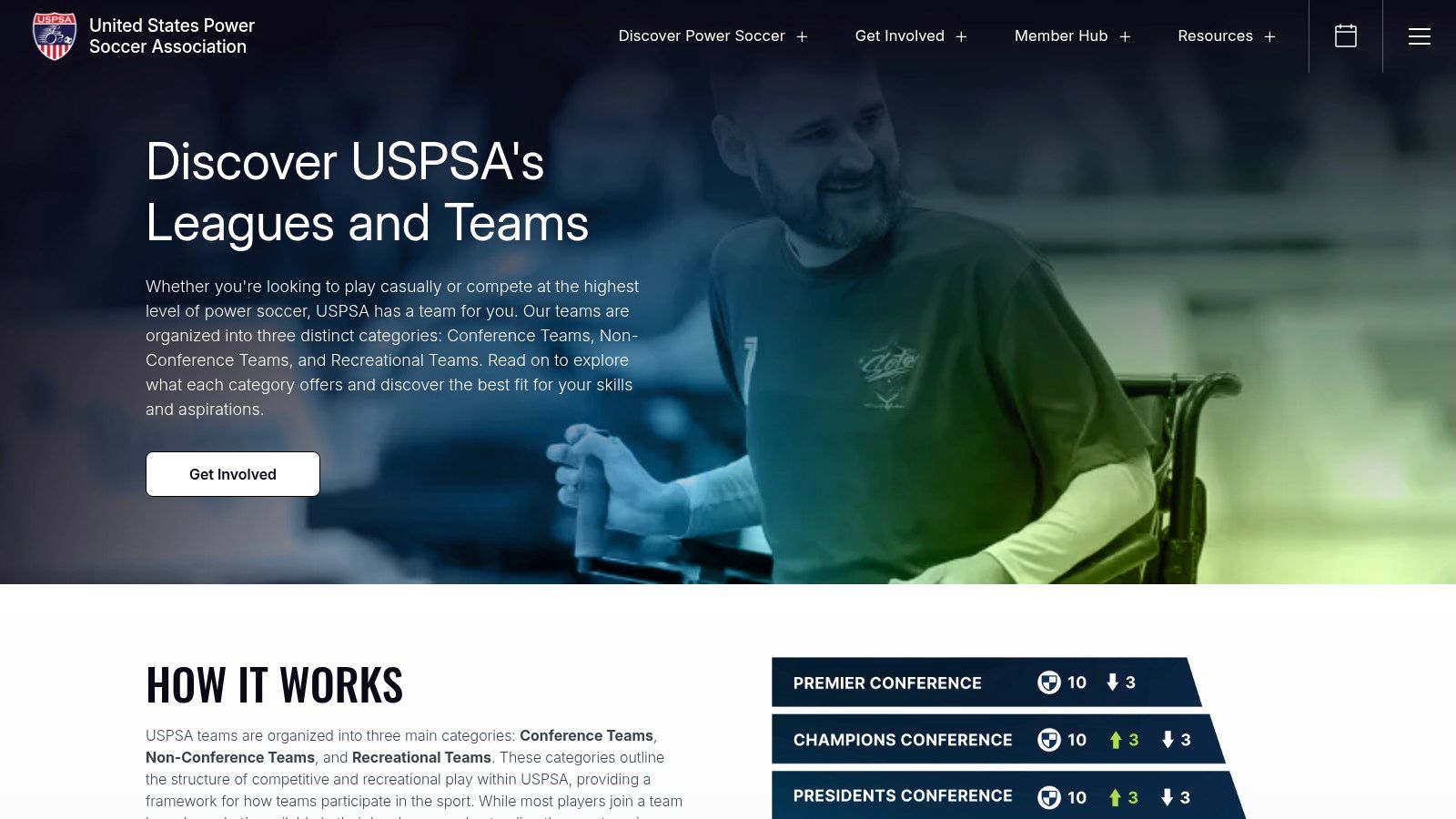
A parent can spend hours searching "soccer for special needs near me" and still miss the option that fits their child best. That happens often with powerchair users, because powerchair soccer sits in a different category from standard adaptive or inclusive soccer programs.
For the right athlete, that distinction matters. Powerchair soccer uses specialized equipment, sport-specific rules, and a playing model built around chair use from the start. In practice, that usually creates a better experience than asking a child to adapt to a format designed mainly for standing players. It can also give families a clearer way to judge fit, which is one of the hardest parts of choosing any program.
The key questions are practical. Does the program regularly work with powerchairs, or is your child the first? What chair setup or guards are required? How is contact managed in play? Is there a local team, a trial session, or a way to watch before committing? Those answers tell you quickly whether this is a realistic option or just an interesting idea on paper.
This option fills a gap that broader local lists often miss.
What stands out about USPSA is the structure behind the sport:
Built for powerchair athletes: The game format starts with how athletes move, defend, and strike the ball in a chair.
Clearer competitive pathway: Families can ask about team availability, practice expectations, and what progression looks like over time.
More relevant safety conversations: Questions about equipment, contact, space, and chair control are part of the sport, not an afterthought.
The trade-off is availability. Houston-area access can change, and some families may need to travel farther or wait for the right local connection. Equipment needs can also make the first conversation feel more technical than with a typical rec soccer signup. Still, if your child uses a powerchair and wants real game play, this is one of the first options I would investigate rather than treating it as a last resort.
Families comparing mobility equipment more broadly may also find this buyer's guide to standing power chairs useful.
You can search for local contacts through the U.S. Power Soccer Association team finder.
7-Provider Comparison, Special Needs Soccer Near Me
A parent in Humble or Kingwood usually is not asking, “Which program is best on paper?” The key question is, “Which one can handle my child well, fits our schedule, and feels worth the effort of trying something new?”
That is the right standard to use here. Compare each option by five practical factors: how much setup the family needs to do, what support or equipment the program expects, what kind of progress it is built for, which players it serves best, and what trade-offs come with that choice.
Program | Implementation complexity 🔄 | Resource requirements ⚡ | Expected outcomes ⭐ | Ideal use cases 💡 | Key advantages 📊 |
|---|---|---|---|---|---|
HTX Soccer, Adaptive Soccer Program (The Woodlands and Fulshear) | Moderate. Trained adaptive staff, sensory-aware sessions, seasonal scheduling | Club infrastructure, fields, trained coaches, seasonal fees | Improved fundamentals, pathway into CP and Para 7-a-side | Families seeking regular club-run adaptive sessions and progression | Multiple local sites, TOPSoccer education, CP pathway |
Klein Soccer Club, TOPSoccer (Spring, TX) | Low. Volunteer-led, buddy model, simple session format | Low cost, volunteers or buddies, designated weekend field | Social inclusion and basic skill-building | Local families wanting low-cost, consistent weekend sessions | Very low cost, clear schedule, long-established club |
Special Olympics Texas, Greater Houston Area | Moderate. Registration, eligibility steps, event coordination | Area offices, event staff, often low or subsidized fees | Competitive progression to regional or state events, inclusion through Unified play | Athletes seeking competition or Unified team experiences | Statewide competition pathway, built-in inclusion, low-cost options |
CP Soccer, Houston regional pathway (via HTX) | Moderate to high. CP-specific coaching, national standards, targeted progression | CP coaches, grants or partnerships, specialized camps and events | Sport-specific skill progression, access to national team pathways | Ambulatory athletes with CP, stroke, or TBI pursuing competitive development | Clear CP pathway, national governance, coaching resources |
YMCA of Greater Houston, Adaptive Sports (including soccer) | Low to moderate. Branch-dependent offerings, recreation-first model | Multiple branches, adaptive staff, scholarship options | Introductory skills, family support, accessible participation | Beginners and families needing geographic access or financial aid | Wide geographic reach, financial assistance, family services |
Houston Dynamo FC x Special Olympics Texas, Unified Sports Soccer | Low for event participation, moderate coordination for exhibitions | Pro-club event logistics, partner coordination, SOTX channels | High-visibility inclusion events and exhibition matches | Teams wanting big-club experiences to complement regular training | Unique pro-club visibility and community celebration of inclusion |
U.S. Power Soccer Association, Houston-area Powerchair Soccer | High. Adapted rules, safety protocols, specialized training | Powerchair equipment, coaching, safety gear, possible funding needs | Competitive, purpose-built framework for powerchair athletes | Powerchair users seeking competitive play or a route to start with the sport | National support, specialized rules and equipment, funding assistance network |
The table gets more useful if you read it like a decision tool instead of a ranking.
If your child needs a gentle entry point, YMCA and Klein TOPSoccer usually make the first trial easier. If your child wants a more defined skill pathway, HTX, CP Soccer, or Special Olympics Texas will often make more sense. If mobility equipment changes what “soccer” needs to look like, powerchair soccer belongs in a separate category and should be judged on fit, access, and safety, not against a standard rec model.
Ask each provider the same few questions. Who leads the session? How are meltdowns, breaks, or communication differences handled? Is there a trial session or a chance to observe first? What does success look like after one season?
Those answers usually matter more than a polished website or a familiar club name.
Taking the First Step Onto the Field
Choosing the right soccer program can feel heavier than it should. You're not only comparing schedules and locations. You're trying to predict whether your child will feel comfortable, whether staff will understand their needs, and whether the experience will be worth the emotional energy it takes to start something new.
That's why the best approach is usually simple. Pick the two or three programs that fit your child's needs most closely, call them directly, and ask the practical questions that most websites skip. Ask how they handle transitions. Ask whether buddies are available. Ask what happens if your child needs a break, stays on the sideline for part of a session, or communicates differently from other players.
The strongest options in the Houston area don't all serve the same purpose. HTX Soccer and Klein TOPSoccer are strong if you want dedicated adaptive programming. Special Olympics Texas is a better fit for athletes who want team identity and a clearer competition pathway. CP Soccer is the right specialized route for ambulatory players with cerebral palsy, stroke, or traumatic brain injury. YMCA adaptive sports works well when your child needs a lower-pressure introduction. Dynamo Unified events add visibility and excitement. Powerchair soccer fills an important gap for athletes who need a sport built for their mobility profile from the ground up.
If you're in Humble, Kingwood, or Atascocita, don't let the search term do all the deciding. “Soccer for special needs near me” is only the starting point. The better question is this: where will my child be understood, supported, and given the right kind of challenge?
Start there. Visit a session if you can. Try the program that feels most welcoming, not just the one that looks best on paper. The right team often becomes more than an activity. It becomes a place your child wants to come back to.
If you're looking for a welcoming local sports environment in Humble, Kingwood, or Atascocita, JC Sports Houston is a smart next call. Families can explore beginner-friendly soccer training, small-sided development, camps, and a free trial option to see whether the coaching style and environment feel right for their child.
Comments