

What Sport Should I Play? a Guide for Kids and Parents

A Saturday morning class, twelve four-year-olds, one whistle. One child is already sprinting laps. One is standing behind a parent's leg. One is doing the drill correctly and checking the room for applause. Same class, same coach, three different children, and three different answers to the question their parents typed into a search bar last night.
What sport should I play? For a five-year-old, the better question is how that child handles group size, physical contact, waiting and being coached. Talent matters less than fit at this age. The right match makes an ordinary class feel easy to join; the wrong one turns the most popular sport in the neighborhood into a Tuesday night fight.
Treat the first sport as a time-limited trial with an end date: two weeks, then a decision. That small finish line lowers the pressure for everyone involved.
Find Your Child's Best-Fit Sport at a Glance
There's a moment at the kitchen table when a child asks which sport to try, and every parent at that table wants to give the right answer. The honest answer is that the sport matters less than the child sitting across from you. A six-year-old who loves noise and contact and a six-year-old who needs a quiet corner will take different things from the same Saturday class.
Sport fit chart by movement, pace and child type
Sport | Main movement skills | Pace and contact | Often suits a child who | Watch for |
|---|---|---|---|---|
Soccer | Running, stopping, changing direction, kicking | Continuous running, limited contact | Enjoys constant motion and creative footwork | Long waits in line in large groups |
Basketball | Jumping, landing, dribbling, passing | Quick transitions, moderate contact | Likes fast decisions and sharing the ball | Early pressure to shoot or to be the star |
Baseball | Throwing, catching, hitting, fielding | Stop and go, low contact | Prefers throwing, hitting and position challenges | Long waits in the field and batting lines |
Swimming | Breathing control, stroke technique, floating | Individual, self-paced, no contact | Prefers measurable personal goals | Fear of water and cold pool sessions |
Gymnastics | Balance, rolling, jumping, body control | Individual, minimal contact | Likes structured skill progression | High repetition and early skill pressure |
Multi-sport class | Running, throwing, balance and catching mixed | Rotating, mostly small-sided games | Is still deciding or gets bored easily | Coach quality varies, so check active time |
Read one row at a time, and read it for the child you have rather than the one you hope they'll become. Find the row that matches two or three of their traits, then check the last column before you sign anything. A child who narrates every game, invents rules and never stops moving fits the soccer and basketball rows. A child who lines up toys by size and asks to repeat a skill until it's right is described better by swimming and gymnastics.
The final column is where most guides stop short. Long lines in a large soccer group can sour a child who needs frequent touches, and a baseball season can spend more of it in the batting queue than at the plate.
Choosing by enjoyment rather than perceived talent has national evidence behind it. 54.1% of children ages 6 to 17 in the United States participated in organized sports during the 12 months before the 2020 National Health Interview Survey, and the same analysis linked team participation with higher physical-activity levels and better physical and mental health, according to the CDC National Center for Health Statistics data brief. What the numbers can't tell you is which of those children kept coming back. Enjoyment and access decide that.
Tiebreaker: when two rows fit equally well, choose the sport your child will walk into next week without a negotiation.
Water is a sensible addition for families who want a low-contact option they can share, and the PADL Florida paddling advice covers the gear and first-session basics for paddleboarding and kayaking with kids.
Two rows tie more often than parents expect, especially at five and six years old. A child who asks about Tuesday's class on Sunday is telling you more than any chart can.
Match the Sport to Your Child's Temperament
Most sport advice sorts children by age, body type or how good they look in a drill. Watch instead for how your child reacts to four things: group size, physical contact, waiting and being coached. Those four decide whether a season ends in February or in week two.
The children below could sit in the same class and still need different entry points.
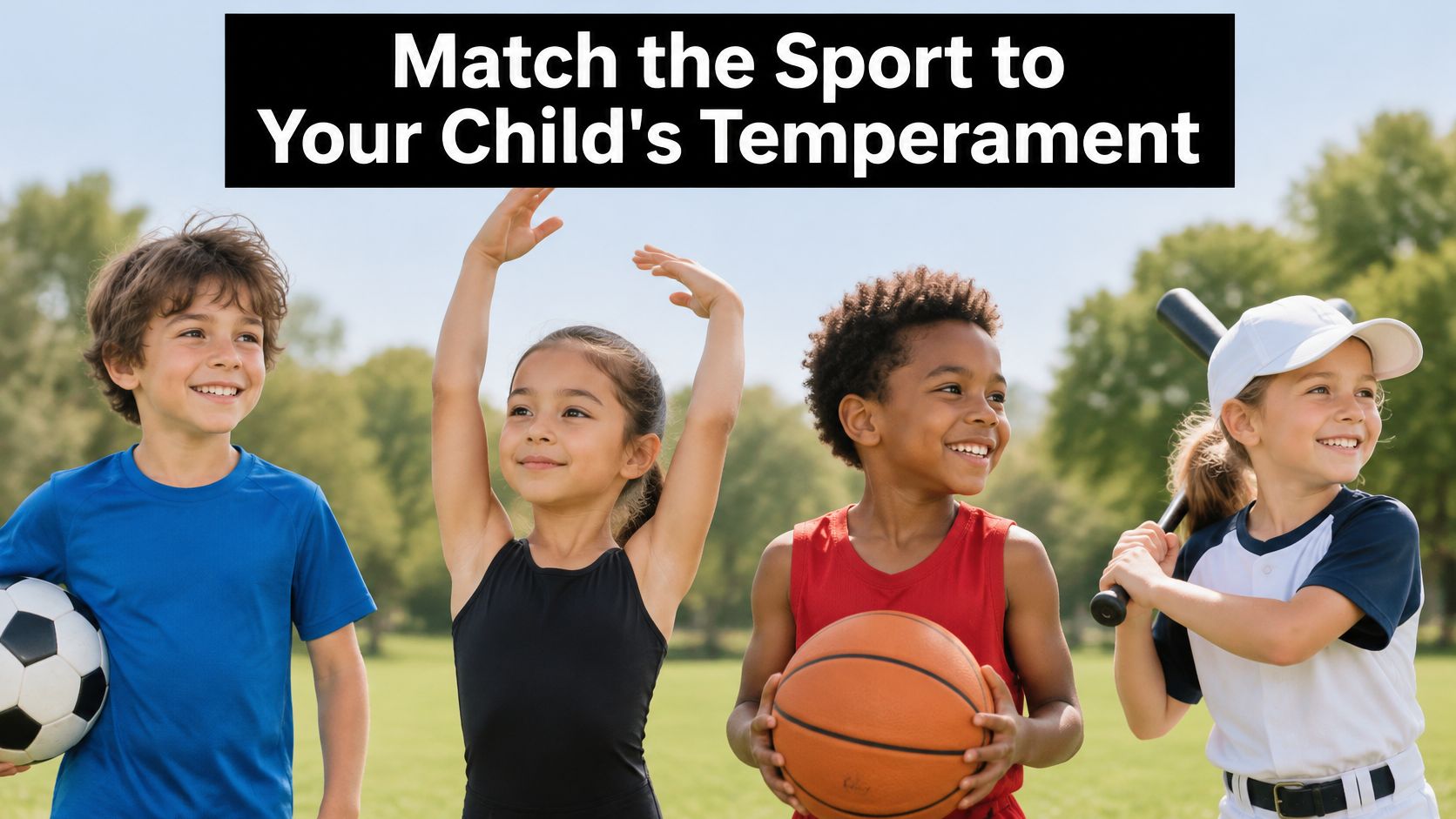
Six things to watch in the first ten minutes
Energy. A high-energy child needs a session with constant movement and two-sentence instructions. A slower starter does better with short, calm drills and a coach who repeats the plan.
Competitiveness. Some children want the scoreboard and the last shot. Others want to pass, set picks and know their role. A program that only rewards scoring loses the second group by week three.
Group size. Small-sided games of three or four let a shy child find the ball. A squad of twenty with one coach can swallow them.
Contact. A child who bumps and tackles on the playground usually enjoys court and field sports with body contact. A child who flinches at a shoulder tag is happier in swimming or gymnastics.
Repetition. Children who like practicing the same skill until it's clean thrive in swimming and gymnastics, where progress is measurable. Easily bored children need variety.
Coach style. A child who responds to praise learns fastest with a warm, encouraging coach. A child who needs correction to feel secure wants clear, calm feedback.
Ask the question directly, then watch. In 2025, 86% of surveyed parents said their child's input or preferences were an important influence on sports-purchase decisions, according to the Sports & Fitness Industry Association's Team Sports Parents' Insights Report.
The reasons children give matter too. A 2025 study of children's physical-literacy perceptions found that immediate fun and social interaction were central drivers of meaningful activity, while perceived competence, access and encouragement helped sustain participation, as reported in this study of children's physical-literacy perceptions. Curriculums that place the child at the center of the game, building motor skills, self-confidence and technique through interactive games and drills, fit those traits better than programs built around lines and lectures.
A shy child who lights up in a three-player game is a better match than a gifted child who goes quiet in a large squad.
A child who asks to practice a skill at home is showing you the confidence that carries a season. That signal is worth more than a coach's compliment.
Choose by Age From Toddlers to Teens
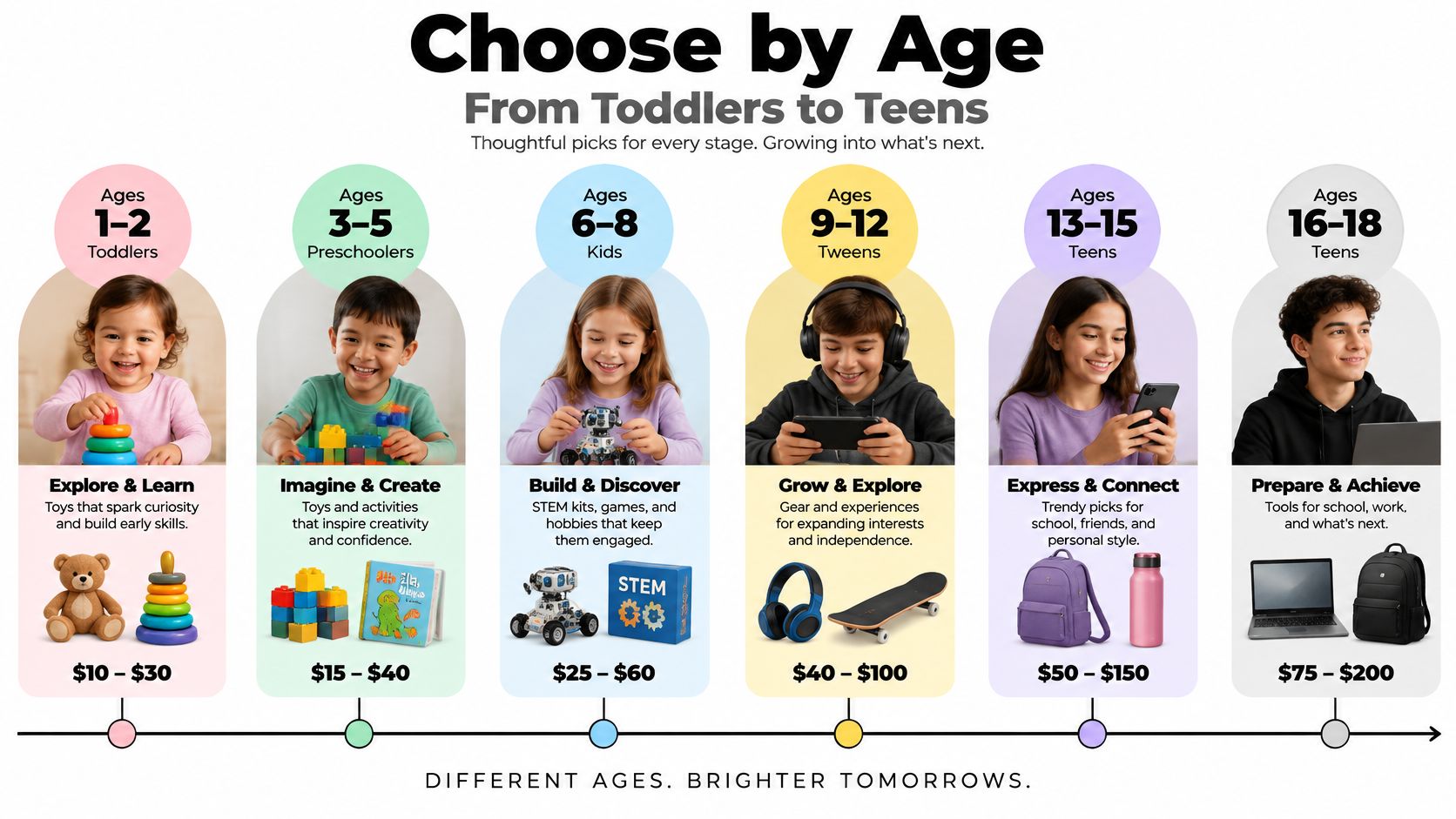
The right first sport changes with age, and the change is mostly about format rather than sport. A three-year-old's job is moving, listening and taking turns. A nine-year-old's job is widening skills and making friends. A fifteen-year-old's job is owning the choice.
Best starting format by age band
Age band | Best starting format | Why it works | Watch for |
|---|---|---|---|
2 to 4 years | Parent and child or multi-skill play class | Builds moving, listening and taking turns without scores | Long lectures or waiting in lines |
4 to 6 years | Multi-sport or one small-sided sport | Fun and frequent touches matter most | Pressure to score or pick a position |
7 to 9 years | Two sports, one seasonal league each | Skills widen and friendships grow | Full commitment to one sport too soon |
10 to 13 years | One main sport plus one or two others | Sport preference becomes clearer and skills sharpen | Year-round exclusive training |
14 and up | Chosen sport with flexible commitment | Personal goals and motivation drive commitment | Burnout after many seasons of repetition |
Read the table as a staircase. Each step borrows the balance, coordination and confidence the one below it built, so a child who starts organized sport at seven is not behind. That child begins on a different step, and a season at any band is a rehearsal for the next one rather than a verdict on the future.
Motor skills are the currency at every age, and structured activity builds them. A systematic review of 25 randomized controlled trials found that 80% reported significant improvements in children's motor-skill performance following physical-activity interventions, and a separate meta-analysis of 26 studies put the overall effect on motor competence at Hedges' g = 0.71, per this review of movement-skill interventions.
Each sport deposits something different in the bank. Soccer builds running, stopping and changing direction. Basketball adds jumping, landing and object control. Baseball develops tracking, throwing and striking. A preschooler who spends a season in small-sided games with frequent touches, varied movement patterns and age-appropriate equipment is building all three at once, which is why the format matters more than the label on the jersey.
What changes at ten: the child starts choosing. Your job shifts from picking the sport to keeping the schedule survivable.
One observation beats any checklist. Watch a whole session and count how much of it your child spends moving, because a drill built around long lines spends more time teaching children to wait than to move. Group size matters at every band: a child who disappears in a full squad often comes alive in a three-player game, and that reaction tells you more than the scoreboard does.
Well-built programs mirror these bands. JC Sports Houston runs age-appropriate sports programs for children 24 months and up, with free trials listed for MultiSport and for soccer in the 4-6, 7-9 and 10-13 age groups, so the trial format above can be tested against a real class. For toddlers and preschoolers, the guide to sport classes for toddlers shows what a well-built first session should contain.
Why Trying Several Sports Beats an Early Pick
The most common mistake is a single-sport plan that starts at six. It looks committed and disciplined, and by ten it often produces a child who is tired of that sport with no second one to fall back on.
The American Orthopaedic Society for Sports Medicine consensus statement is direct about the risk. Early specialization is associated with overuse injury, burnout, reduced motivation and sport withdrawal, and the statement recommends varied activities with specialization delayed until at least puberty, as summarized in this consensus statement on youth specialization. It also concludes that early diversification is linked to longer sport participation and doesn't appear to reduce the chance of later elite participation in sports whose peak comes after maturation.
That's the long game. A 2025 systematic review and meta-analysis found that youth-sport participation was linked over time with higher physical-activity levels, better health and well-being and fewer symptoms of mental ill-being compared with nonparticipation, published in the International Journal of Behavioral Nutrition and Physical Activity.
Two nine-year-olds make the difference concrete. One plays soccer in the fall, basketball in winter and swims in summer, with free play after school most weeks. The other is on a year-round travel team with two practices a week and no off-season. Three years on, the first child has three movement vocabularies and still likes all three sports. The second has one refined skill set, a sore elbow and a calendar with no gaps.
Keep the plan simple. Choose one enjoyable primary sport, protect room for other sports and free play, and build in real rest. Then avoid these three warning signs:
Year-round exclusive participation that forbids other sports in the same year.
Excessive weekly competition that leaves no practice time for skill work.
Training through persistent pain, which turns a manageable niggle into a spring of missed games.
For a child who runs a lot, strength work to prevent running injuries is the piece that keeps hips and legs balanced across sports. The wider case for keeping several sports in the calendar is covered in the benefits of playing multiple sports.
What you want instead is progressive instruction that mixes skill practice with games, balance, jumping, agility, throwing, catching and decision-making. If a program's session looks like that, the sport label on the door matters much less.
Count the Real Costs Before You Commit
Cost ends more sport choices than any other factor, and it often goes unnoticed. The average U.S. sports family spent $1,016 on a child's primary sport in 2024, a 46% increase from 2019, and children in households earning $100,000 or more were roughly twice as likely to participate across tracked sports, according to Project Play's research. Enjoyment can't be tested if the registration fee ends the conversation first.
Smart decisions start with a clear view of the expenses.
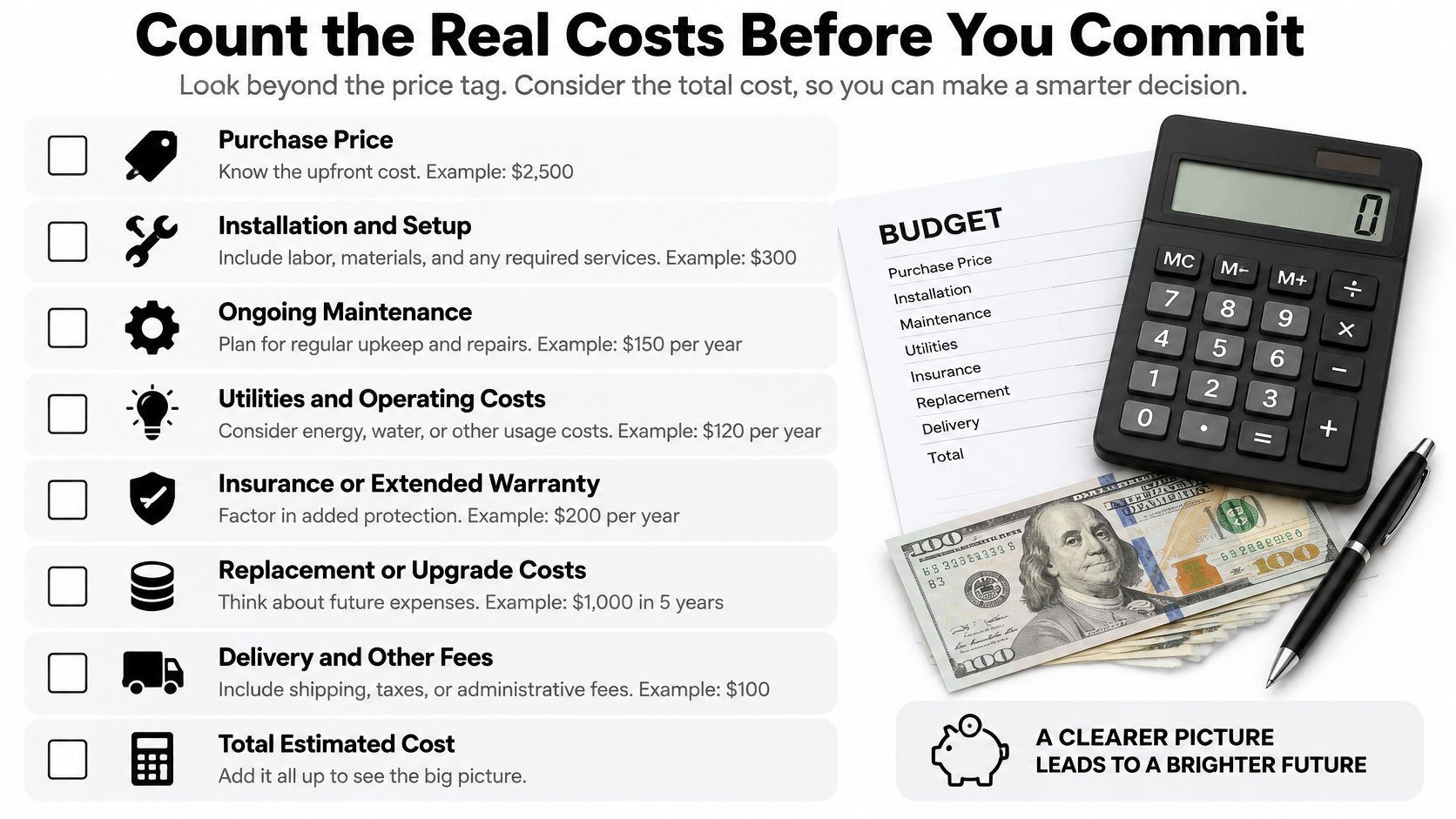
Total these six line items for each candidate sport before you compare anything else:
Equipment and uniforms for the first season, including shoes, guards and the items coaches assume you own.
Registration or lesson fees, checked for what the base price excludes.
Travel time and fuel for every practice and game, multiplied by a full season.
Private lessons, if the program expects them to keep a beginner competitive.
Missed work or childcare for parents who must attend sessions and weekend games.
Hours per week, because a schedule your family can't sustain ends the sport faster than a fee does.
First-season total: add gear, fees, fuel, missed work and weekly hours, then ask whether you'd sign that number twice.
The same sticker shock shows up outside team sports. Families curious about a barn-based option can check what riding really costs beginners, where helmet, boots and lesson fees sit behind a single advertised price.
Cost shapes decisions in the room as well as the bank account. Watch this coach explain how program structure affects what families get.
Some of the pressure is about time, not money. Plenty of parents describe steady pressure to specialize earlier than they planned, and it now comes from high-school pathway talk more often than from professional hopes. A nearby, affordable program that lets a child sample several sports first answers both worries at once, and it keeps the season sustainable while everyone learns what fits.
How to Run a Two-Week Sport Trial
Two weeks is enough to learn something real and short enough that nobody has signed away a year. Run it like a coach scouting a player.
A good trial starts with watching, not signing.
Pick two sports from the fit chart that match two or three of your child's traits. One trial tells you almost nothing, because a single bad coach or a rainy morning can decide the outcome.
Book a free or introductory session for each. A short trial reveals fit faster than any conversation with a director about philosophy, and what a free trial actually covers is worth checking before you book.
Watch how much of the session is active play. The common slip is judging the coach's energy and charisma while missing the twenty minutes of standing in line.
Ask the child for a 1 to 5 fun rating and one thing they'd change. Specific answers separate a tired child from a bored one.
Note whether they ask to go back. Treating reluctance as a bad sign is the other slip, since a five-year-old who is tired at the end of a school week isn't rejecting the sport.
Ask the coach one question about next steps, and listen to whether the answer is clear. Vague answers about progression tell you what the next season will feel like.
Repeat with the second sport, then decide once both sessions are done rather than after each one.
One practical detail to plan around: our sports programs aren't drop-off classes, so parents or caregivers of all participants stay in the building during class. Check the seating and the timing before the first visit, especially if you have a younger sibling in tow.
The decision rule at the end is simple. Choose the sport your child asked to return to, and hold the other one as the second option.
Pick One Sport to Try This Season
With both trial sessions finished, compare only the two sports you've tested and ignore everything else for now. Keep a sport when three things line up: the child asked to go back, the first-season total from your cost list fits your budget, and most of each session was active play rather than waiting. Drop the one that needs private lessons just to keep pace with the group, or the one with a year-round exclusive schedule attached.
Locally, free trials are listed for our MultiSport program and for soccer at ages 4 to 6, 7 to 9 and 10 to 13. Families request a free trial by sending the child's name, child's age and favorite sport, and it helps to check the drive time from Humble, Kingwood or Atascocita before locking in a weekday slot. Our indoor center runs age-appropriate programs from 24 months up, so a first trial doesn't depend on the weather.
Three actions finish the job:
Circle the winning row on the sport-fit chart and write the second choice beside it.
Book that one trial within two weeks, while the season still has room for a beginner.
Set a season-end check-in on the calendar and ask whether your child still wants to play.
If the answer at that check-in is no, move to the second tested sport. Changing sports is what a trial is for, not a failed season.
JC Sports Houston runs multi-sport and sport-specific classes for children 24 months and up inside its indoor center, which makes a low-pressure first trial easy to arrange for families in Humble, Kingwood and Atascocita. Send us your child's name, age and favorite sport to request a free trial, then watch how they handle the group, the coach and the waiting before you commit to a season. Visit JC Sports Houston to book that first session and let two weeks of play answer the question for you.
Comments